

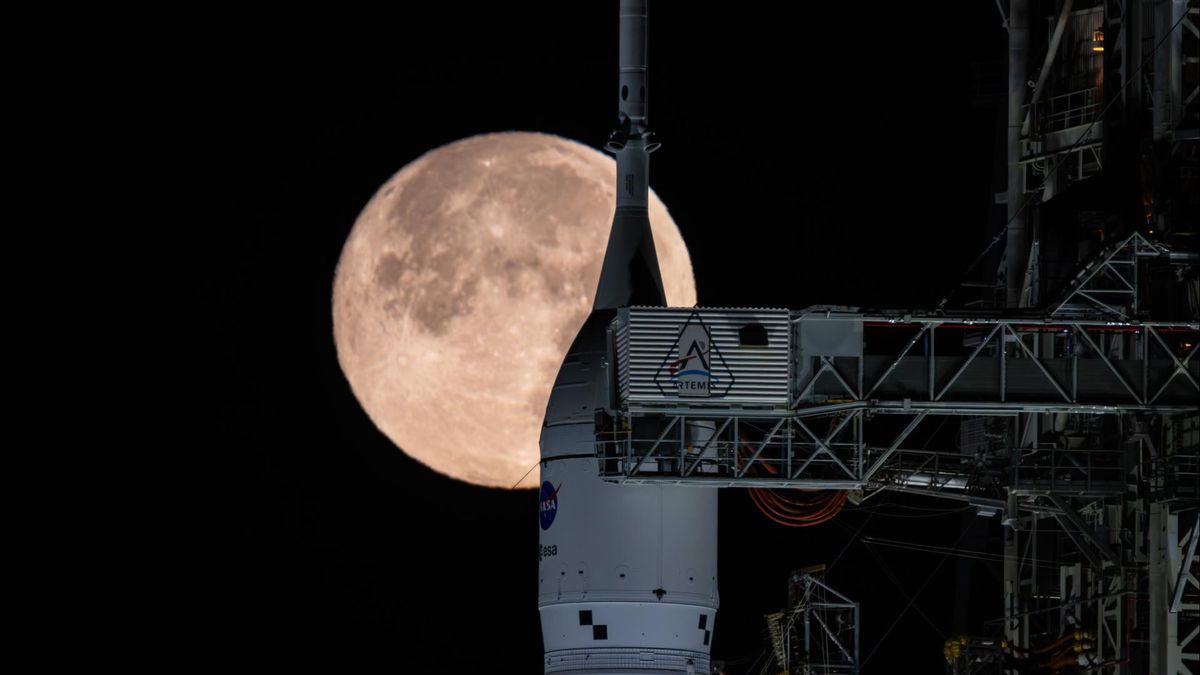


NASA will allow astronauts to bring cellphones into space for the first time. This policy will be implemented on the Crew-12 and Artemis II expedition missions.
Crew-12 is an expedition mission that sends four astronauts to the International Space Station (ISS) to conduct various scientific experiments. Meanwhile, Artemis II is the opening mission for the next human landing on the Moon.
The Artemis II mission is scheduled to take humans around the moon in March. The four astronauts selected for the mission are allowed to bring cellphones to document the trip in more detail than before.
This is a major change for NASA, which has been known to be very strict in approving the use of technology in space. According to NASA Administrator Jared Isaacman, providing modern tools to capture moments is important for astronauts.
"We give our crew the tools to capture special moments for their families and share inspiring images and videos with the world," Isaacman wrote on his X account, quoted on Friday, February 6.
In addition to documentation needs, this new policy is implemented as part of testing the durability of modern hardware in space. Isaacman explained that this decision was made to encourage NASA research progress.
"We are challenging a long-running process and testing modern hardware for spaceflight in an accelerated timeframe. That operational urgency will be of great benefit to NASA as we pursue high-value science and research in orbit and on the lunar surface," added Isaacman.
For decades, launching from TechCrunch, NASA has only allowed the use of cameras such as Nikon DSLRs and GoPro that are a decade old. Although it still works well, the use of mobile phone cameras is considered much better.
For Isaacman, mobile phones can speed up content creation. That way, astronauts, including NASA, can create educational content or share space conditions instantly and more modern.
Although the use of mobile phones in space is new for NASA, the agency is not the first. The use of smart phones in space has been done before by SpaceX in its private astronaut mission.
The English, Chinese, Japanese, Arabic, and French versions are automatically generated by the AI. So there may still be inaccuracies in translating, please always see Indonesian as our main language. (system supported by DigitalSiber.id)


