

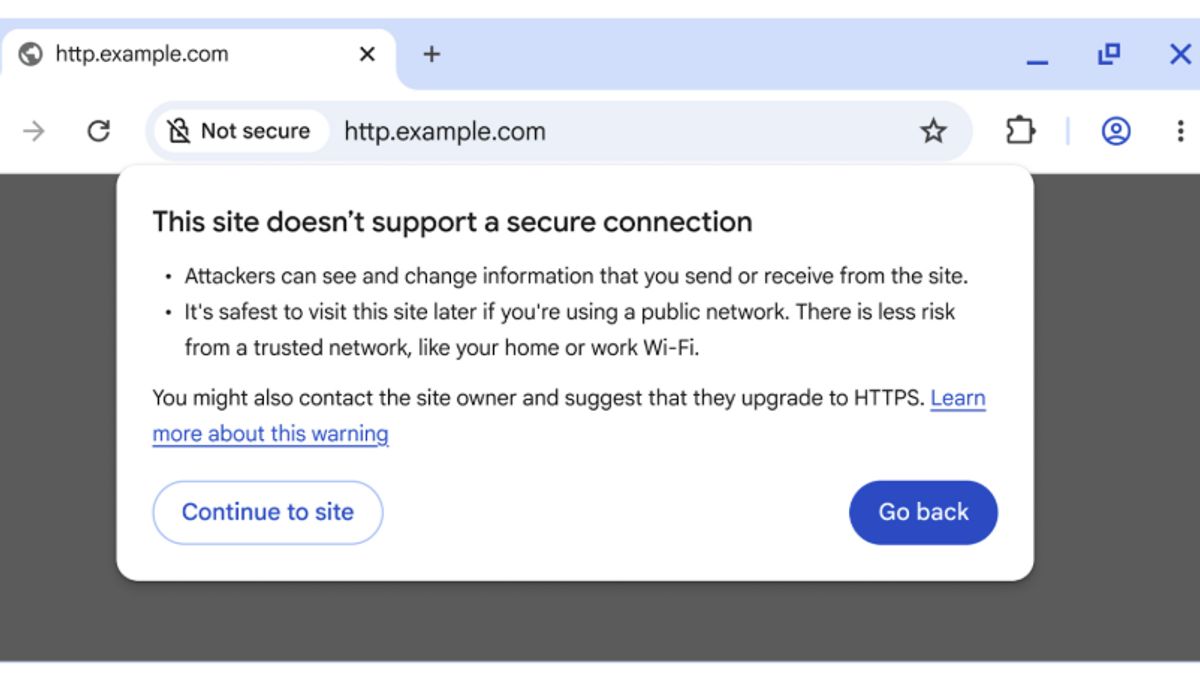


JAKARTA Chrome will issue more warnings to its users starting October next year. This warning will appear when users visit public websites without encrypted HTTPS connections.
Currently is HTTPS, the shortcoming of Hypertext Transfer Protocol Secure, is a very important encryption standard. This encryption is used to build secure website connections so that no third party tries to peek at information.
Google is deliberately implementing this new policy because the HTTPS connection adoption rate has reached 95 to 99 percent globally. This high adoption rate encourages Google to implement stronger mitigation of unsecured HTTP sites.
Before becoming a standard warning for all users, Google plans to launch its features in the early stages. This feature will begin to expand in April 2026 for users who activate the Enhanced Safe Exploration Protection in Chrome.
"Before activating it by default for all users, on Chrome 147, which will be released in April 2026, we will enable Always Use Safe Connection on its public site variant for more than 1 billion users," Google said, quoted on Thursday, October 30.
Google notes that the biggest contributor to HTTP today is a personal website. Many websites are still struggling to get HTTPS certification. Although HTTP's navigation to private sites is risky, Google considers it less dangerous than public sites.
SEE ALSO:
-
 | TEKNOLOGI
realme 15T 5G Hadir di Indonesia pada 30 Oktober, Ponsel Tipis dengan Baterai Jumbo
21 Oktober 2025, 13:30 -
 | TEKNOLOGI
Premier League dan Vidio Ingatkan Penggemar soal Bahaya Streaming Ilegal
30 Oktober 2025, 11:31 -
 | TEKNOLOGI
Huawei Memperkenalkan F5G-A, Jaringan Optik Penuh yang Berkecepatan Tinggi
30 Oktober 2025, 11:05

The reason is, there are fewer ways for attackers to take advantage of HTTP navigation on private sites. Therefore, Google prioritizes warnings for visits to public websites without HTTPS connections.
Users still have full control because they can disable this HTTP alert at any time. Users can do this by always turning off the Settings Use Safe Connection in Chrome.
"In the future, we hope to continue to reduce the obstacles to HTTPS adoption, especially for local networking sites. This effort is expected to enable stronger HTTP protection in the future," Google explained.
The English, Chinese, Japanese, Arabic, and French versions are automatically generated by the AI. So there may still be inaccuracies in translating, please always see Indonesian as our main language. (system supported by DigitalSiber.id)
Most Popular Tags
#Prabowo Subianto #donald trump #firearm #8791 #giias 2026Popular


