
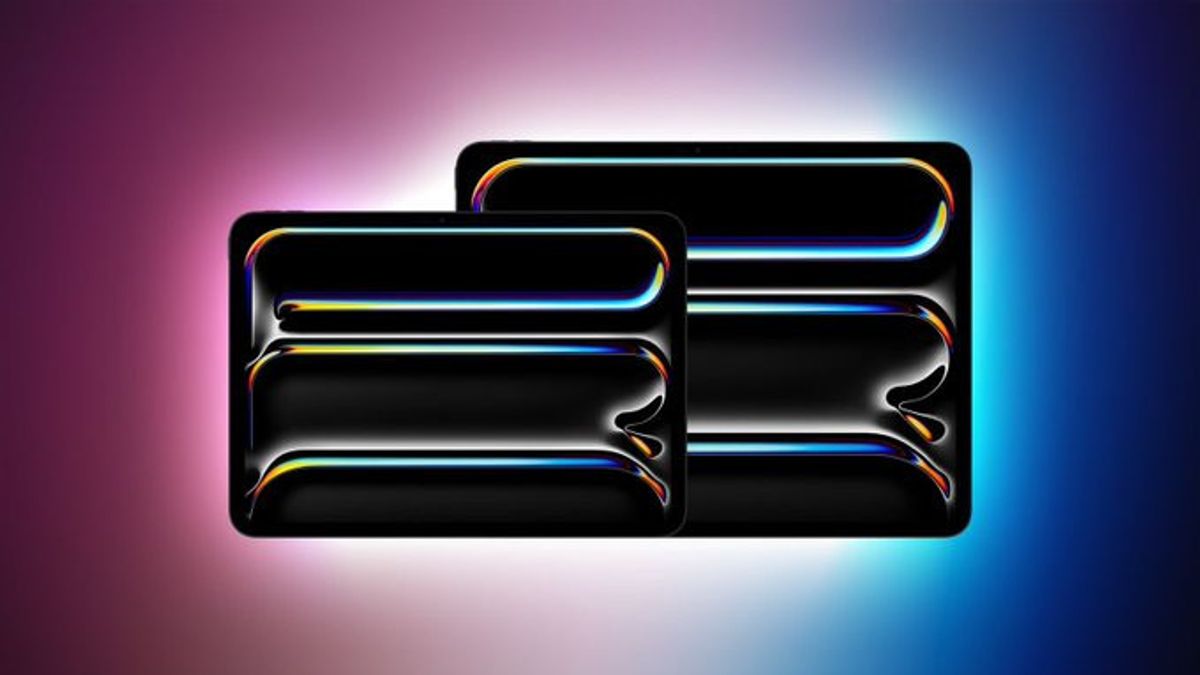


JAKARTA - The iPhone 20 is expected to get a more sophisticated screen if the development of the Tandem OLED panel from LG Display for this smartphone is successfully realized.
The OLED screen on the iPhone is now known to be bright and has high contrast, but there is still room for improvement. If claims regarding LG Display's plans are correct, these changes can come as soon as possible on the iPhone 20.
According to an industry source quoted by DealSite, LG Display is developing Tandem OLED technology so that it can be used on future generations of iPhones. The company has reportedly repeatedly recommended Apple to use the OLED Tandem on the iPhone line.
SEE ALSO:
-
 | TEKNOLOGI
Sony Buka Stan di Tokyo Game Show 2025, Ini Dua Gim yang akan Dipamerkan
27 Agustus 2025, 19:05 -
 | TEKNOLOGI
Gim Train Sim World 6 akan Hadir 30 September, Simulasi Kereta Api yang Realistis
27 Agustus 2025, 18:35 -
 | TEKNOLOGI
Apple Akan Hentikan Penjualan Tujuh Perangkat Ini Setelah Peluncuran Seri iPhone 17
27 Agustus 2025, 18:05 -
 | TEKNOLOGI
Turnamen Esports H3RO 6.0 Kembali Hadir, Siap Jaring Talenta Muda Indonesia
27 Agustus 2025, 17:32 -
 | TEKNOLOGI
Warga California Tuntut OpenAI dan Sam Altman, Tuduh ChatGPT Dorong Aksi Bunuh Diri
27 Agustus 2025, 17:05
One source said that LG is targeting to supply the Tandem OLED panel for the iPhone to be released in 2028, which is estimated to be the iPhone 20 series. However, the final decision remains in Apple's hands.
LG Display already produces panels with Tandem OLED technology, which Apple has used on the iPad Pro 2024.
It is possible that LG Display will also create a similar screen for the MacBook Pro, given the company's half-year report that it has created an ideal 14-inch Tandem OLED panel for laptops. However, rumors for the MacBook Pro 2026 say that the OLED panel will be supplied by the Samsung Display.
The publication from Korea does not yet have a strong track record of leaks or supply chain rumors compared to other media. However, this is not the only report that supports this news.
In early August, other Korean media also reported that LG Display had spoken to Apple about the Simpled Tandem OLED panel in 2024.
The Advantages Of The OLED Tandem
The use of the OLED Tandem screen offers several advantages for Apple compared to regular OLED panels.
As the name implies, the Tandem OLED panel has two OLED layers that are stacked with each other and work simultaneously. Because OLED is a screen technology that emits its own light without requiring backlight, the buildup of this layer is able to increase the amount of light produced by each pixel, while at the same time minimizing energy waste.
For users, this means that the screen display will become brighter with a higher level of contrast. In addition, at normal brightness levels, power consumption can also decrease.
The Simplified Tandem OLED variant has a similar design, but reduces the number of subpixels used to form each pixel. In the first layer there are red, green, and blue subpixels for each pixel, while the second layer only uses blue subpixels and voids for red and green.
This second version can produce higher brightness than single OLED panels, but simpler and cheaper to produce than the full OLED Tandem.
The English, Chinese, Japanese, Arabic, and French versions are automatically generated by the AI. So there may still be inaccuracies in translating, please always see Indonesian as our main language. (system supported by DigitalSiber.id)


