
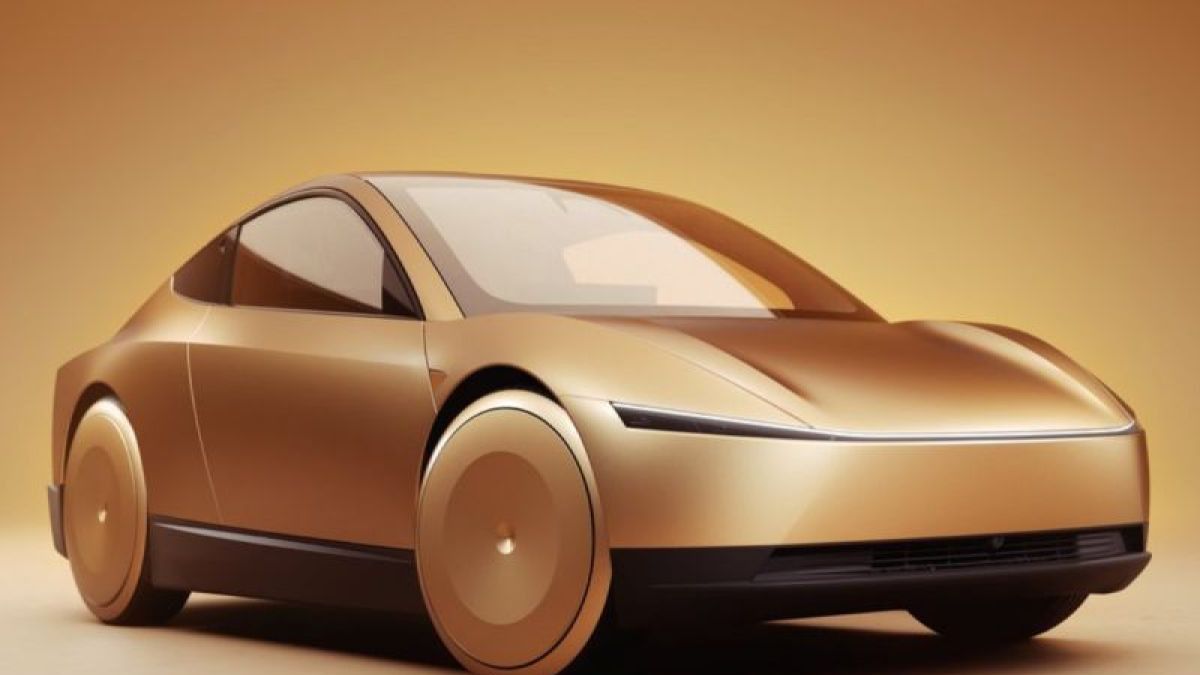


JAKARTA - Elon Musk has made another big breakthrough. The Tesla CEO announced that his company's driverless robotaxi service will start operating on June 22 in Austin, Texas.
In his post on social media, Musk called this service the most important product Tesla had ever made, although he still inserted notes that the launch date was still tentative.
Musk has spoken about robotaxi over the past nearly six years, promising a revolution of transportation through autonomous cars that can transport passengers without a driver. Currently, the promise is becoming increasingly urgent, given Tesla's drastic decline in sales and profits. In last year's financial report, Tesla's net income slumped 53% compared to 2023, reaching "only" US$ 7 billion (Rp113.6 trillion).
Despite the apparent confidence, the challenges faced are not small. Major competitors such as General Motors and Ford have stopped their autonomous car projects. GM, for example, withdrew due to high costs and tight competition, while Ford decided to stop efforts in this area completely. However, the real threat to Tesla may not be from a large company, but from Uber and Lyft drivers who still dominate app-based transportation services.
Bryant Walker Smith, a researcher from Stanford Law School, said that the main obstacle is not to technology, but to the economic aspect. According to him, it is difficult for companies that have to pay technicians, engineers and long-distance support to compete with Uber drivers who use their own vehicles and may receive wages below standard.
Even so, Musk remains confident. In a revenue call in April 2025, he said Tesla would dominate the robotic market by up to 99%. But in reality, Tesla currently doesn't have a single active robotaxi, while Waymo, Google's, is already operating in four major cities in the US with 250 thousand paid trips per week.
Waymo has recorded more than 10 million trips since the service began in 2020, and continues to grow rapidly. Even Uber is in partnership with Waymo in Austin, and plans to expand to Atlanta next year.
Safety issues remain a concern. Tesla still uses a Full Self-Driving (FSD) system that relies solely on cameras, without the help of a lidar sensor like the one Waymo uses. Musk once satirized lidar as stupid and hal', but many experts call lidar safer in detecting pedestrians and other obstacles on the road.
SEE ALSO:

The National Highway Traffic Safety Administration (NHTSA) is even investigating several accidents involving Tesla's FSD system, including a fatal incident when a vehicle hits a pedestrian on a road with low visibility.
Musk said that Tesla's robotaxi will use the Model Y model that is already circulating on the market. Meanwhile, a future version called Cybercab without steering wheel and pedals is planned to start production in 2026.
With great pressure on Tesla and Musk's reputation often too optimistic, many are still skeptical of this latest claim. GLJ Research analyst Gordon Johnson even said the launch would not be a real commercial launch, but only a proof of concept.
Bryant Walker Smith also doubts Musk's ability to fulfill his promise this time. "I don't know why anyone still believes in his statement," he said. We have to realize that the promised future has never really been realized by Tesla.
The English, Chinese, Japanese, Arabic, and French versions are automatically generated by the AI. So there may still be inaccuracies in translating, please always see Indonesian as our main language. (system supported by DigitalSiber.id)
Most Popular Tags
#Prabowo Subianto #donald trump #firearm #8791 #giias 2026Popular


