



JAKARTA - The ambition of Chinese car manufacturers to break into the top 10 sales ranks in Australia is increasingly visible. From established brands to newcomers, they all aim for market share that has been dominated by old players.
However, this aggressive expansion also demands "sacrifices" from brands that have taken root and the most affected are Japanese manufacturers. As reported by Drive, Saturday, December 27.
In 2024, the composition of the top 10 best-selling brands in Australia is still dominated by Japan, with five representatives, followed by two South Korean brands and two Chinese brands. Entering 2025, the competition map is predicted to change slightly, but the ratio of power has so far remained relatively stable.
Even so, Japanese manufacturers are beginning to show signs of resistance. The signal was clearly visible at the Tokyo Motor Show last October, Japanese brands showcased a portfolio that was not just a display.
Starting from mainstream compact cars, medium-sized off-road SUVs, hybrid and electric models, to premium vehicles. This choice is clearly not a coincidence, but a measured response to segments that have long been the "gold mine" of Chinese brands in the export market.
Mazda, for example, introduced a small crossover prepared for the European urban market. Toyota gave a glimpse of the direction of the next generation Corolla along with a flexible multi-powertrain platform.
Then Honda brought a compact electric SUV from its new EV division, while Mitsubishi challenged plug-in hybrid technology with a new concept that also touched on AI-based automatic driving capabilities. A number of other manufacturers also participated, some even showing more than one model, both production-ready versions and previews.
The range of technologies on offer is also broad: from internal combustion engines, conventional and plug-in hybrids, to pure electric vehicles. But in Australia, the challenge is real as Japanese brands have to face off directly with Chinese competitors who come with aggressive price tags.
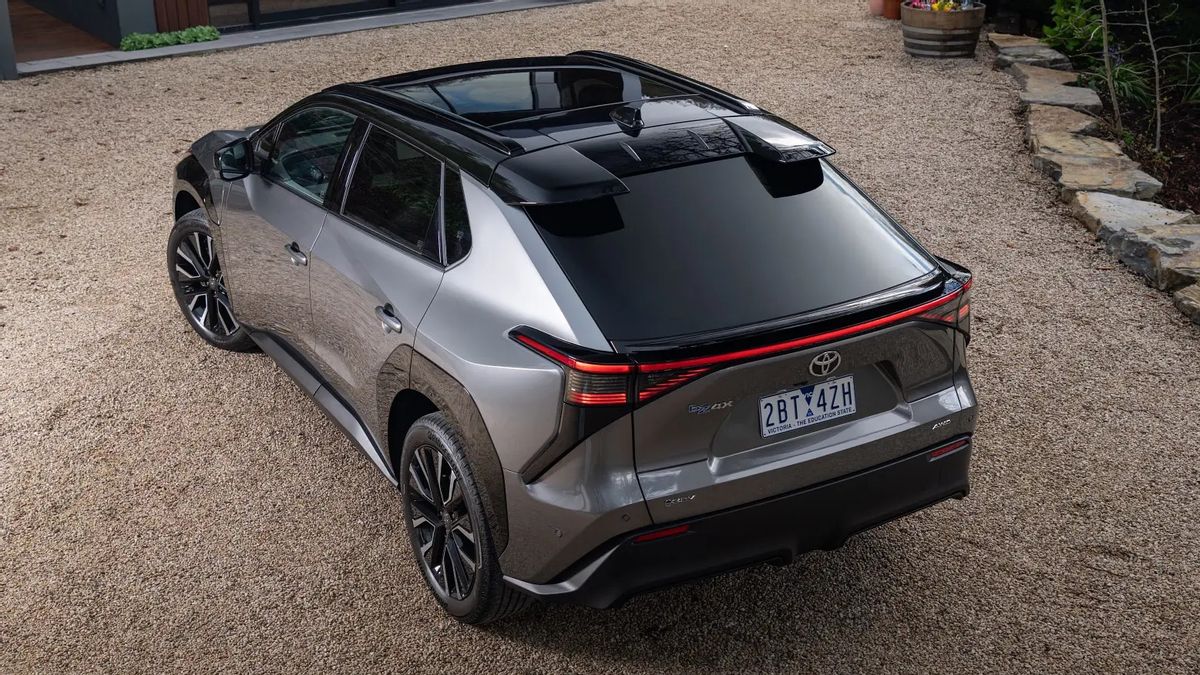
The Toyota bZ4X, which initially had a less biting bite, now has a significant mileage update as well as a price cut of up to 10,000 US dollars. Shortly thereafter, its twin version from Subaru, Solterra, also received similar technical improvements with a price adjustment of around 7,000 US dollars.
Mazda is also moving, the CX-60 which was launched in 2023 with a price range of 59,800-87,252 US dollars is now trimmed through the presence of a more affordable variant. The entry level price has dropped drastically, while the highest variant has also been repositioned, all of which are outside the on-road cost.
This price pressure comes from Chinese brands offering plug-in hybrid mid-size SUVs starting at $30,000 and electric cars under $40,000. This condition makes Japanese manufacturers almost certainly continue to make adjustments, although extreme cuts are considered risky for eroding the resale value of old consumers.
Toyota is now acknowledging the advantages of PHEVs, with a plug-in hybrid version of the RAV4 ready to launch and studies to revive the hybrid and PHEV Prius. Meanwhile, Mitsubishi's latest Outlander PHEV increases pure electric range to 103 km thanks to a larger battery to challenge models such as the BYD Sealion 6 and GWM Haval H6.
The after-sales strategy is also being accelerated, Honda is extending the warranty to strengthen the long-term ownership value. Meanwhile, Nissan launched a 10-year warranty program shortly after MG took similar steps.
The English, Chinese, Japanese, Arabic, and French versions are automatically generated by the AI. So there may still be inaccuracies in translating, please always see Indonesian as our main language. (system supported by DigitalSiber.id)
Most Popular Tags
#Prabowo Subianto #donald trump #2026 World Cup #Febrie Adriansyah #8791Popular


