
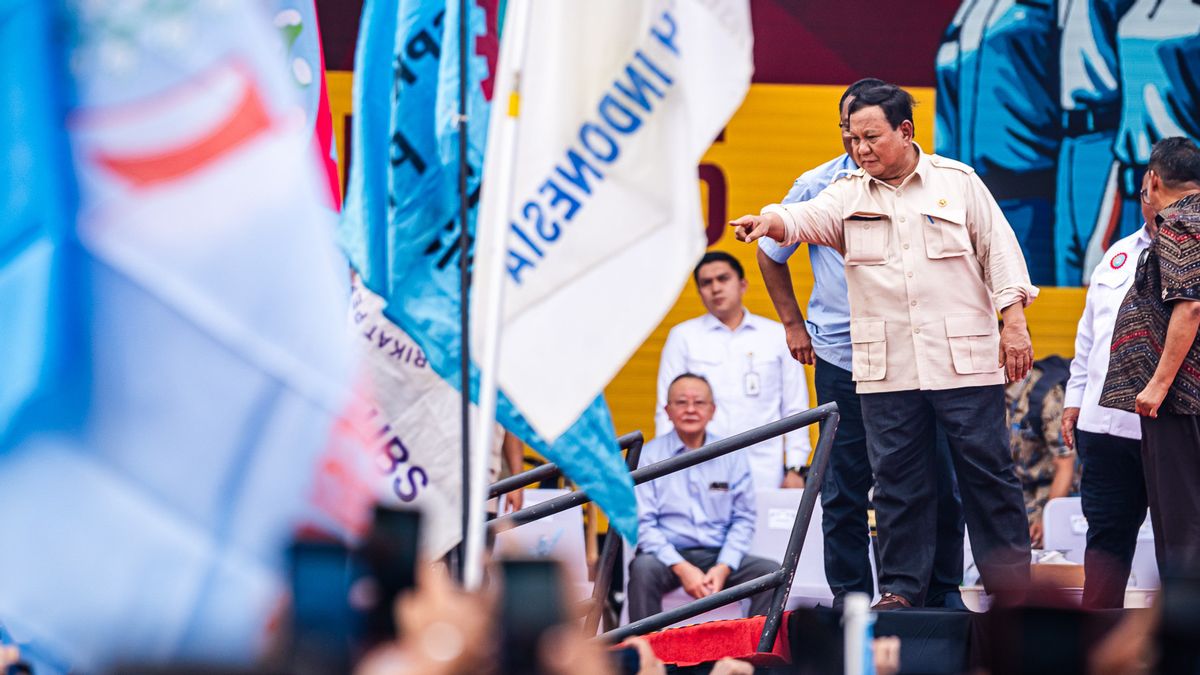


May 1, 2025. President Prabowo Subianto descended on the National Monument (Monas). This was no ordinary day. It was a rare day. No president since Sukarno had been present in person to celebrate Labor Day in the heart of the republic.
Prabowo Subianto took the podium. Smiling. Delivering a powerful speech. Promise after promise was launched. Eliminate outsourcing. Establish a Workers' Welfare Council. Layoff Task Force. Expedite the Domestic Workers Bill. Support for the Asset Confiscation Law.
And one rhetorical sentence: "I support Marsinah becoming a National Hero."
Noise. Applause. Cameras flashed. The media wrote. History seemed to come to life. But is it really alive?
Marsinah was kidnapped and murdered in May 1993. Tortured. Found in the forest, her body bruised. Because she demanded wages according to the minimum wage.
Thirty-two years have passed. Today, workers are still demanding the same things: a living wage and job security.
Based on BPS data (August 2024), the average worker's wage is only IDR 3.27 million per month. Compare that to the price of the cheapest house on the outskirts of the city. Or the price of rice, which has reached IDR 15,000–17,000 per kilogram. It's irrelevant.
On the other hand, as reported in various media, 59.17 percent of workers in Indonesia are informal workers. They have no contracts. They don't have BPJS (Social Security) insurance. They don't have legal protection. Outsourcing remains rampant. The contract system is becoming increasingly ruthless.
Prabowo Subianto promised to eliminate the outsourcing system. But this isn't the first time such a promise has been made. In 2012, President SBY even proposed reviewing the law governing outsourcing. This failed. In 2019, Jokowi promised worker protection. The Job Creation Law was passed, which actually expanded outsourcing.
Now, in 2025, the promise is being made again. But the numbers speak otherwise. The media reported that 18,610 workers had been laid off since early 2025. Said Iqbal from the Indonesian Labor Union (KSPI) said the actual figure could reach 60,000.
Meanwhile, according to an official statement from the Central Statistics Agency (BPS), the unemployment rate reached 4.91 percent in 2024. The government claims it wants to create jobs. But to date, there have been no concrete policies other than the promise of a labor-employer meeting at the Bogor Palace.
Marsinah is now an icon. Posters. Banners. Quotes. But the question is: will her designation as a National Hero change the fate of workers?
The answer seems to be no. Marsinah didn't die for awards. She died for wages. For a permanent employment contract. For the right to strike, which is protected by law. But today, workers are still afraid to demonstrate. They are still threatened with layoffs.
On the other hand, the government is promoting the idea of "workers owning shares." At first glance, it's appealing. But let's be realistic: how can workers buy shares if they can't even eat?
The economic conditions in 2025 are also unfavorable. Purchasing power is sluggish. Meanwhile, the vulnerable middle class is beginning to collapse, and workers remain a cushion.
The Minister of Manpower has called for Labor Day to be used as a momentum for collaboration. But what kind of collaboration is meant?
If collaboration means aligning the interests of workers and employers, then that's absurd. Employers want efficiency. Workers want a decent living. Compromise is difficult.
At Monas, labor unions praised President Prabowo Subianto. But outside the fence, thousands of workers still took to the streets. Carrying banners. Shouting. Sweating. Without cameras. Without protocol.
Also, thousands of digital workers, such as online motorcycle taxi drivers or content creators, are still categorized as workers—but not mentioned in the state address.
Marsinah may be in the history books. She deserves to be appreciated. But thousands of new Marsinahs may still fill the pages of forgotten lives.
The English, Chinese, Japanese, Arabic, and French versions are automatically generated by the AI. So there may still be inaccuracies in translating, please always see Indonesian as our main language. (system supported by DigitalSiber.id)
Most Popular Tags
#Prabowo Subianto #donald trump #earthquake #independence day #8791 #hut riPopular


