

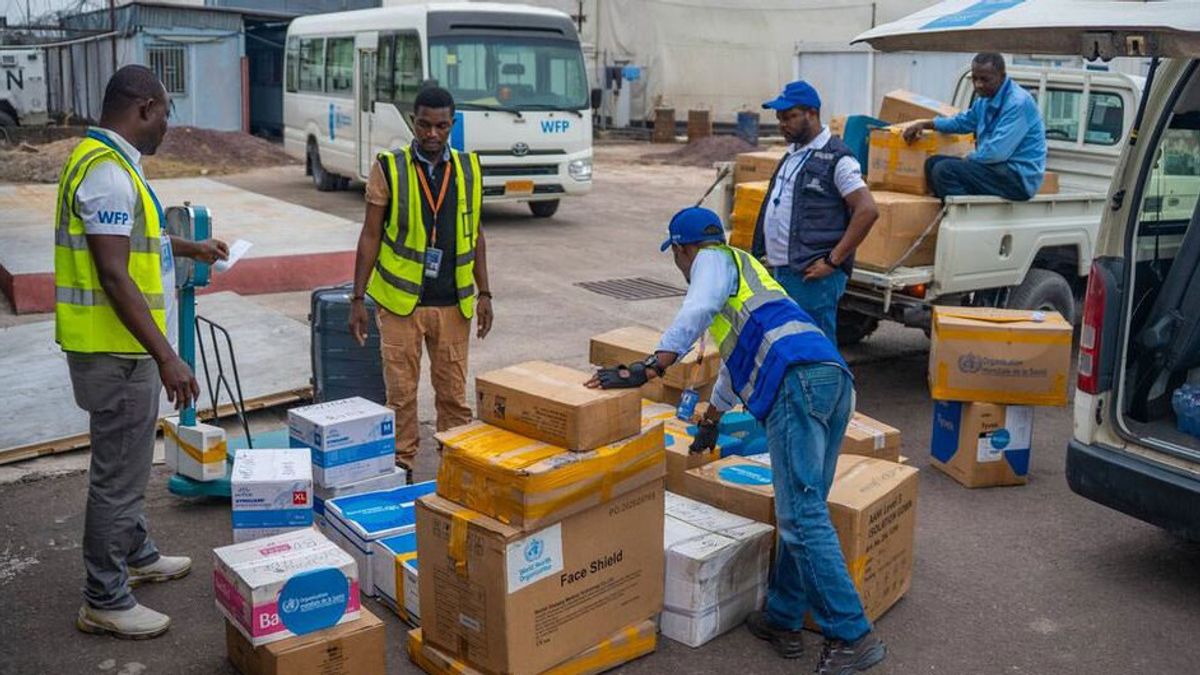


JAKARTA - Director-General of the World Health Organization (WHO) Tedros Adhanom Ghebreyesus warned that the increase in violence in the eastern part of the Democratic Republic of Congo (DRC) was exacerbating the Ebola outbreak and hindering humanitarian efforts to deal with the disease.
"Eastern DRC is now facing a devastating collision between disease and conflict," he wrote on X as reported by ANTARA from Anadolu, Thursday, May 28.
Tedros said the Ebola outbreak in Ituri Province was difficult to handle because the fighting and displacement hindered access to affected communities.
The outbreak involves the Bundibugyo Ebola strain, which currently has no approved vaccine or treatment. He warned that the ongoing clashes were forcing exposed people into overcrowded camps, allowing for wider transmission.
"Stopping the transmission of Ebola completely depends on humanitarian access," said Tedros.
Attacks on health facilities also make tracking infections and contacts "almost impossible", he said.
The WHO chief said frontline health workers were working while challenging extreme dangers as violence spread across the region.
"We cannot build public trust or isolate the sick while bombs are falling," Tedros wrote.
He urged all parties involved in the conflict to agree to an immediate ceasefire and allow "safe and sustainable access" for medical teams dealing with the outbreak.
"We plead that human survival be prioritized above all else," he said.
Violence in eastern DRC involves several armed groups, including the M23 rebels and the Cooperative for the Development of Congo militia, and has led to hundreds of thousands of civilians fleeing amid long-running ethnic and regional tensions.
Previously, health authorities warned that the Ebola outbreak continued to spread in parts of Africa, with neighboring countries also affected.
Ten countries, including Rwanda, Kenya, Tanzania, Angola, Burundi, the Central African Republic, the Republic of Congo, Ethiopia, South Sudan, and Zambia, are at risk of an Ebola outbreak - according to the Africa Center for Disease Control and Prevention.
The WHO also warned that although the risk of global spread remained low, the situation was being closely monitored due to the number of cases, infections among health workers, and outbreaks in urban areas.
The English, Chinese, Japanese, Arabic, and French versions are automatically generated by the AI. So there may still be inaccuracies in translating, please always see Indonesian as our main language. (system supported by DigitalSiber.id)
Most Popular Tags
#Prabowo Subianto #donald trump #firearm #8791 #giias 2026Popular


