
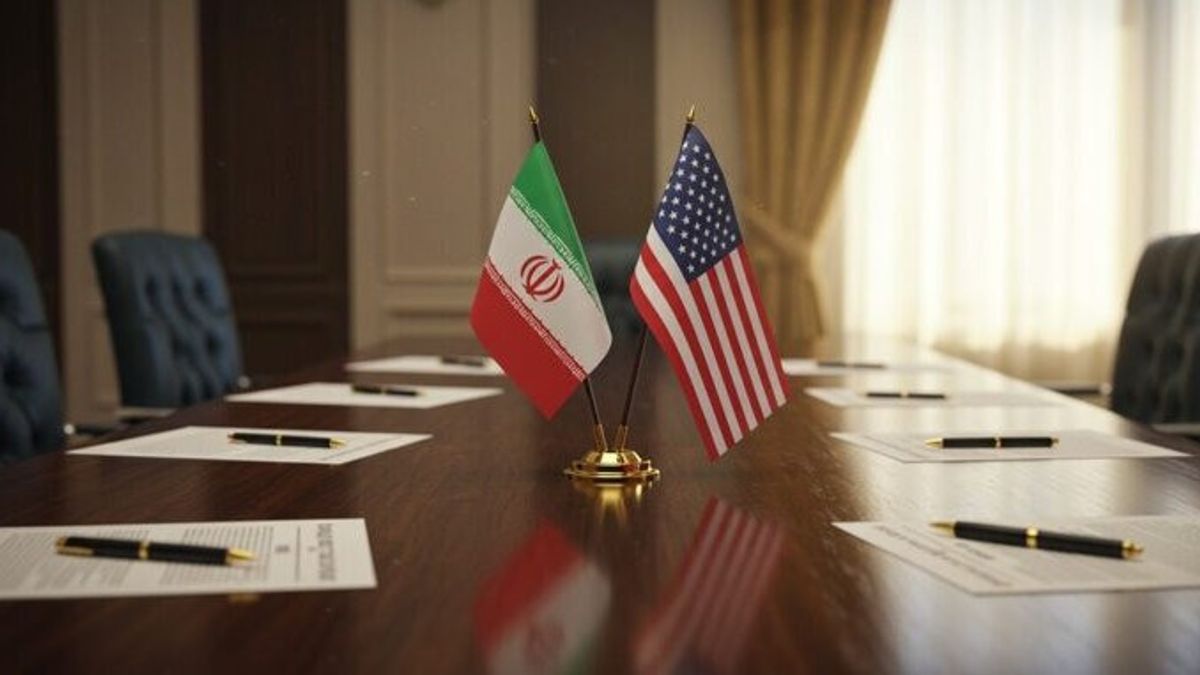


JAKARTA - President Donald Trump said on Sunday that Iran could contact the United States if it wanted to negotiate an end to the war between the two countries.
The United States and Iran are known to have not resumed direct negotiations sought by Pakistan, although last week President Trump last month announced an indefinite extension of the ceasefire, ahead of the expiration of the previous two-week ceasefire that ended on April 22.
"If they want to talk, they can come to us, or they can call us. You know, there's a phone. We have a good and secure channel," President Trump said in an interview on Fox News' "The Sunday Briefing" show, as reported by Al Arabiya from Reuters (27/).
Asked earlier whether the suspension of travel meant a return to open hostilities, President Trump said: "No, that's not what it means," he said.
Earlier, President Trump canceled a visit by his envoys Steve Witkoff and Jared Kushner to Pakistan on Saturday, which was a new setback for the prospects of peace, after Iranian Foreign Minister Abbas Araghchi left Islamabad after only speaking with Pakistani officials.
Minister of Foreign Affairs Araghchi then returned to Pakistan even though there was no US envoy.
However, as a sign of ongoing indirect efforts, the Fars news agency, which is linked to the Iranian government, reported that Iran had sent "written messages" to the United States through Pakistani mediators "containing some of the Islamic Republic of Iran's red lines, including the nuclear issue and the Strait of Hormuz."
However, the messages were not part of any negotiations, Fars said.
It is known that the US-Israel launched an attack on Tehran and a number of cities in Iran on February 28 which is estimated to have killed more than 3,375 people, including the late Supreme Leader Ayatollah Ali Khamenei and a number of other senior officials.
The Mullah State retaliated by carrying out attacks on Israeli territory and targeting a number of facilities related to Uncle Sam's State in a number of neighboring countries in the Middle East.
Although the ceasefire in the US-Israeli war with Iran that began on April 8 has so far held, the economic shockwaves from the war continue to reverberate around the world.
Iran has closed the Strait of Hormuz, cutting off supplies of oil, natural gas and fertilizers in bulk to global markets, causing prices to soar and raising fears of widespread famine across the developing world.
The English, Chinese, Japanese, Arabic, and French versions are automatically generated by the AI. So there may still be inaccuracies in translating, please always see Indonesian as our main language. (system supported by DigitalSiber.id)
Most Popular Tags
#Prabowo Subianto #donald trump #firearm #8791 #giias 2026Popular


