
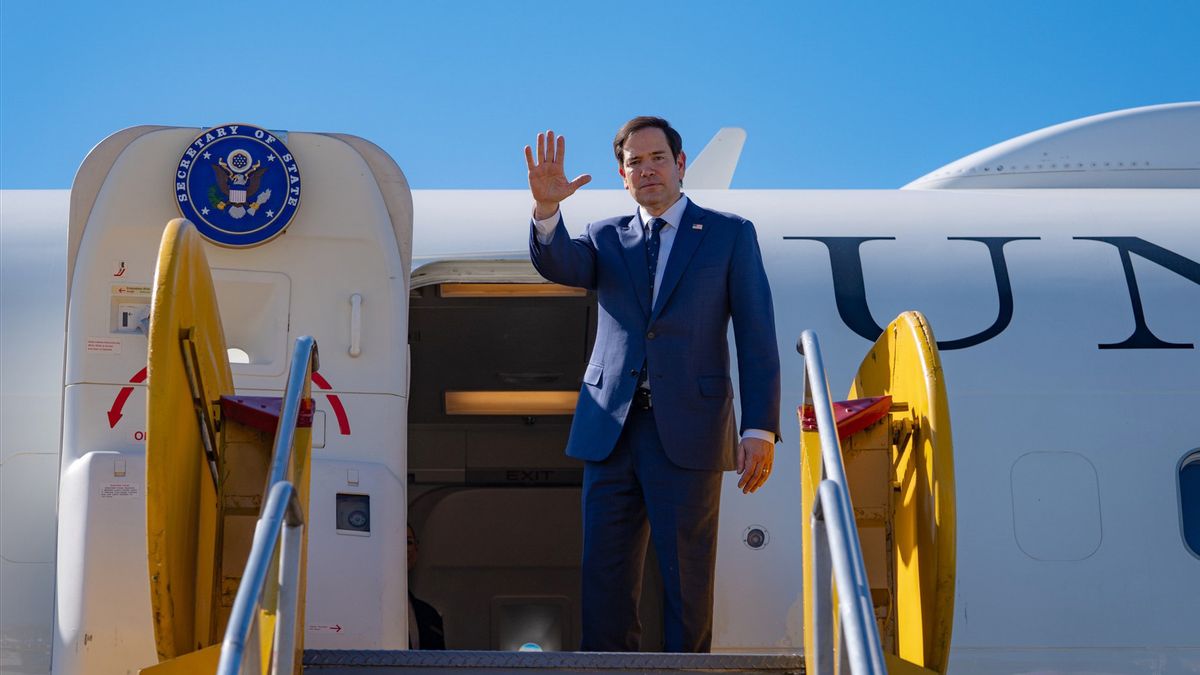


JAKARTA - The United States will secure a strong deal with Iran or face the country with 'other ways', said Secretary of State Marco Rubio after President Donald Trump dampened hopes of an agreement to end the war was imminent.
"We think there may be some news last night, maybe today. I wouldn't put too much faith in it," Foreign Minister Rubio said in New Delhi on Monday, referring to a potential deal to end the US-Israeli war in Iran, which began on February 28, launching Al Jazeera, AFP and Reuters (25/5).
"We have what I think is a pretty solid thing on the table in terms of their ability to open the strait, make the strait open," he told reporters in the Indian capital, where he was on an official visit.
Washington and Tehran have adhered to a ceasefire since April 8, while mediators are pushing for a settlement through negotiations even though Iran continues to block the Strait of Hormuz for most shipping and the US has blockaded Iranian ports.
On Sunday, President Trump wrote on Truth Social, the US blockade will "remain in full force until an agreement is reached, ratified, and signed."
"Both sides have to take their time and do it right," he added.
Meanwhile, in a press conference in Tehran on Monday, Foreign Ministry spokesman Esmaeil Baghaei said Iran and the US "have reached conclusions on most of the topics of discussion" but warned "this does not mean that the signing of an agreement will happen soon."
He also stressed that at this stage, Iran and the US have not "talked about nuclear issues" and their focus is "ending the war."
Baghaei reiterated, however, "there is no guarantee" the US will honor its commitments in any potential deal and said Tehran did not care about "threats."
He made the comments after Secretary of State Rubio warned the US would secure a "good deal" or find "another way."
"We will reach a good agreement, or we will have to settle it in another way. We prefer to reach a good agreement," said the US top diplomat.
As diplomacy intensified, officials from Pakistan, the main mediator, were in China on Monday. Prime Minister Shehbaz Sharif and Army Chief Field Marshal Asim Munir were in Beijing for talks with Chinese leaders, as Pakistani television showed on Monday.
China has said it will work with Pakistan to "make a positive contribution to the earliest restoration of peace and stability in the Middle East."
Marshal Munir was in Tehran last week with Home Minister Mohsin Naqvi as part of mediation efforts to end the war.
As news of the potential deal emerged, a senior Trump administration official outlined what he said were the latest outlines of the issues under negotiation.
Speaking on condition of anonymity, the official told Reuters Iran had agreed "in principle" to dump its high-enriched uranium and open the Strait of Hormuz in return for the lifting of a US naval blockade.
"The United States understands that Iran's Supreme Leader Mojtaba Khamenei has supported the framework of the agreement in general," he added.
There was no immediate confirmation from Iran or further explanation of what the deal "in principle" meant.
The US official said Washington envisioned first reopening the strait and lifting the US naval blockade. Negotiating the details of nuclear steps would take more time, he said.
The official denied Iran had not received the disposal of enriched uranium it had stockpiled.
"It's a matter of how," the official said.
The English, Chinese, Japanese, Arabic, and French versions are automatically generated by the AI. So there may still be inaccuracies in translating, please always see Indonesian as our main language. (system supported by DigitalSiber.id)
Most Popular Tags
#Prabowo Subianto #donald trump #Febrie Adriansyah #8791 #giias 2026Popular


