
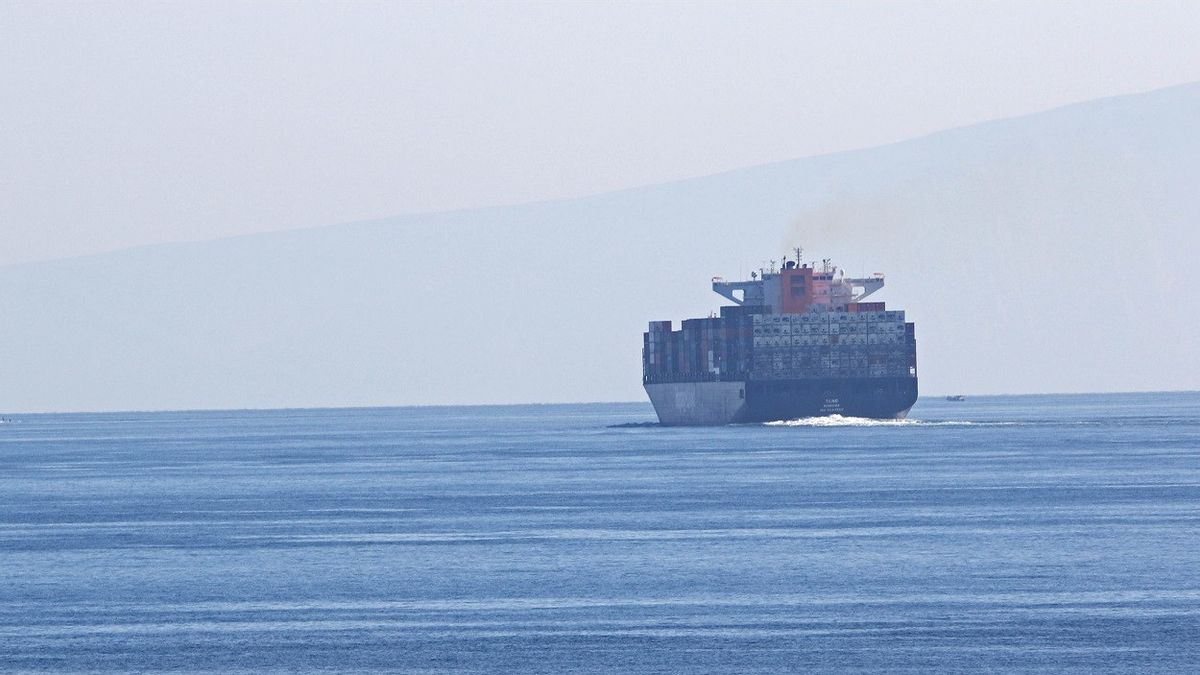


JAKARTA - The World Food Programme (WFP) said on Tuesday that conflicts in the Middle East had caused "the most significant supply chain disruption," affecting 70,000 tons of the agency's food.
"For us, this is the most significant supply chain disruption we have seen since COVID and the start of the war in Ukraine," Corinne Fleischer, director of supply chain, told reporters in Geneva, as reported by Anadolu (1/4).
Fleischer said the agency currently has "70,000 metric tons of food impacted by the war in the Middle East," with shipments delayed or held up in ports due to broader disruptions related to the Strait of Hormuz.
"This has a broad upstream effect on ships that are stuck in ports, not berthed in ports, not leaving ports, (and) containers are not unloaded," he said, describing "a thorough disruption of the global supply chain."
Fleischer further warned that the impact extends beyond the Middle East, with rerouting around Africa adding "about 25 to 30 days of delivery" and increasing costs "between 15 percent and 25 percent of the tariff."
He said WFP was working on obtaining priority cargo access and had negotiated additional cost relief, resulting in "cost savings of around 1.5 million US dollars to date."
However, he expressed concern over the increasing humanitarian needs.
"Our projection is that by June, another 45 million people will be in acute hunger," he said, warning of "more needs, higher costs, and our inability to reach people" with the current low level of funding for humanitarian operations.
Fleischer concluded that all of these higher costs and necessary route shifts are having an impact on rising food prices everywhere, calling it a "major concern."
It is known that the US and Israel launched an attack on Iran on February 28, killing more than 1,340 people, including the late Supreme Leader of Iran Ayatollah Ali Khamenei, triggering tensions in the Middle East.
In response, the State of the Mullahs retaliated with drone strikes and missiles targeting Israel, along with Jordan, Iraq, and Gulf states hosting US military assets, causing casualties and infrastructure damage and disrupting global markets and flights, including tight control of the vital Strait of Hormuz through which 20 percent of the world's crude oil and liquefied natural gas pass.
The English, Chinese, Japanese, Arabic, and French versions are automatically generated by the AI. So there may still be inaccuracies in translating, please always see Indonesian as our main language. (system supported by DigitalSiber.id)
Most Popular Tags
#Prabowo Subianto #donald trump #2026 World Cup #Febrie Adriansyah #8791Popular


