


JAKARTA - Member of Commission IX of the House of Representatives, Nurhadi, highlighted the condition of residents of Kaliabang, Bekasi, West Java who live every day in the midst of coal dust from a surrounding factory. He also urged the Environment Agency (DLH) to monitor air quality regularly, giving strict sanctions to factories that violate.
"I am very concerned about hearing the complaints of Kaliabang residents who are constantly living in the middle of coal ash from a surrounding factory. I urge the local government, especially the Environment Agency (DLH), to act more decisively immediately," Nurhadi told reporters, Thursday, November 20.
"This includes monitoring the air quality regularly, giving sanctions to factories or violating parties, and ensuring that there is a health protection mechanism for affected residents," he continued.
The member of the Commission in charge of health emphasized that the dust caused by coal needed to be addressed immediately because it could have an impact on public health.
"This is not just a matter of dirt, but can have a serious impact on public health," said Nurhadi.
Nurhadi also reminded that coal dust contains fine particles and toxic substances that can irritate the respiratory tract, trigger cough, shortness of breath, and even infection.
Many studies have indeed linked coal dust exposure to respiratory problems and the risk of chronic lung disease, he said.
Meanwhile, from an environmental perspective, according to Nurhadi, this pollution also damages the quality of air to tana which can affect the quality of life of the surrounding community.
"This dust pollution damages the quality of the air, soil, and residential environments. Sustainability of life in areas such as Kaliabang must be seen from the health point of view of residents, not only from the economic side of the factory," said Nurhadi.
If it continues, he assesses that pollution due to coal dust in Bekasi can suppress the quality of life of the community and burden the health system in the future.
Not to mention the social and psychological issues that can affect the lives of local residents. So the government, especially the local government, must immediately address this issue," concluded Nurhadi.
As is known, residents of Kaliabang, Bekasi, have been living side by side with black dust deposited on the floor of the house, attached to the wall, and even littered their skin.
SEE ALSO:
-
 | BERITA
Tenang, Produk Lokal Bebas Cesium-137! BPOM dan BRIN Awasi Ketat Pasar Domestik
12 November 2025, 16:50 -
 | KESEHATAN
Marak Suntik Toksin Botulinum Ilegal, Dokter dan BPOM Minta Masyarakat Waspada
15 November 2025, 20:15
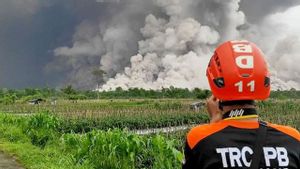

This dust is thought to have originated from coal burning activities at a nearby factory, which appeared to be missing following the wind and weather conditions. When it rains, the dust temporarily disappears, but comes back when the weather is dry and the wind blows.
Some residents reported that almost all parts of their houses were exposed to dust, from tiles, furniture, to walls. These complaints also cause problems with health, including skin irritation.
The English, Chinese, Japanese, Arabic, and French versions are automatically generated by the AI. So there may still be inaccuracies in translating, please always see Indonesian as our main language. (system supported by DigitalSiber.id)


