

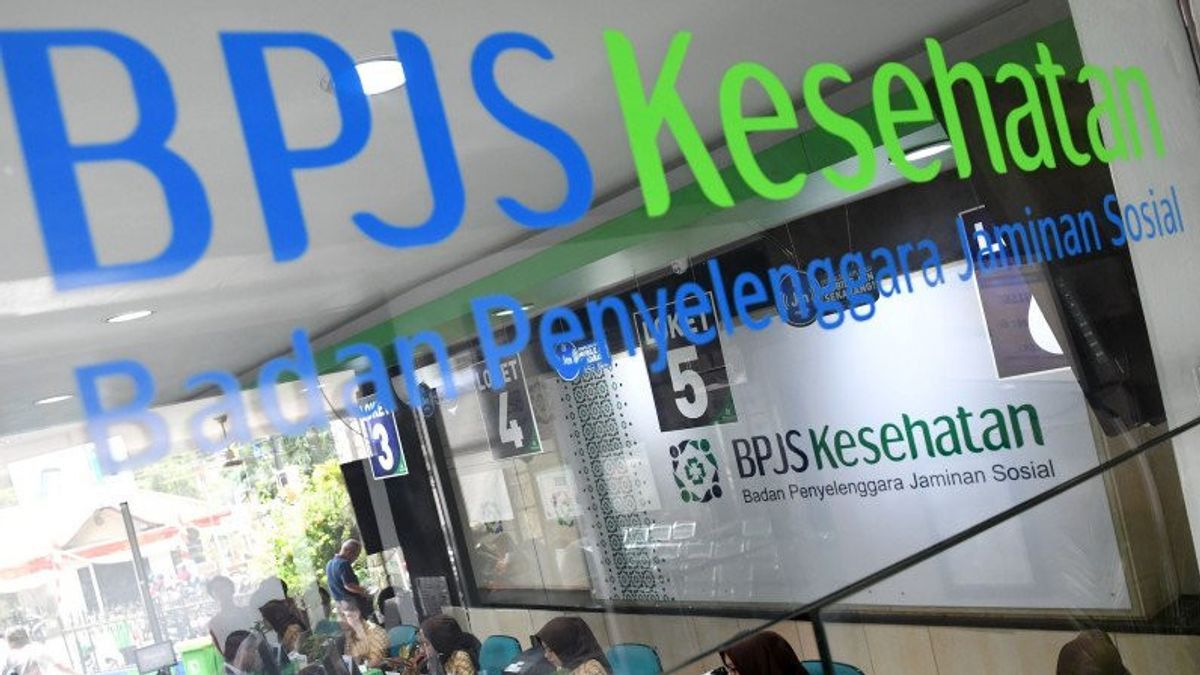


JAKARTA - Member of Commission IX of the Indonesian House of Representatives, Netty Prasetiyani Aher, assessed that the government's plan to bleach BPJS Health arrears worth Rp. 10 trillion, is an important step in maintaining the continuity of the National Health Insurance (JKN) program.
However, he reminded that the bleaching policy was prepared with the principle of strong justice and the assistance was right on target for the underprivileged without ignoring participants who had been disciplined in paying dues.
"The principle of social justice must be maintained. Participants who really cannot afford it must of course be assisted, but the government also needs to ensure that this policy does not dampen the spirit of compliance of other participants," said Netty to reporters, Wednesday, October 22.
Netty explained that the arrears in accumulated contributions mainly came from independent participants or Non-Wage Recipient Workers (PBPU) who had not routinely paid dues. This is an important signal that the payment system for informal groups needs to be improved, given that there is no automatic cut mechanism.
"This arrears problem is not only a matter of economic ability, but also awareness and literacy. The government and BPJS need to strengthen public education so that people understand that contributions are a form of mutual cooperation in maintaining common health," explained Netty.
The member of the DPR's health commission also welcomed the government's policy of easing the burden on participants who were really vulnerable. Even so, said Netty, certainty is needed that the implementation must be accompanied by strict and transparent data verification in order to avoid potential abuse.
"Customs may be carried out for those who are not able to afford it, but participant data that gets relief must be verified properly and openly. The government must ensure that there is no potential for abuse or fraud in the process of eliminating arrears," he said.
In addition, Netty encouraged BPJS Kesehatan to continue to innovate in expanding service access and simplifying the payment system through digitization and data integration with local governments. He reminded that bleaching arrears does not mean removing participants' responsibilities, but a humanitarian effort that must be accompanied by systemic improvements so that the JKN program remains sustainable and fair for all parties.
SEE ALSO:
-
 | BERITA
Dalam Sepekan, Pemukim Israel 71 Kali Lakukan Serangan di Tepi Barat
22 Oktober 2025, 01:01 -
 | LIFESTYLE
Kronologi Perampokan Museum Louvre, Permata Tak Ternilai Raib dalam Waktu 4 Menit
22 Oktober 2025, 00:25

"BPJS Kesehatan is an important instrument for national social protection. Therefore, every policy taken must ensure program sustainability, uphold justice, and be free from fraud (fraud) practices," concluded Netty.
For information, the decision regarding the bleaching plan will be conveyed directly by President Prabowo Subianto or the Coordinating Minister for Community Empowerment (Menko PM) after discussions at the government level.
The English, Chinese, Japanese, Arabic, and French versions are automatically generated by the AI. So there may still be inaccuracies in translating, please always see Indonesian as our main language. (system supported by DigitalSiber.id)


