
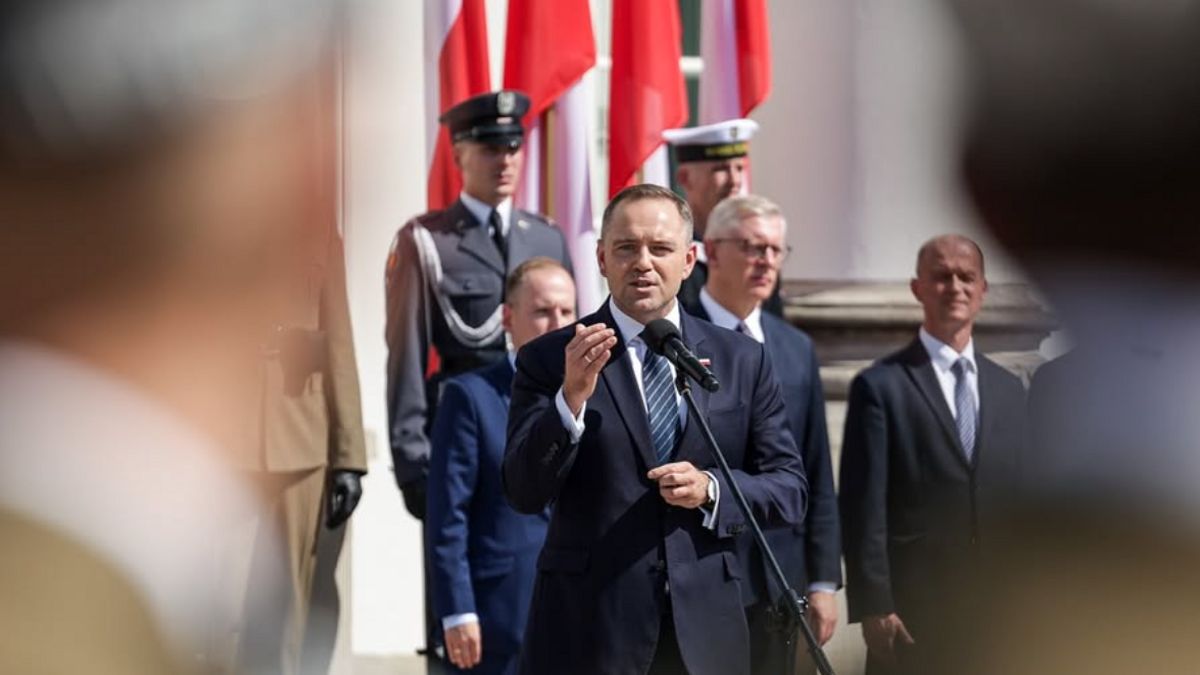


JAKARTA - Polish President Karol Nawrocki announced plans to limit Ukrainians' access to child support and health services, as well as propose a glorification ban on Ukrainian nationalist leaders in the 20th century, as a sign of a strong stance on refugees.
Poland has been one of Ukraine's loyal supporters since Russia invaded in 2022.
But some Polish citizens are getting bored with the large number of refugees, while tensions between Warsaw and Kyiv over the massacre of Volhynia in World War II sometimes surface.
Official data shows about 1.5 million Ukrainians currently live in Poland.
President Karol Nawrocki has pledged during his election campaign this year to prioritize "Polish residents" and limit the rights of foreign nationals in Poland.
"I have not changed my opinion and I intend to fulfill my obligations and I believe that allowances (family) may only be given to Ukrainians trying to work in Poland, as well as health services," he told reporters.
Ukrainian refugees are currently entitled to receive a monthly family allowance of 800 zloty ($219) per child if their children attend Polish school.
Other EU countries such as Germany have also recently proposed cutting benefits.
In Poland, the president can propose a bill and veto the government law.
The government, which is currently led by Prime Minister Donald Tusk, a pro-EU centrist who opposes Nawrocki, can also block the president's proposal, thus creating a deadlock.
Nawrocki also proposed tightening criminal laws to ban the promotion of Stepan Bandera, a Ukrainian nationalist leader who fought Nazi and Soviet forces during World War II, and his rebel forces.
"I believe this bill should clearly discuss Bandera and equate the symbol of Bandera in criminal law with symbols related to German National Socialism, commonly known as Nazism, and Soviet communism," said Nawrocki.
SEE ALSO:
-
 | BERITA
Serangan di RS Nasser Gaza Tewaskan 20 Orang Termasuk 5 Jurnalis, Ini Penjelasan Israel
25 Agustus 2025, 18:27 -
 | BERITA
Empat Mayat Ditemukan di Sungai Seine Paris, Pelaku Pembunuhan Ditangkap
25 Agustus 2025, 18:06 -
 | BERITA
Jerman Dakwa Warga Amerika yang Tawarkan Informasi Militer AS ke Intelijen China
25 Agustus 2025, 17:40
Many Ukrainians regard Bandera and its militias as heroes for their resistance to the Soviet Union and as a symbol of Kyiv's heavy struggle to be free from Moscow.
However, he is remembered by many people in Poland as a symbol of anti-Poland violence. Bandera is linked to the Ukrainian Rebel Army (UPA), which Warsaw said carried out the mass killing of Polish civilians in 1943-1944, especially in Volhynia.
Thousands of Ukrainians have also died in retaliatory killings.
Promoting the idea of Nazis, fascists, or communists in public can face up to 3 years in prison under Polish criminal law.
The English, Chinese, Japanese, Arabic, and French versions are automatically generated by the AI. So there may still be inaccuracies in translating, please always see Indonesian as our main language. (system supported by DigitalSiber.id)
Most Popular Tags
#Prabowo Subianto #donald trump #2026 World Cup #Febrie Adriansyah #8791Popular


