

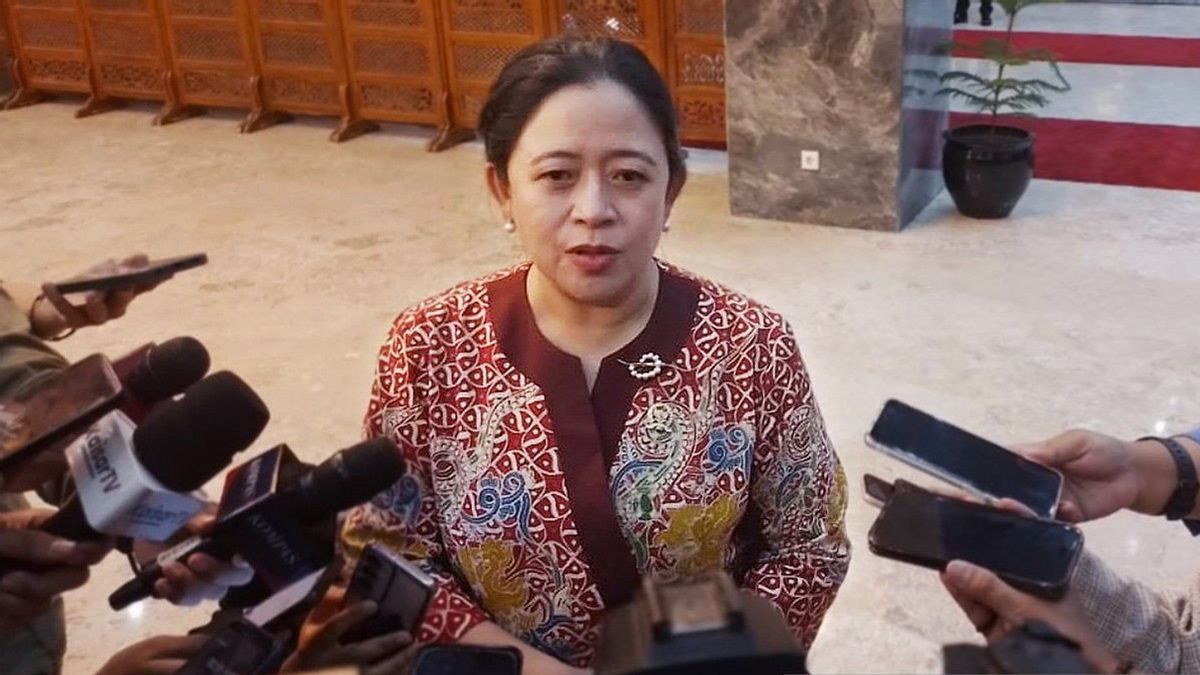


JAKARTA - Chairman of the Indonesian House of Representatives, Puan Maharani, highlighted the heroic action of Dona Lubis, a midwife from the Duo Koto Health Center, Pasaman Regency, West Sumatra, who was desperate to cross a swift river to deliver medicine to TB patients. Puan assessed that this action showed a lack of equitable infrastructure development in the regions.
"The dedication like that of Mrs. Dona deserves respect, but we have to be honest that the state cannot allow medical personnel to replace the responsibility of basic infrastructure that has not been present," said Puan in her statement, Wednesday, August 6.
Previously, a viral video that recorded a midwife named Dona Lubis (46) from Pasaman Regency, West Sumatra, crossing the swift flow of the Batang Pasaman River without a connecting bridge. It was stated that the 15 meter long bridge had been cut off since Friday, August 1, thus making access to the Sinuangon Gorongan, Nagari Cubandak Barat, completely cut off.
Puan appreciated Dona's courage and dedication as a health worker. However, according to him, individual courage should not cover the gap or lack of state services to the community, especially in the context of health services in remote areas.
"Equivalent and safe health access is the right of every citizen, which should be the responsibility of the state," said Puan.
The former Coordinating Minister for Human Development and Culture assessed that what Dona Lubis did was a real reflection that there are still many vulnerable points in this republic that have not received guarantees of adequate connectivity and health services. Puan encourages the Government to further maximize equitable development in the country.
"When a bridge is damaged, the access to health facilities is cut off, so what is disturbed is not only the logistics channel, but the potential loss of human life," said Puan.
It's not just a matter of one midwife or one patient. It's a matter of the system. It's a matter of justice development. We have to make sure that infrastructure and health programs really touch areas that need it the most," he continued.
Therefore, Puan urged the central and regional governments to take concrete steps, such as strengthening the budget for infrastructure development connecting health facilities in vulnerable areas and 3T (lagging behind, leading, outermost).
"Including the preparation of risk maps for health services areas, to identify critical points for access and distribution of medical personnel. As well as guarantees for the safety and protection of jobs for field medical personnel, and emergency transportation systems that can reach difficult locations must be completed," said Puan.
SEE ALSO:
-
 | OLAHRAGA
Penalti Tekanan Ban Dianggap Memberatkan, Marc Marquez Minta Aturan MotoGP Diubah
05 Agustus 2025, 23:40

Puan ensured that the Indonesian House of Representatives through related commissions would strictly oversee the allocation of budgets and the effectiveness of implementing cross-ministerial policies, including the Ministry of Health, the Ministry of Public Works, and the Ministry of Home Affairs.
"We in the DPR will ensure that the health budget and infrastructure are not only large at the center, but really reach the edges of this republic, where residents still need a healthy and safe life," he concluded.
The English, Chinese, Japanese, Arabic, and French versions are automatically generated by the AI. So there may still be inaccuracies in translating, please always see Indonesian as our main language. (system supported by DigitalSiber.id)
Most Popular Tags
#Prabowo Subianto #donald trump #2026 World Cup #Febrie Adriansyah #8791Popular


