

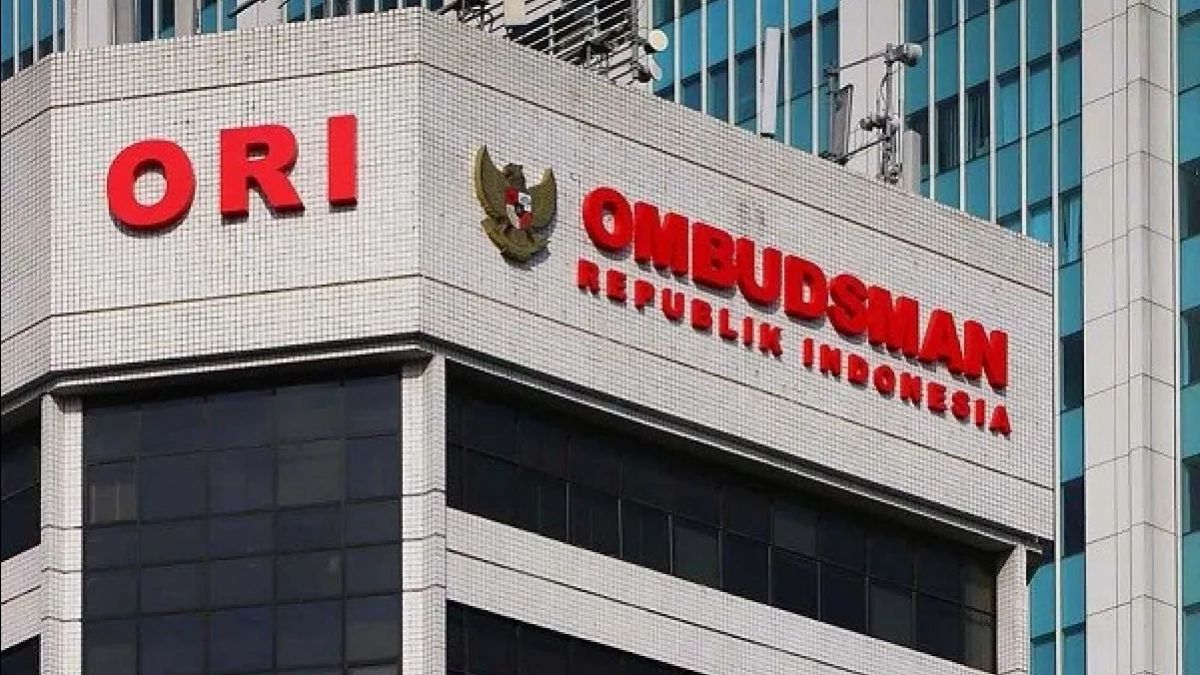


The Indonesian Ombudsman emphasized that hospitals (RS) refuse or repatriate patients who still need medical help is a form of maladministration of health services.
This statement was in response to the rise of cases of rejection and forced repatriation of patients from the Health Social Security Administration (BPJS) by the hospital, which according to him is the peak of the iceberg regarding the quality of national health insurance in the country.
"Health facilities clearly violate regulations if they reject patients in an emergency condition, referring to Article 174 paragraph (2) of Law Number 17 of 2023 concerning Health," said Ombudsman member Robert Na Endi Jaweng, as confirmed in Jakarta, Monday, June 16, quoted by Antara.
Therefore, the Ombudsman received various complaints and consultations regarding the rejection and protracted delay of emergency services, did not provide timely inpatient services, up to the time quota and discrimination of medical services experienced by BPJS patients.
He argues that these various problems at the estuary are detrimental to the patient, even to the point that some have died.
For this reason, Robert conveyed several things that must be improved and must stand on the awareness that public fate is the center of the work paradigm of the central government and local governments as well as BPJS and health centers or hospitals.
In addition, it is stated that it must also be remembered that the highest law in public services is the safety of the people, including and especially the safety of the lives of every patient in health services.
He said there were at least four points of improvement recommended by the Ombudsman. First, the central government and local governments must be firm in law enforcement and the application of administrative sanctions to hospitals that refuse or force patients forced to return home.
Referring to the Regulation of the Minister of Health (Permenkes) Number 47 of 2018, he revealed that no hospital argument could be able to premature repatriate patients or time limit (quote) for the number of service days.
"Patients in the green triage category must also be in a condition that does not require treatment, then they can be allowed to go home," he said.
The second point, BPJS Kesehatan must ensure and continuously educate partner hospitals that emergency services are borne by BPJS Kesehatan.
The reason, said Robert, is that hospitals that refuse or force patients to return patients often reason that some medical services or emergency services are not covered by BPJS Health financing or are the reason for pending-claim or claims that have been delayed so far.
In fact, it is said that Presidential Regulation (Perpres) Number 82 of 2018 clearly regulates emergency criteria, including those stipulated by authorized medical personnel. This means that patients with emergency conditions are fully protected by the National Health Insurance (JKN) facility.
Third, local governments are asked to take action against Health Human Resources (HRK) who are negligent in providing patient services in emergency conditions because the quality of human resources determines the health condition of patients.
"The local government must be able to ensure competent and human safety-oriented human resources. Periodic evaluations can be carried out through hospital audits, periodic inspections, monitoring of patient satisfaction, and so on," said Robert asserted.
SEE ALSO:
-
 | BERITA
KPK Panggil Kepala BPH Migas Terkait Dugaan Korupsi Jual Beli Gas PT PGN
16 Juni 2025, 14:13



He added that the fourth point, namely the Hospital Accreditation Committee (KARS) needs to consider renewal of hospital accreditation that is problematic.
According to him, hospitals with a track record of refusing or repatriating patients must improve service quality before they can increase their accreditation, with hospital benchmarks for carrying out audit results and suggestions for improving other supervisory agencies because accreditation is also a reflection of public reputation and trust.
He also reminded that one of the incidents of the hospital refusing to die in Padang, West Sumatra some time ago, has been a reflection of the failure of the health service system. It was explained that similar cases occurred many but should not be repeated.
Therefore, the Ombudsman appealed to the public to submit complaints or reports if they experienced or witnessed the maladministration of health services through various official Ombudsman channels available at the center and representative offices in 34 provinces.
The English, Chinese, Japanese, Arabic, and French versions are automatically generated by the AI. So there may still be inaccuracies in translating, please always see Indonesian as our main language. (system supported by DigitalSiber.id)


