


JAKARTA - General Chairperson (Ketum) of the Retired Armed Forces of the Republic of Indonesia (Pepabri) General (Ret.) TNI Agum Gumelar revealed that the TNI or ABRI's assignment to civilian positions deviated during the New Order era.
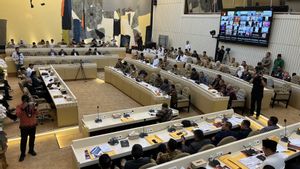
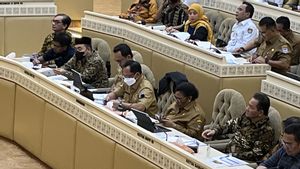
When discussing the Draft Law (RUU) on the TNI with Commission I of the DPR RI in Jakarta, Monday, Agum revealed that in ancient times, the placement of the TNI in civilian positions had the term "work assignment".
According to him, the assignment was based on civil demand, but became increasingly deviated from the original goal.
"This is where things that deviate from the request that was the basis for the assignment of an ABRI officer in a civilian agency were engineered. The approach that occurred at that time during the New Order era became welfare," said Agum at the Parliament Complex, Jakarta, Monday, March 10, was confiscated by Antara.
Agum gave an example during that era, there were aspirations from the people in a district who wanted regional heads from ABRI elements. The aspirations were then channeled to military headquarters and the requests were then followed up
"So a member is determined after a rigorous selection to meet the expectations of the community there, the personnel are given to be processed for work assignments. So, basically, the request without a request is that there is no work assignment," he said.
SEE ALSO:
-
 | BERITA
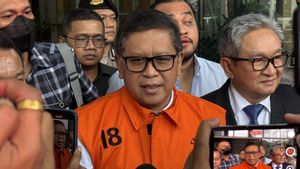
Kubu Hasto Soal KPK Percepat Pemberkasan: Mungkin Takut Kalah Praperadilan
10 Maret 2025, 13:15 -
 | BERITA
2 Daerah Kurang Dana PSU Pilkada 2024: Kabupaten Pasaman dan Boven Digoel
10 Maret 2025, 12:51
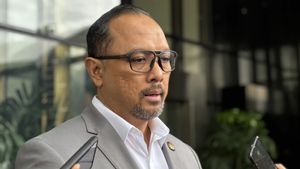
From time to time, he revealed that various engineering requests had occurred, causing many TNIs to fill civilian positions.
According to him, ABRI's duality that occurs during the new order is the wrong work assignment system.
"So the wisest attitude at that time was to take the glass, reflect in front of a large glass, why are we (ABRI) being cursed by the people," he said.
Regarding the TNI Bill, Agum ensured that Pepabri would greatly highlight the discussion.
However, he also considered that the TNI's duality would not rise again because it happened when ABRI elements took part in filling the social and political situation after independence.
The English, Chinese, Japanese, Arabic, and French versions are automatically generated by the AI. So there may still be inaccuracies in translating, please always see Indonesian as our main language. (system supported by DigitalSiber.id)
Most Popular Tags
#Prabowo Subianto #donald trump #Febrie Adriansyah #8791 #giias 2026Popular


