


JAKARTA - Indonesia has officially received an Indigenous Cultural Heritage Certificate (ICH) from the United Nations Educational, Scientific and Cultural Organization (UNESCO) for reog, kolintang, and kebaya.
Three cultural elements were already stipulated in the Meeting of the Intergovernmental Committee on the 19th Intangible Cultural Heritage in Paraguay in December 2024.
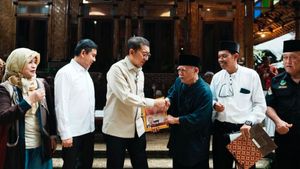
This ICH certificate was handed over by the Ministry of Foreign Affairs to the Ministry of Culture at the National Museum of Indonesia, Central Jakarta, witnessed by representatives of ASEAN Africa, local governments, cultural communities, and diplomatic partners.
Then, the original certificate was submitted to the National Archives of the Republic of Indonesia (ANRI), while a copy was given to local and community governments.
Endah TD Retnoastuti as Director General of Diplomacy, Promotion, and Culture Cooperation said that the submission of this certificate was intended so that the three cultural elements were not only limited as cultural heritage', but could continue to live in society.
"Our hope is that the three Intangible Cultural Heritages, after being handed over and have been included in UNESCO, will continue to be preserved and also continue to be developed, and also used by the surrounding community to become a cultural industry," said Endah, when met after the event at the Indonesian National Museum, Tuesday, December 2.
Endah also emphasized the importance of Indonesia to maintain ICH Certificates for reog, kolintang, and kebaya.
UNESCO's own recognition marks an important milestone in Indonesian cultural diplomacy. Furthermore, the collective commitment of the government and society is required to ensure that these three justuhung traditions remain alive, relevant, and continue as part of the nation's collective memory.
SEE ALSO:
-
 | BERITA
Indonesia Terpilih Sebagai Anggota Dewan Eksekutif IOC dan Komite MOST UNESCO
15 November 2025, 09:00 -
 | BERITA
Museum Semedo Resmi Dibuka, Fadli Zon Tekankan Pentingnya Temuan Homo Erectus
03 Desember 2025, 08:15
"When these various traditions and expressions have been transcribed at UNESCO, we must continue to provide reports. So, from year to year we make reports and we continue to encourage local governments and communities to keep what has been included in UNESCO continues to be carried out," said Endah. Because if not, one day the award from UNESCO will be revoked.
In addition, Tri Tharyat as Director General of Multilateral Affairs from the Ministry of Foreign Affairs emphasized that UNESCO's recognition confirmed the nation's identity to strengthen national cultural character.
"This is proof of world respect for artists in the village and the younger generation who maintain the tradition of living heritage," concluded Tri Tharyat.
The English, Chinese, Japanese, Arabic, and French versions are automatically generated by the AI. So there may still be inaccuracies in translating, please always see Indonesian as our main language. (system supported by DigitalSiber.id)
Most Popular Tags
#Prabowo Subianto #donald trump #firearm #8791 #giias 2026Popular


