


JAKARTA - Arguments related to the governance of music royalties have come to the point of capturing the attention of the wider community. Many parties began to show fear of simply playing songs in their place of business, until cafe musicians were afraid to cover up more well-known musicians' songs.
The question of demanding or singer vs songwriters has indeed caused a commotion, unrest and even fear. However, the fuss about royalties is at least a momentum for improving governance, which so far the process has not been clearly seen by the public.
The urge to audit LMK is getting louder. Likewise, with the hope of transparency in royalty management, more and more musicians and songwriters have spoken.
This issue was brought to a increasingly serious realm, until LMK was frozen temporarily. LMKN is the focus on cleaning up the essence of music royalties that still do not prosper copyright holders.
Some musicians intend to honor to ease the fear of a place of business and cafe band players by making the song free on certain conditions. Unfortunately this step is not entirely effective.
One of the LMKs stated that they would still withdraw royalties on the grounds that there were the rights of other parties such as producers or labels from musical works played at Horeca (hotels, restaurants, cafes) or karaoke venues.
Even though the royalty ratification was obeyed by the LMK, it did not immediately solve the problem. If more and more musicians free their songs, the income of non-performing songwriters will also be even more nil.
We know that songwriters who are also active as musicians still get their rights from performing. So, what is the fate of pure songwriters who don't perform? Or composers who are physically unable to perform, or whose songs are famous but performed by other singers? Their fate seems forgotten.
Not a few cases where the song is very national actually the composer lives in trouble. Make a fuss, as long as there are results. Songwriters who do not rely on performing are also entitled to their intellectual property.
SEE ALSO:
-
 | MUSIK
Transparansi Jadi Isu Pemilik Kafe-Restoran Bayar Royalti, Ini Reaksi Komisioner LMKN
07 Agustus 2025, 10:35 -
 | BERITA
Akhiri Polemik Royalti, DPR Targetkan Revisi UU Hak Cipta Rampung 2 Bulan
22 Agustus 2025, 09:15
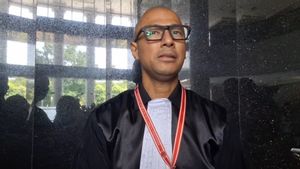
A sad story was revealed by Ari Lasso when he was a guest on the Soleh Solihun podcast. He admitted that he bought the original vinyl belonging to the late Chrisye from his wife just to survive. Even for a name as big and secretary of Chrisye, the fulfillment of his copyright is far from worthy.
All the unrest and conflict that has occurred so far is due to the transparency that is still being questioned. Digitization is also a concrete solution that will cut suspicion, with an accountable and transparent centralized system and details including data according to the original.
A number of LMKs may already have their own digital system, but with centralized management (as managed by LMKN), it will be easier to monitor and audit regularly. With a capable system, direct license can also be alternative to cut bureaucracy and layered pieces so that royalty recipients can monitor and enjoy their own work, which they should get.
Maybe the journey towards justice and the welfare of songwriters is still far from the finish line, but at least they have moved in the right direction. It's been decades or decades, this issue must continue to be discussed so that it doesn't evaporate and then be forgotten.
The English, Chinese, Japanese, Arabic, and French versions are automatically generated by the AI. So there may still be inaccuracies in translating, please always see Indonesian as our main language. (system supported by DigitalSiber.id)