

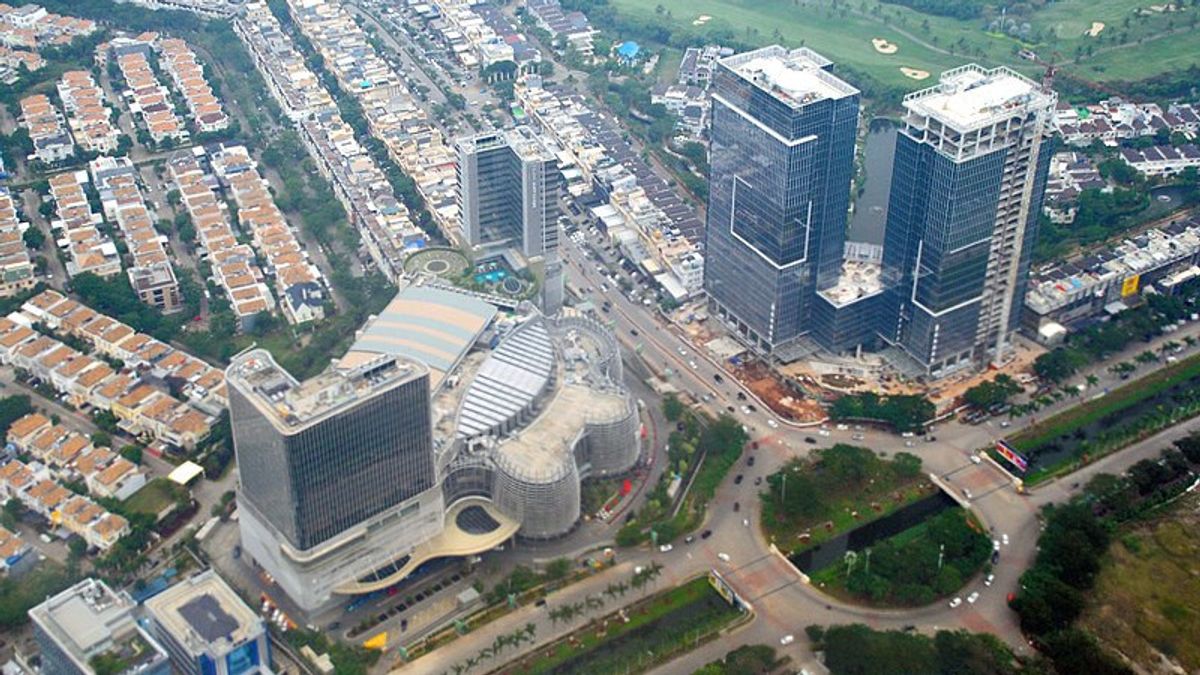


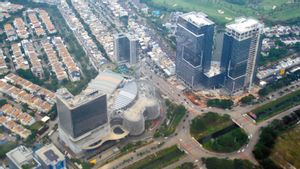
JAKARTA - Citra Ciputra as King of Real Estate is not in doubt. He was able to build a modern satellite city in northern Jakarta. Pantai Indah Kapuk (PIK), his name. The city he built in a swamp and mangrove forests became a luxurious residential area.
Problems arise. The construction of the PIK reclamation project brings a lot of controversy. Hundreds of hectares of mangrove forests were damaged by development. The coastal ecosystem is disrupted. This condition brings many new problems in northern Jakarta. Many villages are submerged in high tides. Sedyatmo toll road, let alone.
The Ciputra business in the real estate group. He understands very well that Jakarta really needs a new modern satellite city. He racked his brains in choosing the construction site. This condition is because Jakarta is really crowded.
He also chose to present a land reclamation option on the north coast of Jakarta. Ciputra wants to build a new modern satellite city: PIK. The semi-city presented is not an ordinary class. Ciputra wants to present a new area of 1,100 hectares.
The area will be inhabited by 12 thousand luxury houses. There are also dozens of hotels and luxury apartments. He who once succeeded in presenting the Ancol reclamation project brought the company PT Mandara Permai to carry out its plan. Ciputra then obtained a reclamation permit from the DKI government from 1984.
The construction was carried out in 1992. Rp300 billion was disbursed for the success of development. Ciputra believes PIK is not only seen as a modern satellite city, but is similar to important monumental works in Jakarta's history.
Ciputra tried to bring the polder system into the PIK development plan. The Dutch import technology serves to prevent flooding from high tides and rainwater. He also brought in a direct polder system expert from the Netherlands, Gerrit J. Neuteboom as a PIK development consultant.
The problem is that the project did not escape controversy. Many parties criticized its construction because it was predicted to damage the northern coastal ecosystem of Jakarta. The development was carried out over mangrove forests. Ciputra and Mandara Permai also tried to dispel all concerns.
SEE ALSO:
-
 | MEMORI
Ahok Tegaskan ISIS Ajaran Setan dalam Memori Hari Ini, 17 Januari 2016
17 Januari 2025, 16:00 -
 | MEMORI
Dari Emil Salim ke Rizal Ramli: Kisah Pejabat Penolak Proyek Reklamasi Pesisir Jakarta
17 Januari 2025, 08:20 -
 | MEMORI
Memori Hari Ini: Menag Pernah Tegaskan Bahwa Dakwah Tak Boleh Memprovokasi
16 Januari 2025, 09:00
The Mandara Permai dismissed all these concerns, including the occurrence of floods. This concern is groundless, that's the excuse. The Mandara party boasts that it will maintain the height of groundwater by maintaining swamps as wide as 20 meters. When the dry season arrives and the swampwater drops, the water will be pumped from Cengkareng Drain.
"Meanwhile, to accommodate excess water, especially in the rainy season, a 100 meter reservoir will be built on the right and left of the swamp. Regarding the construction of the city over the mangrove forest, according to PIK, it is in accordance with the general plan of spatial planning for 1985-2005 for North Jakarta and the plan for parts of the city area of Penjaringan District," said Bambang Aji and Sri Wahyuni in their writings in Tempo magazine entitled Tracing Angke and Reclamation PIK (1994).
Ciputra is no longer in charge of PIK affairs. He has sold his majority stake in Mandara Permai due to the 1998 economic crisis. However, that does not mean the construction has stopped. PIK was officially commercialized with the new majority shareholder in 2004.
Recently, environmental problems that have been criticized by many people have begun to be felt. The northern coast of Jakarta is often hit by high tides. The tide has made many residents' villages, especially in Muara Baru, Penjaringan submerged in high tides since the 2000s era.
This condition can also be seen from the frequent sinking of the Sedyatmo toll road. When it rains, it floods quickly. When the tide is chaotic, it disturbs. The disaster disrupted the passing activity to Soekarno-Hatta Airport.
The Indonesian Forum for the Environment (WALHI) revealed that the tide was a form of neglect by the DKI Jakarta government and Mandara Permai in the construction of Pantai Indah Kapuk. Both are considered to have destroyed hundreds of hectares of mangrove forests.
Before 1884, the north coast had 1,000 hectares of mangrove forests. Recently, only 170 hectares of mangrove forests were acquired. This condition allows tidal waves to directly hit the mainland of Jakarta. In fact, in the past, tidal waves could be prevented by mangrove forests.
The remaining mangrove forest is 170.6 hectares. Even then, only 25.02 hectares are protected. The rest are still being targeted by entrepreneurs to build. Jakarta Bakau Forest, according to the Executive Director of WALHI Jakarta, Slamet Daryoni has been strikingly damaged since 1984.
"At that time, the DKI Jakarta government converted 831 hectares of mangrove forests in the Kapuk area into elite housing areas. The damage to mangrove forests continued as the North Jakarta coast collection project began in 1995," said Reza Maulana and Feri Firmansyah in their article in Koran Tempo entitled Hutan Bakau disappeared, Floods of Sea Pasang Continued to threaten Jakarta (2007).
The English, Chinese, Japanese, Arabic, and French versions are automatically generated by the AI. So there may still be inaccuracies in translating, please always see Indonesian as our main language. (system supported by DigitalSiber.id)


