
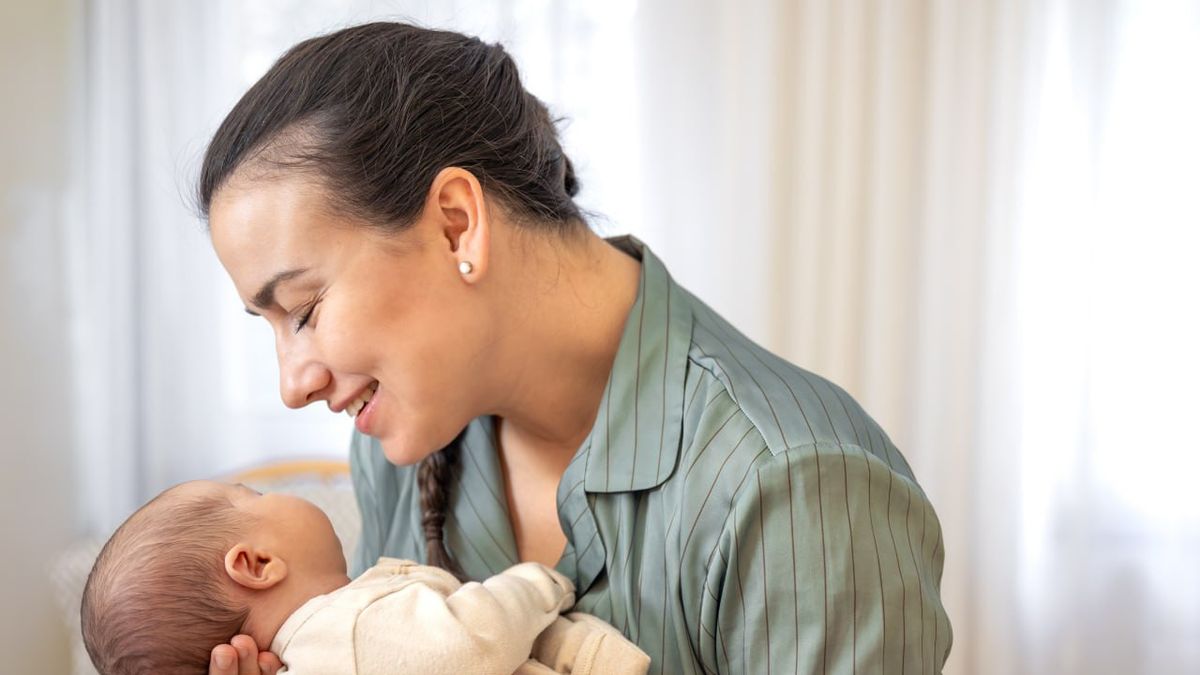


YOGYAKARTA - Carrying a baby is one of the earliest forms of affection that parents give to their children. The touch, warmth, and closeness when carrying helps build an emotional bond between parents and babies. However, not a few parents feel nervous when carrying a baby.
The condition of the baby who is still fragile makes many parents hesitate to hold the baby because they are afraid of hurting the little one. Therefore, it is important to understand the correct technique for holding babies. This article will discuss how and in what position to hold babies safely and comfortably.
How to Hold a Baby Correctly and SafelyCarrying a baby needs to be done carefully so that the baby still feels comfortable and safe. Reported from Momcozy, the following is a step-by-step guide to carrying a baby:
First, prepare yourself before touching the baby. Wash your hands until they are clean because the baby's immune system is still very underdeveloped and vulnerable to germs. In addition, remove your watch, ring, or other jewelry because it is at risk of scratching the baby's skin.
Second, approach the baby calmly and gently. Remember, babies are very sensitive to sounds and movements. You can invite the baby to talk in a soft voice to calm him down and make him feel safe.
Then, when starting to carry, make sure one hand supports the baby's head and neck. The baby's neck muscles are not strong enough to support the head on their own, so this support must be done every time you carry the little one. The other hand is used to support the baby's back and lower body.
Finally, lift the baby slowly and bring his body closer to yours. This position gives a sense of security and reduces the risk of the baby falling out of your arms. With this understanding, parents will be more comfortable and confident in caring for their little one.
Safe and Comfortable Baby Carrying PositionAfter understanding the basic steps above, it is important to know the various safe and comfortable baby carrying positions. Each position can be adjusted to the needs of the baby, from breastfeeding to calming. Quoted from the same page, the following are some carrying positions that make babies comfortable:
Position Holding the BarThe cradle hold position is one of the most classic ways to carry a baby, especially a newborn. The baby's head and neck are supported by the indentation of one arm, while the other hand supports the baby's buttocks or back. The baby's body stretches along your forearm and across your chest.
This position is ideal for use while breastfeeding, both breast milk and bottle milk. In addition, the cradle position is also effective for calming and helping babies fall asleep. Full support on the entire body makes babies feel safe and close to parents.
Position FacingIn this position, the baby is carried upright and facing the parent. One hand supports the baby's back, while the other hand supports the lower body or buttocks. The baby's face is close to your face so it's easy to interact.
The face-to-face position is very good to use when the baby is awake. Eye contact, smiles, and parental voices help stimulate social interaction, communication skills of babies. Emotional bonds are also built stronger through this closeness.
Shoulder Carry PositionThe shoulder carry position is done by placing the baby's head on your shoulder so that his cheeks are comfortable against your body. Support the baby's back with one hand and the bottom with the other. This position feels very soothing for the baby.
This position is highly recommended after breastfeeding to help babies burp. In addition, this position is also very suitable for calming crying babies. Let the baby listen to your heartbeat and feel safe.
So that's how to hold a baby properly and safely for your little one. By understanding the basic steps and choosing the right position, your baby will feel more comfortable and protected. Over time, you will get used to it and the activity of holding will become a warm moment that strengthens the bond with your little one.
In addition to the discussion above, follow other interesting articles at VOI.ID. So as not to miss the latest news, follow and monitor our social media accounts!
The English, Chinese, Japanese, Arabic, and French versions are automatically generated by the AI. So there may still be inaccuracies in translating, please always see Indonesian as our main language. (system supported by DigitalSiber.id)
Most Popular Tags
#Prabowo Subianto #donald trump #firearm #8791 #giias 2026Popular


