
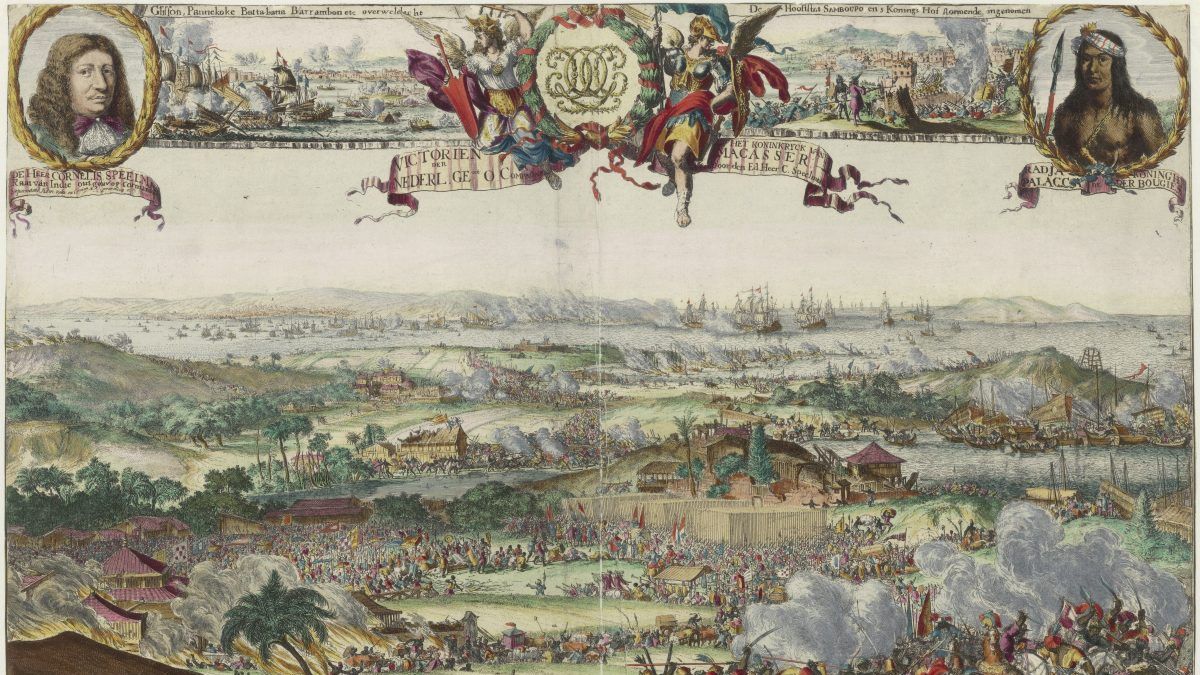


YOGYAKARTA - Understanding the details of the contents of the bongaya agreement is very important to see how the power map in East Indonesia changed drastically due to the political pressure of the Dutch colonialists on the sovereignty of the Gowa Makassar Kingdom.
This historic document not only ended the armed conflict, but also brought heavy economic consequences. Through this article, let's dissect one by one the points of the agreement that are detrimental here.
Background of the Bongaya AgreementIn the 17th century, the Gowa-Tallo Kingdom stood as a maritime giant in the archipelago. Reported by VOI from the INCA University website, with a formidable naval fleet, Gowa dominated the spice trade route from Maluku to Sumatra.
You need to know, Gowa's greatness lies in its principle of free trade, where they strongly reject the monopoly system carried by the VOC.
Tensions peaked when Sultan Hasanuddin refused to close access for international traders such as the Portuguese and British. This triggered the VOC, under the leadership of Admiral Cornelis Speelman, to launch the Makassar War (1666-1669).
Then with the help of Arung Palakka from Bone, the VOC managed to corner Gowa until forcing Sultan Hasanuddin to sign an agreement in Bongaya Village on November 18, 1667.
Read also the article which discusses There has been since the 17th century! Here is the History of Pajimatan Imogiri The Makam Complex of the King of Mataram on Bukit Merak
Important Points of the False Agreement (1667)The Bongaya Agreement consists of 24 articles that systematically cut down Gowa's sovereignty. Some of the crucial points in the contents of the Bongaya agreement include:
Surrender of the Defense Fort: Gowa is obliged to surrender its main forts, including Somba Opu Fort, to the VOC. Absolute Monopoly of the VOC: Gowa must recognize the VOC as the only party entitled to trade. Official free trade practices are abolished. Recognition of Arung Palakka: The appointment of Arung Palakka as King of Bone to strengthen VOC control in South Sulawesi. Military Ban: Sultan Hasanuddin is prohibited from rebuilding military forces and must submit to the power of the VOC. Expulsion of Other European Nations: Portuguese and other European traders are prohibited from operating in Makassar, eliminating Dutch trading competitors.Fatal Impact for the Gowa Kingdom and NusantaraHistory records that after the signing of the Bongaya Agreement, Gowa's dominance as a maritime power immediately collapsed. Its power area also narrowed drastically because many allies switched to the Dutch.
Economically, Makassar lost its status as a free port. Traders from Malay, Arab, and Portuguese were forced to leave, resulting in a drastic setback to the local economy.
On the other hand, the VOC further strengthened its position in East Indonesia. By controlling Makassar, the spice route was completely in the Dutch grip.
Although Sultan Hasanuddin had made a comeback in 1668, the Gowa forces, which had been limping, were completely extinguished in 1669.
If the Bongaya Agreement never existed, the Gowa Kingdom would likely have remained the largest free trade center (open port) in the Eastern Nusantara. Without the VOC monopoly, healthy competition between British, Portuguese, and local traders would maintain the economic stability of the region.
Politically, the maritime dominance of Sultan Hasanuddin would hinder the Dutch colonial expansion into the Maluku and Papua regions. Gowa could transform into a modern power that adopted Western military technology early.
Then the long-term impact, the integration of the archipelago may occur through local inter-kingdom diplomacy, not under Dutch administrative control, so that the power structure in Sulawesi will be much more independent and economically strong.
The Bongaya Agreement is a tangible proof of the VOC's military tactics and cunning diplomacy in destroying local kingdoms. Although politically defeated, Sultan Hasanuddin's persistence in fighting the unfair contents of the Bongaya Agreement still made him a respected national hero.
The English, Chinese, Japanese, Arabic, and French versions are automatically generated by the AI. So there may still be inaccuracies in translating, please always see Indonesian as our main language. (system supported by DigitalSiber.id)
Most Popular Tags
#Prabowo Subianto #donald trump #2026 World Cup #Febrie Adriansyah #8791Popular


