
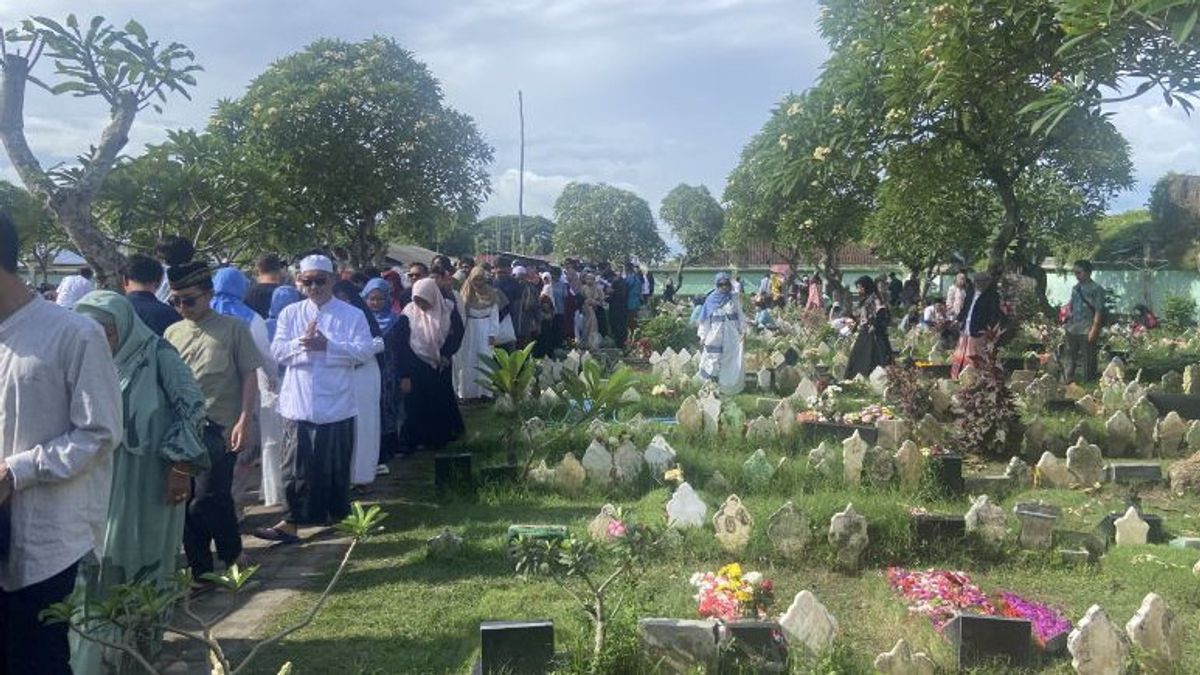


YOGYAKARTA - In Islamic teachings, there are several prohibitions imposed on women who are menstruating. These prohibitions are generally related to certain worship activities that should not be carried out during menstruation. As for visiting graves is one of the activities that often take place in special moments, for example during the celebration of the Idul Fitri holiday. This activity is part of the tradition to honor the ancestors and pray for them. However, for women, can menstruating people go to the grave?
1. Ziarah Kubur 1. Ziarah Kubur"Ziarah" comes from the Arabic word "zaara - yazuuru - ziyarotan" (زار- يزور - زيارة), which means "intention" or "desire to come or visit a place."
Thus, visiting the graves can be interpreted as a visit to the graves of relatives, friends, or anyone, whether they are Muslims or non-Muslims. In general, Muslims go to visit graves to pray for the dead, remember them, and reflect on the wisdom of death and life.
"There are several arguments that can be used as references related to visiting graves and the practices of accompanying practices. One of the hadiths that we hear most often and relate to this is the hadith from Buraidah, in which the Prophet SAW said:
"Whoever wants to visit the grave, then do it, and do not say 'hujran' (false words)." (HR. Muslim)
Imam Ash-Shan'ani mentions that this hadith confirms the prohibition of visiting graves, as well as explaining the wisdom behind it, among others to remember death, contemplate the afterlife, and provide motivation in living a temporary world life. If the wisdom of visiting graves is not contained in the wisdom, then the visit is not a visit that is recommended in the sharia.
Can a menstruating woman go to the grave according to the 4 schools of thought?"Basically there is no legal difference between menstruating women and those who are holy in terms of visiting graves. Although in various fiqh books there are prohibitions of certain worship for menstruating women, for example prayers and fasting, but in this case, the problems that arise are generally related to the practices carried out during the pilgrimage. As for the main difference among the four schools of thought lies in the law of visiting graves itself for women in general, not specifically for women who are menstruating.
In Islam, based on the views of scholars from the four schools of law: Hanafi, Maliki, Shafi'i, and Hanbali, the law of visiting graves for women is different. Below is an explanation of the law of visiting graves for women according to the 4 schools of law based on their respective opinions quoted from the book Fiqh Wanita Empat Mazhab: Fatwa-fatwa Fiqh Wanita Kontemporer which was compiled by Dr. Muhammad Utsman al-Khasyat:
"Some scholars of the Hanafi school, as well as the majority of the Shafi'i and Hanbali schools, have the opinion that it is unlawful for women to visit graves.
1. 2. 3.
2. Menziarahi kuburan 2. Menziarahi kuburan
Adab Ziarah KuburThere are several manners that must be observed by women who want to perform a funeral visit. These adab must be carried out and not violated so that this funeral visit does not become a prohibition for Muslim women who carry it out as stated in the previous source:
"Women should not visit graves if they cannot pay attention to the manners of visiting graves, shout hysterically, wear tabarruj (un-Islamic clothing), and slap their cheeks (weeping)," wrote Dr. Muhammad Utsman al-Khasyat.
1. Doa sebelum ziarah kubur 2. Doa sebelum ziarah kubur
1. Avoiding the sight of men. 2. Showing a pious attitude and remembering the hereafter. 3. Avoiding bad speech. 4. Taking wisdom from pilgrimage. 5. Not weeping. 6. Not slapping cheeks. 7. Not tearing clothes."Imam Muslim and Imam Ahmad narrated a hadith in which the Prophet taught Aisyah the best words to say when visiting a grave.
"Aisha asked the Prophet, "What should I say to them (the inhabitants of the graves of the Muslims), O Messenger of Allah?" He then replied:
"Say: 'May the peace be upon the inhabitants of the graves, that is, among the believers and the Muslims. May Allah shower His mercy upon us, both those who have died before and those who are still alive. Indeed, we will follow you (the inhabitants of the graves). " (HR. Muslim and Ahmad)
In this hadith, the Prophet taught Aisyah about words or words that can be said when visiting the graves. Indirectly, the Prophet also gave an understanding that women are allowed to visit graves, because the Prophet Muhammad gave direct instructions to Aisyah regarding this matter.
After understanding the adab and conditions that must be known when performing a funeral visit, it is also recommended to understand and chant prayers while performing a funeral visit. The prayer is as follows:
O Allah, forgive him, have mercy on him, heal him, forgive him, honor his descent, widen his grave, and illuminate it for him.
"Allahummaghfìrlahu war hamhu wa 'aafìì wa'fu anhu, wa akrìm nuzuulahu wawassì' madholahu, waghsìlhu bìl maa'ì watssaljì walbaradì, wa naqqìhì, mìnaddzzunubì wal khathaya kamaa yunaqqatssaubul abyadhu mìnad danasì. "Wabdìlhu daaran khaìran mìn daarìhì wa zaujan khaìran mìn zaujìhì. Wa adkhìlhul jannata wa aìdzhu mìn adzabìl qabrì wa mìn adzabìnnaarì wafsah lahu fì qabrìhì wa nawwìr lahu fìhì."
"O Allah, forgive him and have mercy on him. Give him salvation and forgive him. Give him honor, widen his entrance. Wash him with water, ice, and dew. Clean him from his mistakes as you clean a white shirt from dirt. Replace it for him with a better house than his house, a better wife than his wife. Put him in paradise, protect him from the torment of the grave and the torment of hell. Make it spacious for him in his grave and illuminate it for him." (HR Muslim)
"So that's the review of whether menstruating people can go to the grave. Hopefully useful. Visit VOI.id for other interesting information.
The English, Chinese, Japanese, Arabic, and French versions are automatically generated by the AI. So there may still be inaccuracies in translating, please always see Indonesian as our main language. (system supported by DigitalSiber.id)
Popular


