


YOGYAKARTA Have you ever noticed how children when playing together start sharing roles, waiting for their turn, or helping friends who are struggling? All of this is the initial form of cooperation. This is known as cooperative play, which is when children not only play side by side but really work together to achieve common goals. Well, here are five reasons why it is very important for children to learn to work together from an early age.
Cooperation helps children understand how to interact in a healthy manner with their friends. Through playing together, children learn to listen, share ideas, and respect other people's opinions. Quoting Brightwheel, Wednesday, November 12, cooperative play is an important basis for children to understand social values such as empathy and open communication.
Child psychologist Dr. Kathy Hirsh-Pasek from Temple University explains that playing together helps children hone their social skills in a fun and natural context. They will continue to bring this skill in everyday life to adulthood later.
In playing together, there are often differences of opinion or even small quarrels. This is an opportunity for children to learn to solve problems peacefully. They will begin to understand that compromise and listen are the key to keeping the game fun. Dr. Deborah Phillips, professor of child development psychology attenuated University, asserts that challenging but emotionally secure interactions allow children to learn to navigate conflict in a healthy way. From here, children learn that differences are not an obstacle to keeping working together.
Cooperation also requires children to learn to control emotions and wait for their turn. In cooperative play, children must refrain from getting the same opportunities as other friends. This ability is an important part of self-regulition or self-control, which will later be very useful in the school environment and social. Child psychologist Dr. Laura Markham added that children who learn to regulate themselves through playing groups tend to more easily manage stress and frustration in the future. It is known that children learn about not everything must be in accordance with their wishes.
When children are given a role in the game together, they learn that every task has an important meaning to the success of the group. This fosters a sense of responsibility and makes children feel valued. When children succeed in carrying out their role, their confidence increases. Child development psychologist, Dr. Alison Gopnik of the University of California, Berkeley, said that children who contribute actively to groups tend to have a higher sense of competence and confidence. They begin to understand that small contributions can have a big impact.
SEE ALSO:
-
 | LIFESTYLE
6 Faktor yang Menyebabkan Perundungan Terjadi di Lingkungan Sekolah
04 November 2025, 19:47 -
 | LIFESTYLE
7 Kunci Sukses Jalani Co-Parenting agar Anak Tetap Bahagia dan Tumbuh Seimbang
28 Oktober 2025, 19:47


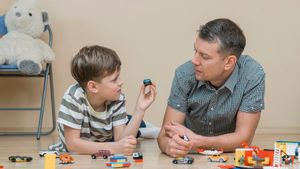
Cooperation teaches children to see things from the point of view of their friends. Children begin to recognize the feelings of others, for example when friends feel sad, lost, or struggling. That way, children learn how to provide support. As explained earlier, empathy is an inseparable part of cooperative play because through positive interactions, children learn to care and help each other. Social psychologist Dr. Michele Borba also emphasized that empathy grows when children repeatedly experience situations that demand that they understand and adapt to others.
Through the explanation above, it is known that learning cooperation is not only about how children play, but also how they grow up to be individuals who understand the value of togetherness. By supporting activities that involve cooperative play, you help your child develop very important social, emotional, and moral abilities in your life.
The English, Chinese, Japanese, Arabic, and French versions are automatically generated by the AI. So there may still be inaccuracies in translating, please always see Indonesian as our main language. (system supported by DigitalSiber.id)
Most Popular Tags
#Prabowo Subianto #donald trump #earthquake #independence day #8791 #hut riPopular


