
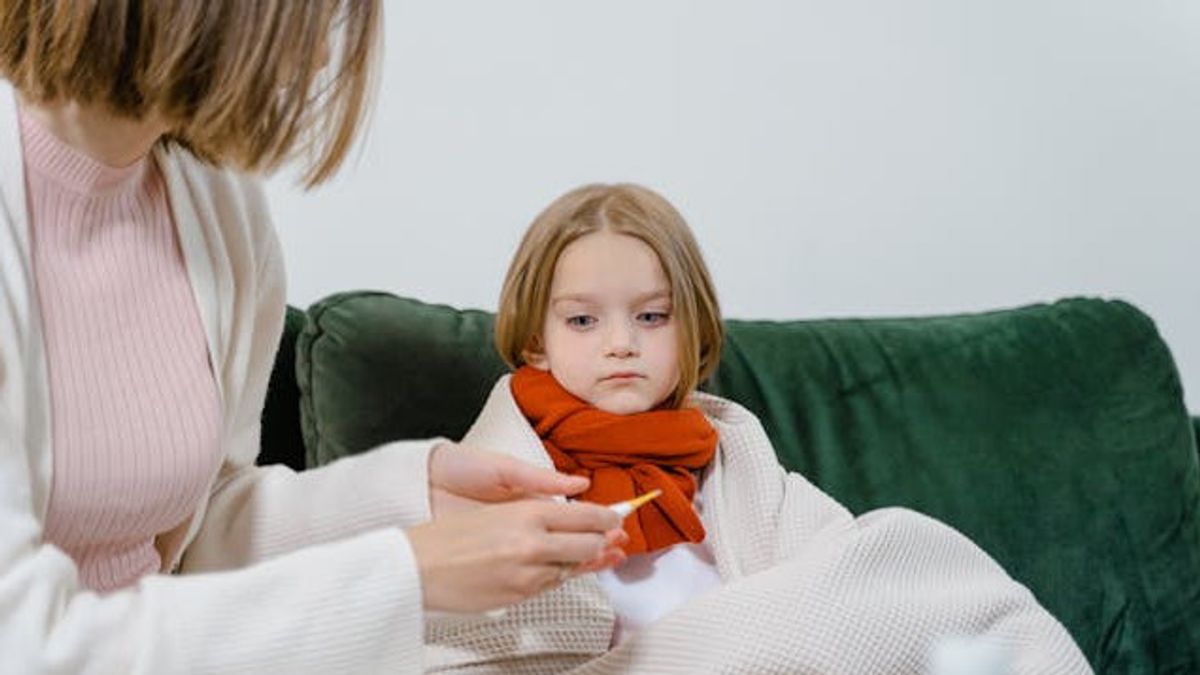


JAKARTA - Not a few parents have ever faced a situation when their child suddenly complains of headaches or stomach pain before school time. The question also arises: do children really feel unwell, or are they just looking for excuses to rest at home? In the world of parenting, conditions like this are quite common.
Children, especially those who are already in school, are starting to understand that physical complaints can be a way to avoid something they don't like. Therefore, it is important for parents to be able to distinguish between the symptoms of real illness and fabricated reasons, in order to give the right response without ignoring their child's emotional needs.
According to an article at the American Academy of Pediatrics (AAP), quoted the Parents page, Friday, November 7, there were several triggers for children pretending to be sick because they wanted to avoid school: it could be due to bullying, a piling up task burden, or even a lack of attention at home, for example when parents travel frequently or have just been present a new younger brother. It could also be as light motivation as if they want to play without being restricted or watch favorite films.
Here are six indications that can help parents map out: whether a child's illness is valid or just 'promptu leaves'.
Headaches without strong evidence
The child may nag 'headed sick', but if he's still eating, playing, laughing, then most likely the pain isn't as serious as he claims.
On the other hand, real headaches are often accompanied by vomiting, visual impairments, or cannot be awakened.
Uninstalled stomach complaints with supporting signs
If the child says 'belly pain', pay attention: Are breakfast still being eaten? Does the skin look pale, sweat cold, or have a diarrhea? Without additional symptoms of encouragement, he could only complain.
Fevers that are 'easy' to regulate
Taking a temperature with your fingers or forehead can be deceptive. Make sure to use a thermometer and not do it directly after drinking/warm or after physical activity. The oral temperature of 100.4$F (~38$C) is considered as a fever valid by AAP.
Forced Cough
Real coughs often come suddenly, hard, accompanied by mucus. On the other hand, the forced cough feels 'regulated' or sounds self-regulated.
Sore throat without a disease context
If there is no fever, runny nose, or cough, the child could only look for excuses. However, not all sore throats are acting, especially if it is caused by bacterial infection.
Complaints of fatigue or fatigue (malaise) that are too common
The child says 'I'm not feeling well' could be right. But if you're constantly without clear symptoms or clear reasons (new school, changing your routine), then you should pay close attention to the root of the problem.
SEE ALSO:
-
 | INFO SEHAT
4 Alasan Anak Takut Sekolah yang Harus Diketahui Para Orang Tua
28 November 2021, 15:49



As a parent, you are between two poles: want to believe that your child is honest when he is sick, but also needs to be alert to left tactics' that can harm their own routines and developments. By understanding the signals that have been discussed and approaching them with affection and vigilance, then you can maintain an open relationship between trust and responsibility. Remember: there is no point beyond' children who pretend to be sick with anger, but are more effective in opening dialogue and exploring the real need behind the complaint.
The English, Chinese, Japanese, Arabic, and French versions are automatically generated by the AI. So there may still be inaccuracies in translating, please always see Indonesian as our main language. (system supported by DigitalSiber.id)
Most Popular Tags
#Prabowo Subianto #donald trump #Febrie Adriansyah #8791 #giias 2026Popular


