
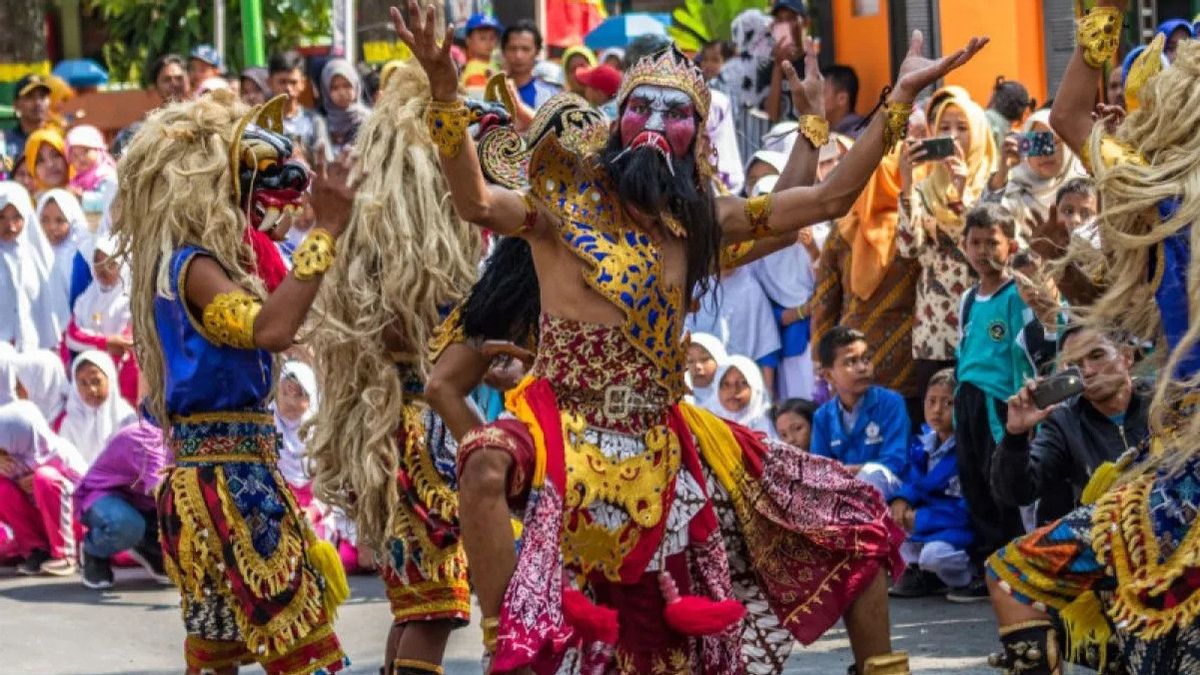


YOGYAKARTA - Indonesia has more than 300 tribes and 700 regional languages spread from Sabang to Merauke. However, why should diversity in Indonesia be maintained and preserved seriously by the whole community?
Diversity is not just a beautiful ancestral heritage to be proud of. But more than that, diversity is the foundation of the nation's strength that determines Indonesia's future in the midst of increasingly complex global challenges.
Disarikan dari laman, Pemerintah Kabupaten Buleleng dan penelitian Maulana Teguh Perdana, staf guru di Politeknik Purbaya, berikut ini beberapa alasan perlunya menjaga dan memperlindungi keagaman di Indonesia:
With more than 17,000 islands and 1,300 ethnic groups, Indonesia has a unique cultural heritage. Each region has its own special customs, ranging from the Ngaben ceremony in Bali, the Solo Rambu' in Toraja, to the Grebeg Maulud in Java.
This diversity is a window that connects us with cultural roots and ancestral history. Regional languages, for example, are not only communication tools but representations of values, norms, and habits passed down from generation to generation.
In addition, every word and expression also contains a philosophy of life that strengthens local cultural identity.
Also Read the articles about history and culture below: Revealed! Moh Yamin's Basic State Proposal Which Becomes The Cical Will Of Pancasila
Indonesia's diversity has a significant economic impact. For example, traditional art such as the Reog Ponorogo Dance, Saman Dance, and Angklung musical instruments have been recognized by UNESCO as a world cultural heritage.
Then there are typical culinary delights such as Rendang, Gudeg, and Pempek which are the attraction of tourism and improve the local economy. Batik, Ulos, and Songket as traditional textile products also strengthen branding and regional identity in trading.
In a social context, the use of regional languages strengthens solidarity and relations between citizens. Well, this attitude fosters a sense of togetherness and pride towards the cultural identity of the community.
Unfortunately, Indonesia's diversity faces serious threats. The dominance of foreign languages, especially English, reduces the use of regional languages.
Urbanization makes the younger generation lose their relationship with their original culture. Regional languages are often considered outdated, so that the younger generation is more interested in learning foreign languages that are considered more prestigious.
In addition, modernization and globalization also threaten cultural diversity. Loss of regional languages causes a setback in understanding traditional values and reduces the diversity of views of the human world.
To overcome these various threats, cooperation from various parties is needed. The government can develop an education curriculum that includes language and regional culture subjects.
Local communities can also hold cultural festivals, speech competitions in regional languages, and traditional art performances.
In addition, the use of technology is also important for documentation. Digital projects such as regional language databases, online dictionary applications, and folklore recordings can be valuable resources.
Based on the case study of Nage Village in East Nusa Tenggara proves that with strong commitment and government support, regional languages can continue to live in the globalization era. So, of course, if there is a will, then other regions can too.
Why should diversity in Indonesia be maintained and preserved? The answer, none other than because diversity is invaluable wealth that strengthens the nation's identity, encourages economic growth, and maintains ancestral values.
Also follow other interesting articles on VOI, to get updated news, don't forget to follow and monitor all of our social media accounts!
The English, Chinese, Japanese, Arabic, and French versions are automatically generated by the AI. So there may still be inaccuracies in translating, please always see Indonesian as our main language. (system supported by DigitalSiber.id)


