
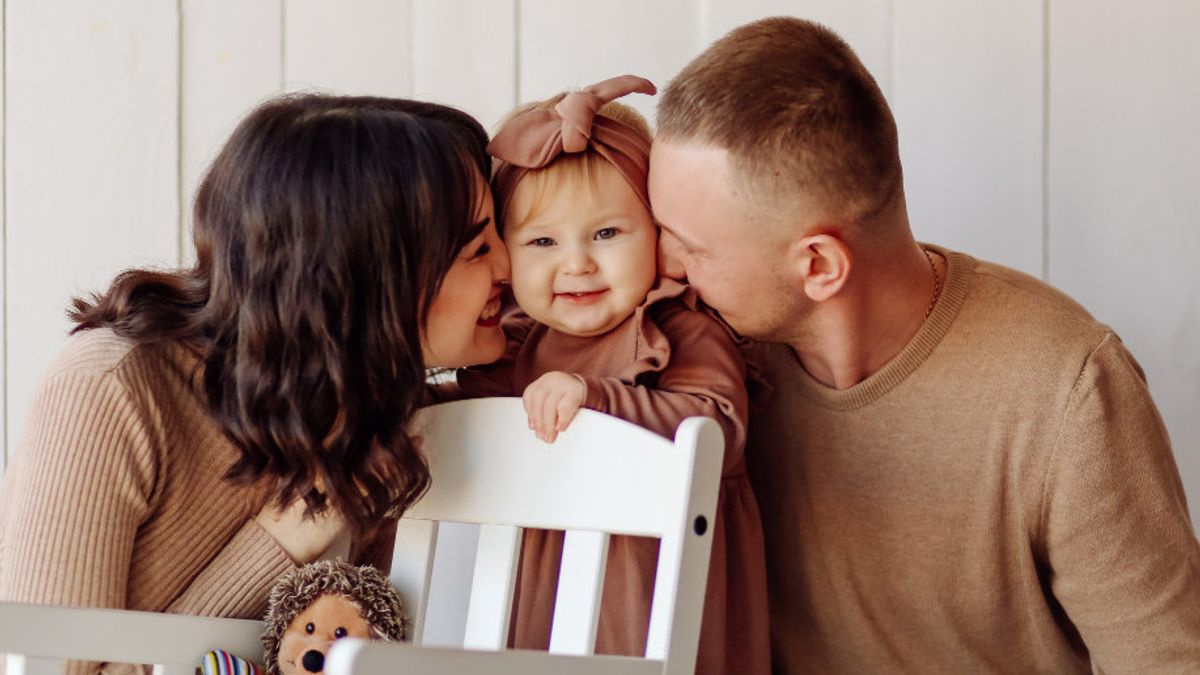


YOGYAKARTA - Did you know that simple behaviors such as snacks to new toys or baby chatter at the age of 7 can actually provide clues about their intelligence in adults. The latest study reported by Parents, Monday, September 1, research from the University of Colorado Boulder shows that small aspects of the behavior of babies can provide an overview of their cognitive capacity in the future. Although it does not make intelligence a destiny, this result reminds that stimulation and a positive environment at the beginning of life have an important role for the younger one's future.
The study follows more than 1,000 twins (identical and fractal) from the age of 7 months to adulthood. They used a number of behavioral tests such as interest in new things (novelty prevalence), orientation of tasks, and vocalization to assess the cognitive abilities of infants. The results show that this behavior predicts about 13% variation in intelligence scores at the age of 30. This study confirms that both gene and environmental factors from the start of life have been involved in shaping brain development.
The findings note that environmental influences before the age of 1.2 contributed about 10% to the variation of children's intelligence as they grew up. Meanwhile, the influence of genetics is more dominant in the childhood and youth. The role of this early environment highlights the importance of the family atmosphere, sensory stimulation, and interaction when the baby is very young.
In children aged 7 months, they show basic cognitive abilities. As mentioned above, it includes interest in new things, focus ability, and response to visual/audio stimuli. Although the predictors are not large, Pol aini shows how information processing and exploration interests have emerged at the beginning. With age, the ability to process and explore interests can develop more complex.
It is important to understand, heritability does not mean it cannot change. So predictors need to be considered by parents to support the development of children's intelligence more optimally. This research also shows that intervention, positive stimulation, and variety of experiences during growth greatly affect the growth of children's intelligence. That means, parents still have a big role in supporting their child's potential to develop.
Experts suggest that light stimulation should be carried out consistently, including as follows:
Keep in mind, not all babies show 'smart' signs from the start. Not seeing certain milestones does not mean something is wrong. Because many babies are late in speaking, pursuing normal developments at the age of 4'7 years, especially with early interventions if necessary. Of course, if there are concerns about developments, consultation with pediatricians is important.
SEE ALSO:
-
 | INFO SEHAT
Siapa yang Lebih Banyak Menurunkan Kecerdasan ke Anak, Ibu atau Ayah?
22 Agustus 2025, 14:25 -
 | LIFESTYLE
Tak Perlu Khawatir Biaya Pendidikan, Ini Deretan Beasiswa untuk Perempuan 2025
24 Agustus 2025, 00:55 -
 | INFO SEHAT
Mengenal Glider Parenting, Pola Asuh yang Tak Membuat Anak Merasa Diawasi
30 Agustus 2025, 06:55


Overall, although the behavior of 7-month-old babies such as interest in new objects or focus on small tasks can provide an overview of the potential for intelligence, this is not a standard prediction. Gens and the environment both play a role. Especially the early environment that you can create with varied and warm stimulation. So, enjoy every exploration and development of your little one, because smart growth is more than just numbers but a journey full of curiosity, affection, and opportunities to continue to grow.
The English, Chinese, Japanese, Arabic, and French versions are automatically generated by the AI. So there may still be inaccuracies in translating, please always see Indonesian as our main language. (system supported by DigitalSiber.id)


