

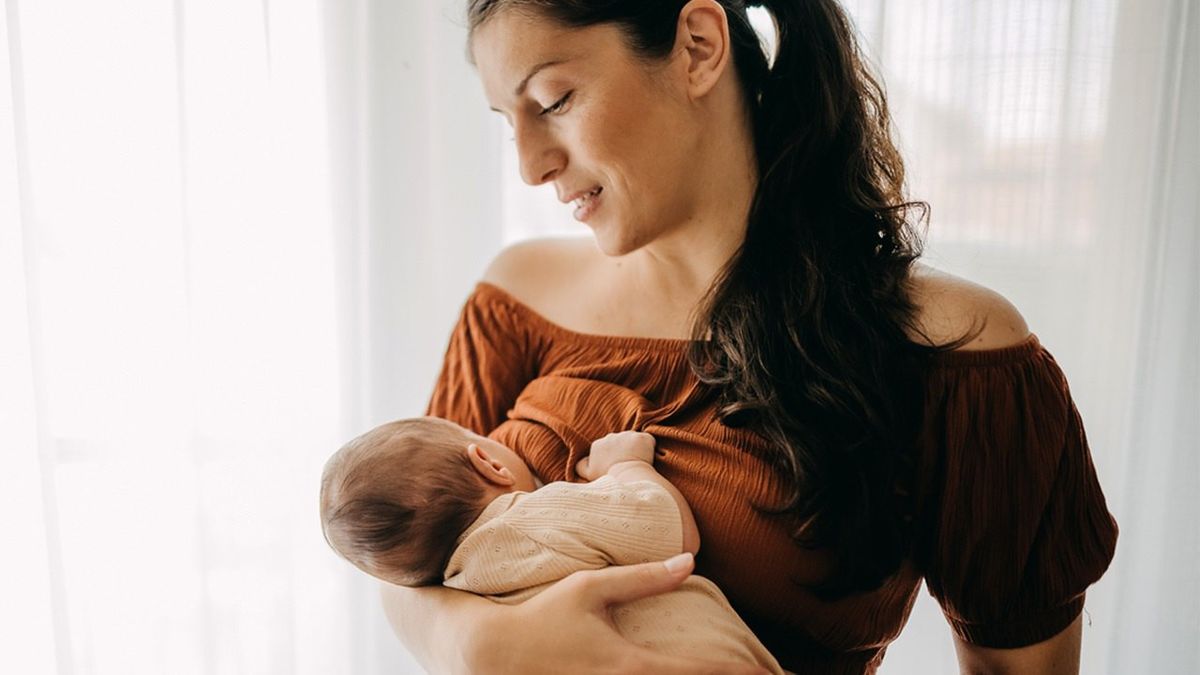


YOGYAKARTA - Breastfeeding needs to be done more often in the early days of the baby's birth to keep its nutritional needs met. Newly born babies do require a lot of food intake, but considering that the stomach capacity is still very small so they cannot accommodate a lot of milk at once.
Therefore, babies must be fed in a shorter time interval in order to continue to get enough nutrition to grow, usually every 2 to 3 hours. For new parents, one of the questions that often arise is how long babies need to be breastfed every 2 hours?
This question is natural because the need for breastfeeding babies will change with age. At first they may need to drink every two hours, but as the body develops, the distance between breastfeeding times will be longer. Reporting from Parents, here's the explanation.
Newborn babies usually suck every 2 to 3 hours, or about 8 to 12 times in 24 hours. Every time a baby is breastfed, the baby consumes about 30-50 ml of breast milk. Because the stomach is still very small, it is natural that they quickly feel hungry again after they finish breastfeeding.
In the first few days, parents are also advised to wake their babies if they sleep too long, for example more than 4 to 5 hours, in order to keep getting adequate nutritional intake. This is important especially in the early week of baby life to prevent excessive weight loss.
The duration of breastfeeding babies every 2 hours usually takes up to 20 minutes. However, this is different for every baby, so it needs to be adjusted to the needs of the little one.
Entering the age of 1 month, breastfeeding patterns begin to decrease every 2 hours. They usually feed around 8-10 times a day, with a total of 90-120 ml per drink. At the age of 2 months, the need increases to 110-130 ml every 3-4 hours.
At the age of 3 months, babies may be able to drink more at once, so that the frequency of breastfeeding can be reduced to every 3-4 hours. That way, parents no longer need to wake up at night as in the early weeks.
SEE ALSO:
-
 | LIFESTYLE
Produk Perawatan Masa Kecil Bisa Ciptakan Kenangan Kuat Anak dan Orangtua
22 Agustus 2025, 23:25 -
 | INFO SEHAT
Bahaya Minum Obat Cacing Sembarangan, Bisa Berisiko bagi Anak dan Dewasa
22 Agustus 2025, 19:25

When the baby reaches 4 months old, its milk needs can reach 120-175 ml at a time of drinking, with a break of about 4 hours. The frequency of breastfeeding usually drops to 6-8 times a day. At this stage, parents may start to see the baby sleeping longer at night, so breastfeeding is no longer needed every 2 hours.
When approaching the age of 6 months, most babies are ready to be introduced to solid food or MPASI (Smilent Food Companion). However, even though you have started eating, breast milk remains the main source of nutrition until the age of 12 months. Babies aged 6 months usually consume about 180-235 ml of breast milk every 4 to 5 hours, in addition to a small portion of MPASI food.
But basically, pediatricians recommend that babies be breastfed according to demand, which is whenever the baby shows a sign of hunger. Signs of hunger can be in the form of crying, smoking fingers, or the baby looks restless.
In this way, babies get intake that suits their needs, not just fixated on numbers or hours. Each baby is different, some need more often, some are a little longer apart.
By understanding the needs of babies at every stage of age, parents can provide the right nutritional intake and at the same time feel calmer in facing a frequently changing breastfeeding pattern. Breastfeeding is tiring at the beginning, but over time, the rhythm will become more regular and comfortable for both mother and baby.
The English, Chinese, Japanese, Arabic, and French versions are automatically generated by the AI. So there may still be inaccuracies in translating, please always see Indonesian as our main language. (system supported by DigitalSiber.id)


