


JAKARTA - Caring for children, parents, or family members who are sick are often considered part of a natural task of a housewife.
In fact, this work takes time, energy, and even sacrifices opportunities to work outside the home. Unfortunately, all these efforts have not actually been recognized as economic contributions.
This is what the government is trying to change through the Ministry of Population and Development of the National Family (Kemenduk bangga/BKKBN) through the initiation of the concept of care economy, an approach that places the job of caring for as an important part of the economy, not just domestic activity without value.
Through the incentive and support scheme currently being designed, women, especially housewives, are trying to be productive without having to choose between work and family.
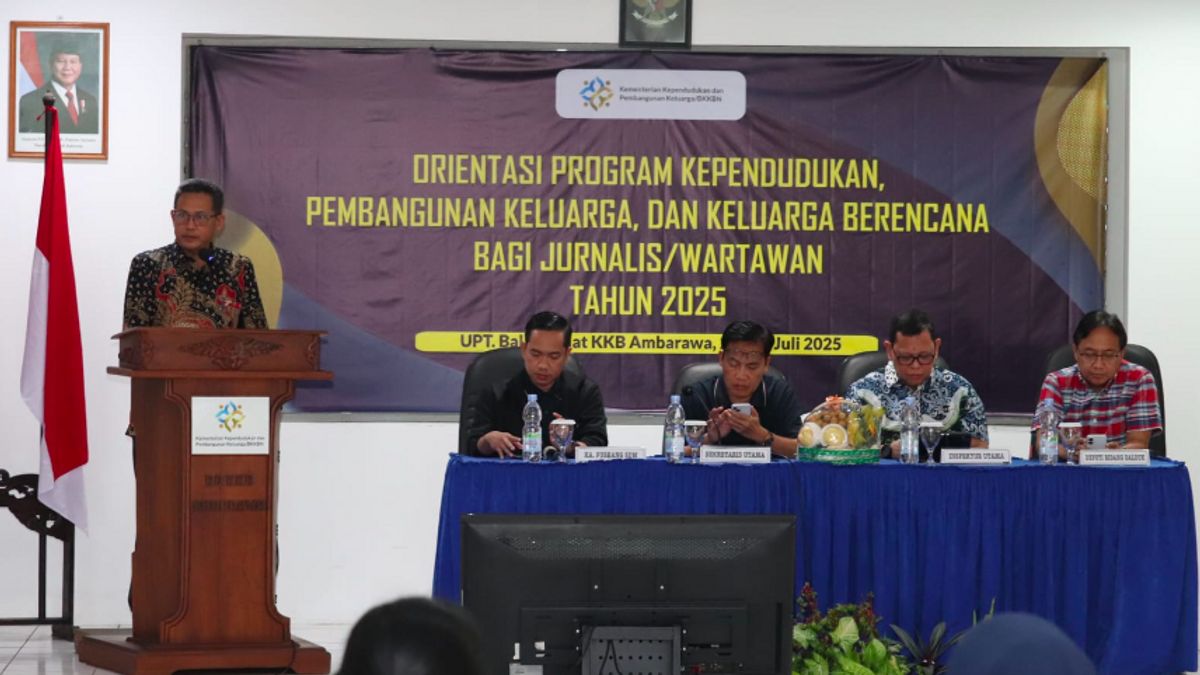
Thiscare economy not only takes care of children, but also takes care of the elderly, sick, disabled. So far, informal work like this is not appreciated economically. Even though the role of housewives and families is very important," said Deputy for Population Control of BKKBN, Bonivasius Prasetya Ichtiarto in a forum in Ambarawa, Central Java, Saturday, July 26.
In this case, the burden of caring for the elderly is usually borne by families, especially women who are housewives or girls in families without financial support or facilities from the state.
SEE ALSO:
-
 | INFO SEHAT
Cegah Komplikasi Infeksi Pernapasan, Lansia Komorbid Perlu Vaksin RSV
10 Juli 2025, 13:25



One of the initial initiatives from the Ministry of Education and Culture is the Taman Asuh Sayang Anak (Tamasya) program, which is a daycare provided at work, so that women can continue to work while their children are being treated. But that's only a small part of the concept of care economy that the government wants to develop.
"If a mother takes care of her child, she can't work, it means she loses her job. That's what she looks like. Then, what does the government do? Now that an action plan has been designed for thecare Economy, later every support given is calculated in value, for example, if she doesn't work but takes care of her child, there is support from the government," he said.
In the national action plan currently being drafted, the incentive scheme will be developed through two channels, such as direct financial support (incentives). This incentive is given to housewives who cannot work because they care for their children or parents, the economic value of the time and energy they provide will be calculated.
Then the second scheme is that the government can provide elderly nurses from residents at productive age.
"This effort can be seen for example in Scandinavian countries, where residents who have treated the elderly can "strengthen" the service with the right to receive treatment when they are elderly," he explained.
This plan aims to reduce the economic burden in households which are now under great pressure, children's education costs, daily consumption needs, and the care of elderly parents.
If not handled systemically, increasing the elderly population will become a national economic burden, both in terms of state spending and labor productivity.
This care economy incentive scheme is also expected to change the paradigm related to care work, not just personal responsibility, but social work that deserves appreciation.
"That way, the productive generation can still work and support the economy, while the elderly and children get proper treatment," he concluded.
The English, Chinese, Japanese, Arabic, and French versions are automatically generated by the AI. So there may still be inaccuracies in translating, please always see Indonesian as our main language. (system supported by DigitalSiber.id)


