
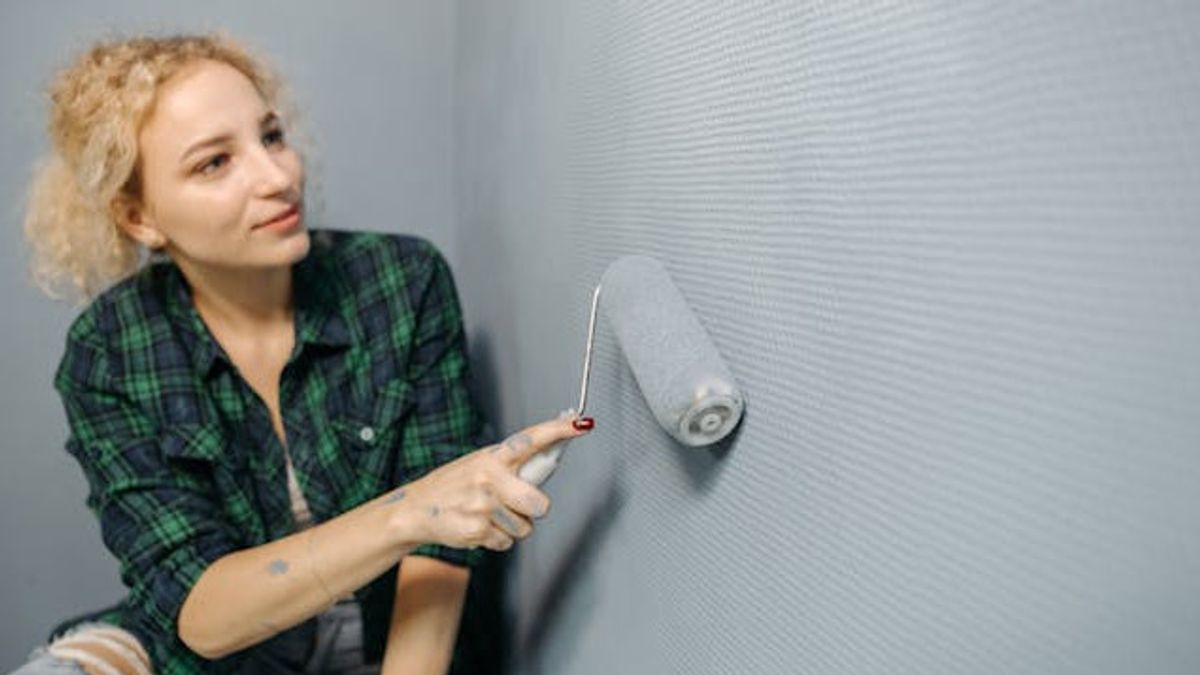


JAKARTA - Repainting the house is one of the easiest ways to completely change the room. In addition to increasing aesthetics, solid interior painting can increase property value, keep the walls clean, and prevent unwanted moisture. Even if you like room transformation by repainting, it's not always an easy job, especially if you're a beginner.
Experts study some of the most common errors in painting and how to avoid them so that the final result is perfect. Improved painting techniques will produce a clean and fresh canvas to decorate the room without the need to work extra to remove paint stains or repair uneven parts. Prior to the next painting project, consider tips from these leading paint experts to transform the home room skilled and confident.
"Clean the wall surface until it is free from dirt, oil, and other deposits that can interfere with paint fractures," said Tom Hill, president of C2 Paint, as reported by Better Homes and Garden, Friday, July 25.
If you miss this step, later on, dust, hair, and other small particles can penetrate the final layer of paint and damage the smooth and neat look you want. For prevention, start cleaning using a vacuum brush or kemoceng. Next, use warm soap water with a sponge or cloth to wipe the walls. Also make sure to clean the corners and small gaps, such as the intersection between the ceiling and the wall fuse board.
Competitive preparation significantly reduces the cleaning time at the end of painting by preventing droplets and paint splashes. To start, cover the floor and furniture with a covering cloth or clean the whole room if your room is narrow. For cleaner final results, remove the socket cover and the switch (per sure the power on the power cut off has been turned off). When painting the interior door, wrap the door button with plastic and cellotype. Finally, check the imperfect parts.
"Make sure to repair the hole and attach the part that needs to be cleaned so that the surface is smooth," Hill said. "After attaching, a surface cloth with a cloth or damp cloth to remove dust."
Another general error is choosing the wrong type of paint. Before going to the paint shop, consider quality, slope, and color for the specific surface you want to paint on. Hill recommends not using a ceiling-specific paint to paint the walls, because the paint is less durable, is very susceptible to abrasions and stains, and can't be fixed like satin paint or Eggshell paint. This is why professionals usually recommend using semi-gloss paint or glosss for doors, liss, and skinning boards, and scintillating paints like satin or eggshells for walls.
Hill said the most important step in any painting job is investing in high-quality paints and trying out color choices before deciding. This will prevent repainting repeatedly or repainting in the future. Hill says that many people often choose the wrong color, so he suggests observing the paint sample directly (in the afternoon and evening) to make the right choice.
"We also consider natural lighting and the "temperature" of the room as a whole, cold or warm, when choosing colors," he added.
And as almost every paint brand on the market now offers traditional paint samples or pasty paints, taking this step before the painting day will save time and money in the long term.
SEE ALSO:
-
 | LIFESTYLE
Hindari Mengecat Ruang Tamu dengan 4 Warna Ini Kalau Enggak Mau Terkesan Jadul
03 Januari 2025, 20:48 -
| LIFESTYLE
Hindari Mengecat Ruang Tamu dengan 4 Warna Ini Kalau Enggak Mau Terkesan Jadul
03 Januari 2025, 20:48 -
 | LIFESTYLE
Perlu Suasana Baru, Ini 7 Acuan saat Mendekorasi Ulang Ruangan Kecil
27 Desember 2023, 15:48

You can easily get uneven painting results (even with high quality paint) if you don't use the right brush and roller.
"Rolls and cheap and low quality brushes do not distribute paint evenly and can be faded," Hill said.
"High-density foam rollers can also help achieve a smooth finish without brushaging. You can also try using paint conditioners like Floetrol to minimize brush scratches."
It is also better to determine whether primary use is needed first.
"If the surface of the wall has a lot of patches and patches, it's best to coat the walls with a primer before painting," Hill said. "Many paints are labeled 'cat and primary' but only effective if applied to uniform substrates."
Hill explained that inconsistency with the painted surface can lead to imperfections in the painting results. "In this case, the surface must be covered with a primary first," he said. The area filled with a pulse has a higher absorption power, so it must be flattened.
The process and direction of the painting technique will also affect the final results.
"Always paint the walls from the top down, not from the bottom up," said Hill.
This technique allows gravity to work, because if you shed paint, you can paint directly on it. In addition, some paints are easier to balance and this is more likely to happen if you follow it up than down. Hill also recommends framed everything with a brush first to coat the perimeter of doors, windows, and other architectural elements.
The type of paint will also affect the technique you need to use.
"If you use latex paint, be careful not to apply it too much," Hill said.
"The quality latex record will be evenly distributed on its own. If you look at the brush marks and then match them again, you will paste the brush marks, while if you leave them, the paint will be evenly distributed to itself."
He also advised to remain patient. Give enough time for each coat of paint to dry up so as not to leave stains and fingerprints. Check the paint can to find out the recommended drying time. Also make sure you have good lighting when painting to catch droplets or uneven areas.
The English, Chinese, Japanese, Arabic, and French versions are automatically generated by the AI. So there may still be inaccuracies in translating, please always see Indonesian as our main language. (system supported by DigitalSiber.id)
Popular


