


JAKARTA - The discovery of rare snakes has always been an important moment in the world of conservation, especially when these species are rarely seen in their natural habitat. One of these rare findings recently occurred in the forest area of the Maninjau Nature Reserve, Agam Regency, West Sumatra.
A two-meter-long red-headed snake (Bungarus flaviceps) was successfully documented by a patrol team from the Natural Resources Conservation Agency (BKSDA) of West Sumatra.
The snake with the characteristics of a striking red head was discovered on Wednesday, July 9, 2025, by a joint patrol team of the West Sumatra BKSDA and members of the Palembayan Police while walking through a conservation area in Nagari Sungai Pua, Palembayan District.
Head of the Maninjau Conservation Resort II, Ade Putra, said that while walking down the forest route, he found the snake in a stationary position only about 50 centimeters from its feet.
"Luckily the snake was not stepped on. This is the first time I have seen this species firsthand after more than two decades of serving in the West Sumatra conservation area and Kerinci Seblat National Park," he said in Lubuk Basung, as quoted by ANTARA.
According to Ade, Bungur flaviceps is a snake that is very rare and belongs to the catang group, which is a venomous snake. This snake is known for its bright red head and tail, while its body is dominated by black with a blue white line next to the body.
The lower part of the body is white, in contrast to a similar species such as a large chili snake (Calliophis bivirgatus) which has a red ventral part.
This species is spread across several Southeast Asia regions such as southern Myanmar, Thailand, Cambodia, Vietnam, Malaysia, as well as on various islands in Indonesia, including Sumatra, Java, and Kalimantan. Its main habitat is lowland to mountainous forests with a maximum height of about 900 meters.
SEE ALSO:
-
 | LIFESTYLE
Inilah Dua Benda yang Ditakuti Ular, Pasang di Tempat Masuknya Ular ke Rumah
16 Februari 2025, 10:25


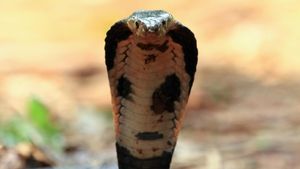

Red head snakes usually have a body length of between 1.2 and 1.5 meters, but the individuals found this time have a length of up to two meters, approaching the maximum size of the species. The dorsal scales of this snake are arranged in 13 rows with larger back scales (vertebral). Lower scales (ventral) and tail (subkaudal) also have a typical amount for males and females.
"This snake is not only rare, but also very dangerous. The poison is classified as deadly, so its presence in the forest needs to be observed with vigilance," explained Ade.
Brigadier Jefri Januardi, a member of the Palembayan Police who was also involved in the patrol, also expressed his admiration for the findings.
"As long as I'm on duty, I've never seen a snake like this. The color and size are very flashy. It feels like seeing a king coach, but with a different look," he said.
This discovery is an important record for the wildlife conservation world, as well as a reminder that there is still a lot of Indonesian biodiversity that has not been fully revealed. The presence of this rare species emphasizes the importance of keeping forest areas a safe habitat for endemic fauna that is threatened with its existence.
The English, Chinese, Japanese, Arabic, and French versions are automatically generated by the AI. So there may still be inaccuracies in translating, please always see Indonesian as our main language. (system supported by DigitalSiber.id)
Most Popular Tags
#Prabowo Subianto #donald trump #2026 World Cup #venezuela #Bhayangkara hut #konflik timur tengahPopular


