


JAKARTA - Sarong is now increasingly recognized as an icon of national fashion that reflects Indonesia's cultural identity. Efforts to lift the sarong as part of the country's mode trend continue to develop, one of which is through initiatives initiated in Semarang City.
Member of Commission VII of the Indonesian House of Representatives (DPR), Samuel Wattimena, is committed to making sarongs a better known symbol of Indonesian culture.
"I want to present a sarong as the identity of a nation that is more socialized," he said at an event in Semarang, as quoted by ANTARA.
The statement was made during a recess with traditional art activists, Indonesian Fashion Chamber (IFC), and the Denok-Kenang community. On that occasion, Samuel and members of the Semarang City IFC wore the regional batik sarong as a form of support for strengthening cultural identity.
"I am grateful that both the younger generation and seniors are willing to wear sarongs. If this kind of socialization continues, I am sure that the use of sarongs will be more widespread in people's daily lives," he added.
SEE ALSO:
-
 | LIFESTYLE
Pesona Wastra Nusantara Berpadu Nuansa Mesir di Ramadan Runway 2025
22 Maret 2025, 08:40 -
 | LIFESTYLE
Hemat dan Stylish, Ini Alasan Orang Indonesia Suka Cari Promo Baju Lebaran
20 Maret 2025, 19:25 -
 | LIFESTYLE
Melihat Upaya Pelestarian Tenun Samarinda sebagai Warisan Budaya Kalimantan Timur
03 Januari 2025, 13:25
The choice of Semarang City as the center of this movement is not without reason. The city known as the city of Lumpia has been designated as a fashion city. As a fashion designer since 1979 as well as a legislator representing the area, Samuel feels responsible for further strengthening Semarang as a fashion center.
"Making Semarang as a fashion city is not only a matter of trends for certain groups, but also for various fields, including dance arts and other cultures," he explained.
To make this happen, Samuel also encouraged batik in Semarang to explore more local motifs in their work. "From the sustainability side, sarongs are very relevant national products. Besides being flexible for various body shapes, maintenance and use are also very practical," he said.
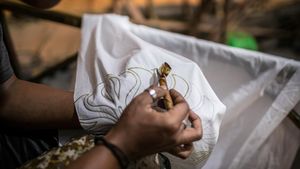
One of the handprints of Semarang, Jessie Setiawati, revealed that she was inspired to lift the motifs that came from the traditional Semarang dance into her batik design.
"As a writing batik, I want to create a design that describes the story of the typical Semarang dances," he said.
Previously, Jessie took a lot of inspiration from historical buildings in Indonesia, especially in the Semarang Old Town area, as her batik motif.
"In the Old City of Semarang, there are many cultural heritage buildings such as the Blenduk Church and the Monod Building. I document architectural elements such as tiles, stairs, trellis, windows, and doors, then adapt them to be batik motifs," he explained.
The English, Chinese, Japanese, Arabic, and French versions are automatically generated by the AI. So there may still be inaccuracies in translating, please always see Indonesian as our main language. (system supported by DigitalSiber.id)
Most Popular Tags
#Prabowo Subianto #donald trump #2026 World Cup #Febrie Adriansyah #8791Popular


