
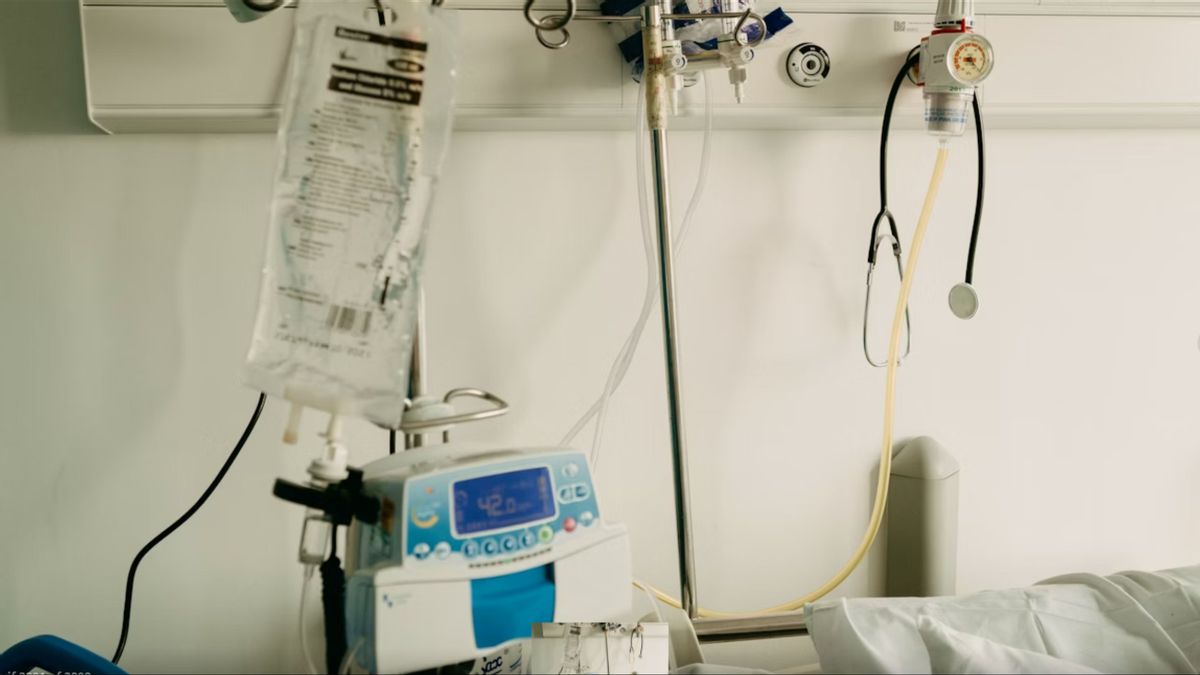


YOGYAKARTA - CAPD (Continuous Ambulatory Peritoneal Dialysis) is one of the methods of kidney replacement therapy used in patients with chronic kidney disease with a blood washing method carried out through the abdomen. This method utilizes the lining of the abdominal cavity (peritoneum) which has a large surface and many vascular tissue as a natural filter when passed by waste substances. This method is an alternative to hemodialysis (blood washing with a machine) and kidney transplantation.
Blood washing is useful for cleaning the blood of metabolic waste substances, electrolytes, minerals, and excess fluid due to decreased kidney function. Blood washing procedures, either with the CAPD or hemodialysis method, can also help control blood pressure.
Preparation Before Performing CAPD ProceduresReported by Healthy, patients are required to undergo surgery to insert a catheter into the abdominal cavity before the CAPD procedure is performed. This catheter serves as a place for the dialysis fluid to enter and exit, namely sterile fluid to pull the remaining substances of metabolism, minerals, electrolytes, and water from the body.
The surgeon will make a small incision (usually on the lower side of the navel) after the patient is given a total or local anesthetic. A catheter from the incision is inserted until it reaches the abdominal cavity (peritoneum cavity). If the surgery is complete, the patient may be required to stay overnight. However, most can go home immediately. The catheter will work better if the surgical wound has healed, namely about 10-14 days or 1 month, although blood washing can be done immediately after the catheter is attached,
Nurses will teach how to properly exchange fluids, as well as how to avoid infection. Patients can usually do it themselves at home after 1-2 weeks of CAPD with the help of a nurse.
CAPD Working Method and ProcedureCAPD works by utilizing the peritoneal membrane as a natural filter inside the body. The CAPD process consists of the following main stages:
Fluid Exchange (Exchange) Fill (filling): Dialyzed fluid is inserted into the abdominal cavity through a catheter. Dwell (residence): The fluid is left for several hours to absorb residual substances and toxins from the blood. Drain (drainage): The fluid that has contained waste is removed from the body.This process is usually done 3-5 times a day and can be done at home, work, or other clean locations.
How to Perform CAPD ProcedureFirst of all, the patient needs to place a bag containing dialysis fluid, such as icodextrin, up to the shoulder. Then, the dialysis fluid from the bag is drained into the abdominal cavity with the help of gravity.
After the dialysis fluid is completely entered into the abdominal cavity, the catheter must be closed tightly so that the patient can move and carry out daily activities as usual.
After 4–6 hours, the dialysis fluid containing waste substances can be drained out of the abdominal cavity and then discarded into the toilet. CAPD can be done 3–6 times a day, with one filling of the fluid before going to bed.
Various CAPD AdvantagesCAPD has almost the same effectiveness as hemodialysis (HD). There are several advantages of CAPD when compared to HD, namely:
There is no drastic change in blood flow that usually occurs in hemodialysis, so the burden on the heart and blood vessels is lighter. Less use of drugs. More freedom and independence because CAPD can be done anywhere as long as the place is clean. The time needed for fluid exchange is not long so that patients can still carry out activities as usual. Food and drink restrictions are not as strict as patients undergoing hemodialysis because the process of washing blood through the stomach can be done more often in intensity. Kidney function can be maintained for longer. The risk of dementia and anemia is lower. Benefits of CAPDCAPD as a medical therapy has various benefits, namely:
Flexible and independent: Patients can do therapy themselves without having to go to the hospital often. Quality of life improves: Patients can still carry out normal activities such as working or going to school. More stable for the body: The process continues so that it does not cause drastic changes in blood pressure. Without machines and needles: It does not require large tools such as hemodialysis, so it is more practical. Conditions that Do Not Allow CAPD to Be DoneCAPD is not necessarily the right solution for all people with kidney failure. There are several conditions that make this blood washing through the stomach difficult or even impossible, namely:
Obesity or overweight. Have had abdominal surgery several times or have large surgical scars on the abdomen. Experience hernia disease, Crohn's disease, ulcerative colitis, intestinal cancer, and end-stage liver disease with ascites. There is a hole or stoma in the abdomen (ileostomy or colostomy). Lack of self-care or limited help from others CAPD riskSome risks and complications of CAPD are:
Infection (peritonitis): The main risk due to lack of hygiene during the procedure. Problems with the catheter: Such as blockage or irritation in the installation area. Fluid accumulation or metabolic disorders: If the procedure is not performed correctly.CAPD is an important innovation in the medical world as a solution for patients with chronic kidney failure. This method allows patients to undergo therapy independently and maintain a good quality of life by utilizing the peritoneal membrane as a natural filter. CAPD offers high flexibility and a more stable process for the body.
However, the success of CAPD therapy depends heavily on the patient's discipline in maintaining cleanliness, following the procedure properly, and having regular check-ups with medical personnel. Therefore, before deciding to undergo CAPD, the patient needs to get adequate education from health workers so that this therapy can provide optimal benefits and minimize possible risks.
That's the review to get to know CAPD. Hopefully useful. Visit VOI.id for other interesting information.
The English, Chinese, Japanese, Arabic, and French versions are automatically generated by the AI. So there may still be inaccuracies in translating, please always see Indonesian as our main language. (system supported by DigitalSiber.id)
Most Popular Tags
#Prabowo Subianto #donald trump #firearm #8791 #giias 2026Popular


