
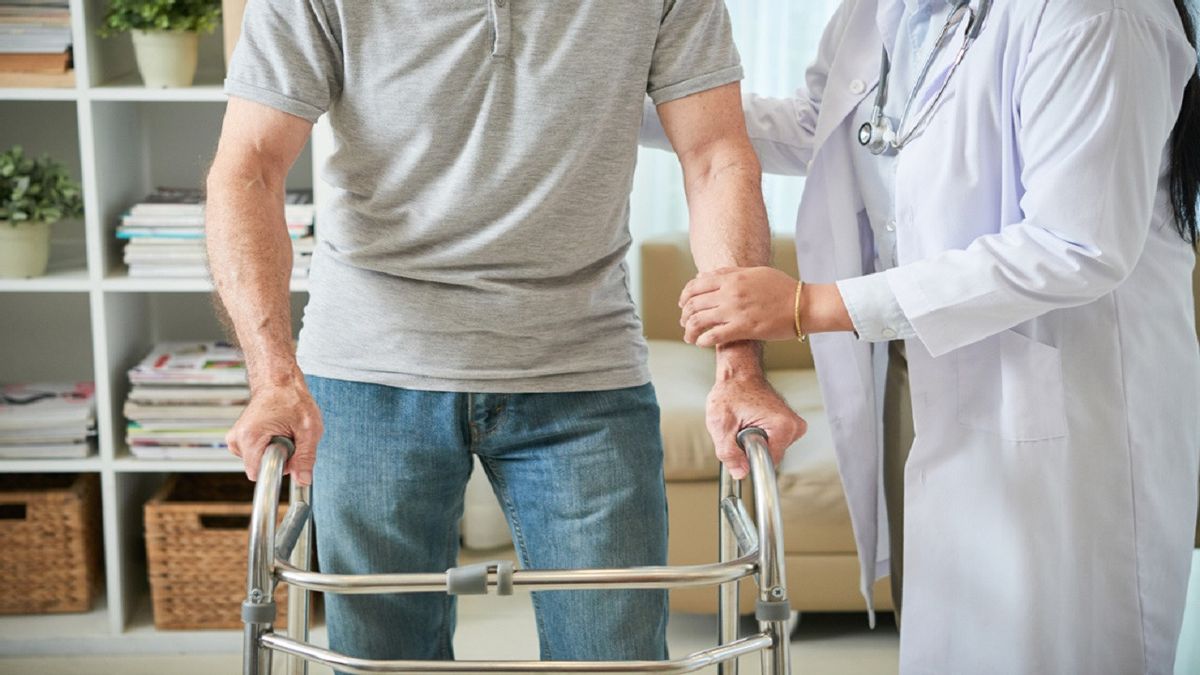


YOGYAKARTA - A left brain stroke will result in the right side of the body being paralyzed. Therefore, the therapeutic movement for left stroke patients has an important role to play in restoring the affected body functions. So how do you treat a left paralyzed stroke? Check out the full review below.
How to Cure Paralyzed Stroke on the Left SideReported from the Healthline page, the way to treat left hemiplegic stroke can be done with the following movements:
Hand StretchThis movement is useful for reducing muscle stiffness and improving flexibility in the hands and wrists affected by stroke. The hand stretching procedure is generally started in a sitting position or standing up.
The patient is then asked to stretch by moving the hand affected by the stroke in the opposite direction of the paralysis.
Standing on One LegThe next left stroke therapy movement that can be done is standing on one leg.
The procedure for this movement begins by standing up straight, either by holding on to a solid surface or with the help of a support device such as a chair or table.
The next patient lifts one leg off the floor, with the side of the body affected by the stroke as the main focus.
After one leg is lifted, try swinging it backwards slowly. This movement serves to improve postural control and increase stability, which is often disturbed after a stroke.
JinjitJinjit is a simple movement that we often do without realizing it, it turns out to provide great benefits for left stroke survivors.
Berjinjit can train proprioception, which is the body's ability to feel its own position and movement. This is important for maintaining balance and preventing falls.
Patients can start this movement by holding on to a sturdy surface, such as a chair or wall to maintain balance.
Next, the patient lifts the heel off the floor slowly, maintaining the position for a few seconds, and then lowers it back down with control.
The Squeezing MovementThe next left stroke therapy movement that can be done by the patient is the squeezing movement of objects such as rubber balls, sponges, or other materials.
The squeezing movement serves to improve the coordination and control of the small muscles in the hands that are important for performing daily activities, such as writing, eating, and dressing.
During the therapy, make sure the patient performs squeezing movements slowly and stably. In addition, pay attention to whether the patient feels comfortable and does not experience excessive fatigue during therapy.
Pundak ExercisePatients can apply it by sitting on a chair or standing in front of a table. Next, use a towel placed on the table surface.
The initial movement is done by holding the towel with both hands, then moving it back and forth as if wiping the table.
This process will involve the shoulder and arm muscles to move the towel with enough pressure, so that the strength and flexibility of the arm affected by the stroke can be improved.
In addition, additional movements can also be performed by standing in front of a mirror. Patients can be instructed to lift one side of the shoulder alternately up and back. This helps to strengthen the shoulder muscles and increase their range of motion.
Sitting and Standing RepeatedlyThe movement of sitting and standing repeatedly becomes one of the simple but beneficial left stroke therapies in improving balance, coordination, and walking ability on the side of the body affected by stroke.
This movement can be done at home without requiring special equipment. The procedure for this movement can be started by having the patient sit in a chair that is firm and stable.
Furthermore, to maintain balance, instruct the patient to stand slowly using the help of a chair or table in front of them.
After standing up, the patient may be asked to sit down again with good control, in order to keep the body position stable and avoid falling.
Leg Exercise While SittingThe next movement, to restore physical condition, stroke patients can do leg exercises while sitting.
This exercise procedure begins by sitting on a sturdy chair or on a bed. Next, the patient can be instructed to maintain an upright and comfortable body position.
Next, move your feet by bending your knees and lifting them to touch your stomach slowly. Do this movement over and over again for several times.
If done consistently, this exercise can increase strength and the ability to support the body while standing or walking.
The Reaching MovementThis left-side stroke therapy movement is applied to help restore range of motion, fine motor function, and coordination in the arm affected by stroke.
The procedure for this movement can be started by having the patient sit in a sturdy chair or stand in front of a table. Then, the patient is instructed to attach the arm affected by the stroke to the table or other flat surface.
Next, move your hands as if you were reaching for an object in front of the patient by straightening your arms and extending your fingers.
Reaching movements can also be combined with the use of assistive devices or increased intensity to adapt to the individual abilities of the patient.
For example, by using light weights or adding resistance when performing reaching movements to increase the challenge on the muscles affected by stroke.
That's a review of how to treat left hemiplegic stroke. Visit VOI.id for other interesting information.
The English, Chinese, Japanese, Arabic, and French versions are automatically generated by the AI. So there may still be inaccuracies in translating, please always see Indonesian as our main language. (system supported by DigitalSiber.id)


