


JAKARTA - The problem of stunting or tengkes is still a serious health challenge in various regions in Indonesia. The impact is not only seen in children's physical growth, but also on cognitive development and long-term quality of life.
Therefore, stunting prevention efforts require comprehensive attention, ranging from nutrition education, improving health services, to strengthening intervention in vulnerable groups so that the risk of chronic malnutrition can be reduced as early as possible.
Deputy Governor (Deputy Governor) of Gorontalo Idah Syahidah Rusli Habibie expressed his seriousness in dealing with tengkes in the area considering the number of stunting cases experiencing fluctuations.
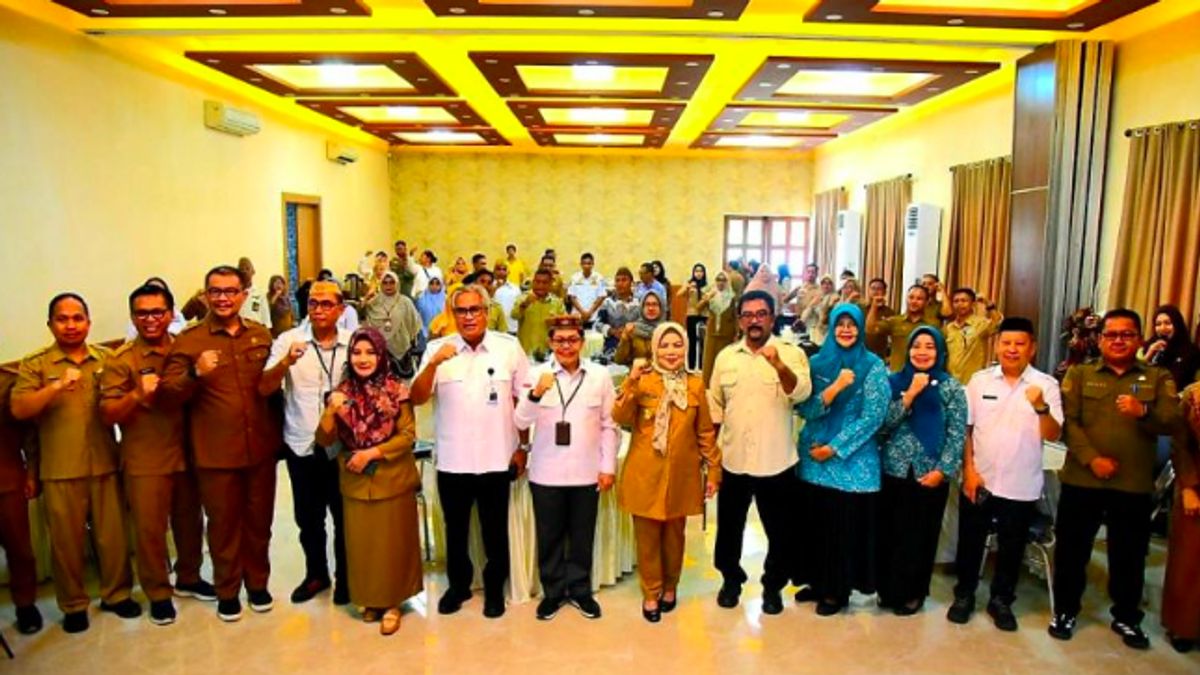
"The handling of tengkes (stunting) must be the main focus of all of us," said Deputy Governor Idah in Gorontalo, Tuesday, when opening the Technical Coordination Meeting (Rakortek) for Prevention and Acceleration of Stunting Reduction at the Gorontalo Province Level.
He emphasized that the increase in stunting prevalence must be responded to with more serious, measurable steps, and involve collaborative work from various levels of government, from the center to villages and sub-districts.
"Stunting is a growth and developmental disorder for children due to chronic malnutrition and repeated infections. Its handling requires specific intervention to address direct causes and sensitive interventions to address indirect causes," said Idah.
Fluctuations in stunting rates in Gorontalo do show unstable conditions. Based on SSGI in 2021, prevalence was at 29 percent, decreased to 23.8 percent in 2022, then increased again to 26.9 percent based on the 2023 Indonesian Health Survey (SKI), before falling back to 23.8 percent in 2024.
SEE ALSO:
-
 | BERNAS
Jangan Malu Berbahasa Daerah Jika Ingin Kelestarian Budaya Indonesia Terjaga
12 Oktober 2023, 23:00 -
 | LIFESTYLE
Cara Melestarikan Kearifan Lokal yang Wajib Diketahui Sebelum Terlambat
03 Oktober 2025, 23:30


This achievement is still quite far from the national target of 14 percent as stated in Presidential Decree Number 72 of 2021.
"Seeing this trend, all regional and community apparatus, both provincial and district/city, must work harder. The Gorontalo Province Stunting Reduction Acceleration Team (TPPS) must be at the forefront of reviewing, formulating, and establishing the direction of stunting reduction policy," he said.
Idah also reminded that target groups such as teenagers, prospective brides, pregnant women, breastfeeding mothers, and children aged 0 to 59 months need to be the focus of attention in efforts to prevent stunting.
This is also in line with the Free Nutrition Food Program (MBG) which is expected to be able to improve the quality of community nutrition and break the chain of stunting.
He emphasized that the MBG Program must be used optimally to produce healthy, intelligent, and quality generations.
He also advised young women to regularly take vitamins and maintain nutritional intake to prevent anemia, which can affect the risk of giving birth to children with stunting conditions.
The coordination meeting was attended by 60 participants from across programs and sectors in the TPPS, including representatives from the Health Office, Bappeda, and BKKBN. The activity is held using a lecture and discussion method.
The English, Chinese, Japanese, Arabic, and French versions are automatically generated by the AI. So there may still be inaccuracies in translating, please always see Indonesian as our main language. (system supported by DigitalSiber.id)


