
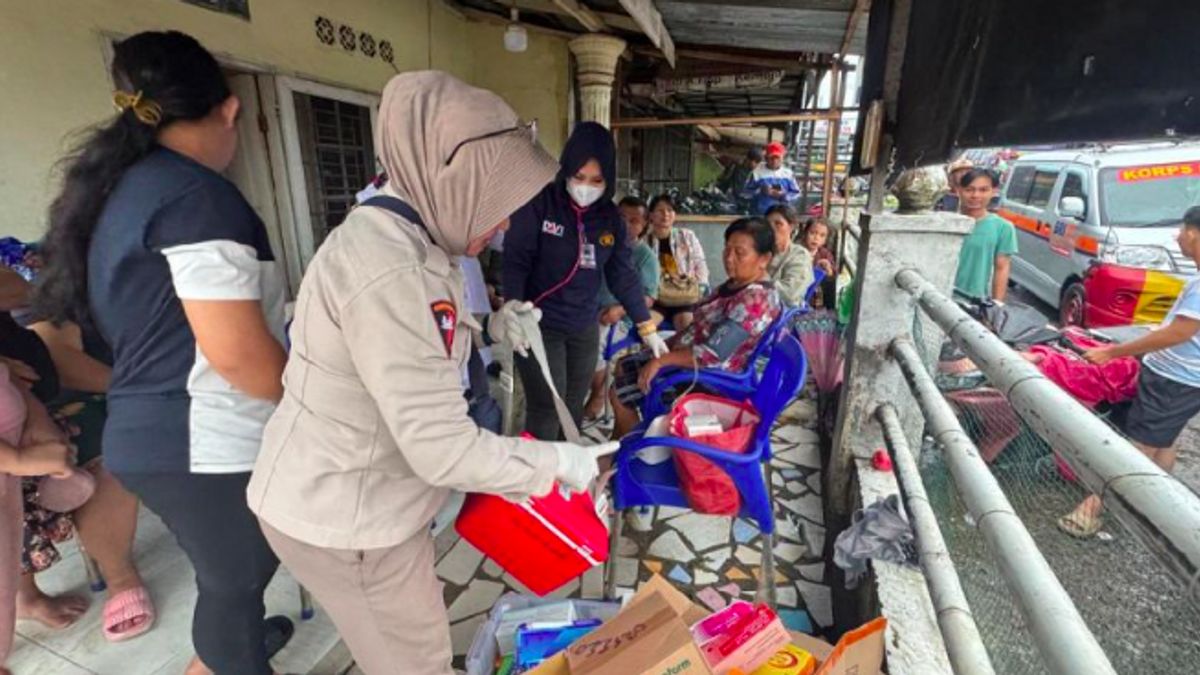


JAKARTA - The Indonesian Pediatrician Association (IDAI) is moving quickly to provide health services, psychosocial support, as well as logistical assistance for children and vulnerable groups affected by floods and landslides in the Sumatra region.
The Chairperson of the IDAI Central Management, Piprim Basarah Yanuarso, emphasized that in emergency conditions, groups such as children, people with disabilities, the elderly, and pregnant women need special attention. He emphasized that their safety and health must always be a top priority during the evacuation process to a safe location.
Based on data compiled by IDAI, in West Sumatra there were 148 victims who died, including four children. Of these, 123 people have been identified while 25 others are still not recorded, and 105 people have been declared missing and eight are undergoing treatment.
In North Sumatra, field reports showed dozens of casualties and hundreds of affected residents in several districts, such as Sibolga, Tapanuli, Langkat, and Binjai. Meanwhile in Aceh, the focus of handling is more directed at access problems and limited health services in affected areas such as Pidie Jaya.
To respond to this condition, IDAI has deployed a team of pediatricians from the branches of Aceh, North Sumatra, and West Sumatra. They collaborated with BNPB, the Health Service, and various other professional organizations in providing medical services and direct assistance at the disaster site.
"A team of pediatricians from the three branches of IDAI, Aceh, North Sumatra, and West Sumatra, have gone directly to the disaster site, collaborating with BNPB, the local Health Service, and other professional organizations," said Piprim.
SEE ALSO:
-
 | LIFESTYLE
WHO Bongkar Fakta: Pukulan Orangtua Bisa Tinggalkan Luka yang Tak Sembuh
21 Agustus 2025, 16:25 -
 | INFO SEHAT
Batas Pemberian Gula dan Garam pada MPASI: Berikut Penjelasan Lengkapnya
20 Agustus 2025, 09:55

In addition to health support, IDAI also distributes non-medical assistance such as basic needs for children, nutritional support for toddlers, trauma assistance, and assistance for the recovery of learning activities.
But in the field, the team faced a number of obstacles, including limited medicines for handling ARI, diarrhea, and skin diseases, difficult access, minimal logistics, limited health workers; and the threat of environmental health problems.
IDAI encourages the community to help victims, especially children, through donations or as health volunteers. The types of assistance most needed include child medicines, formula milk, baby food, clothes and blankets, clean water, and personal hygiene equipment.
Piprim also expressed his appreciation to all IDAI branches and the disaster task force team who have swiftly cooperated with BNPB, the Health Service, TNI/Polri, and volunteers so that assistance can be distributed on target.
The head of the IDAI Disaster Management Task Force, Kurniawan Taufiq Kadafi, added that his party continues to strengthen coordination for medium-term handling. IDAI also expands the reach of assistance and improves cross-professional collaboration with local governments and humanitarian institutions.
In addition to the emergency response, IDAI has begun to prepare for the recovery stage with a focus on children's health, providing clean water, monitoring of preventable diseases with immunizations such ascampus, and ongoing psychosocial support.
The English, Chinese, Japanese, Arabic, and French versions are automatically generated by the AI. So there may still be inaccuracies in translating, please always see Indonesian as our main language. (system supported by DigitalSiber.id)


