


JAKARTA - Along with technological advances in various fields, digital innovation now supports the implementation of social programs, including the government's efforts to provide free nutritious food for students, especially children with special needs.
One of the modern approaches adopted is the use of artificial intelligence (AI)-based monitoring systems to ensure real-time safety, quality, and distribution of healthy foods.
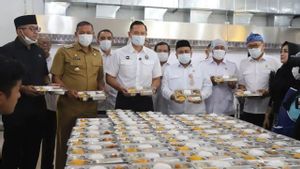
An inclusion foundation that focuses on education for children with disabilities, the National Pelita Inclusion Foundation (YIPB), recently made a visit to a nutritious food monitoring center (Command Center) which is part of a food distribution monitoring system in the Tangerang Raya area.
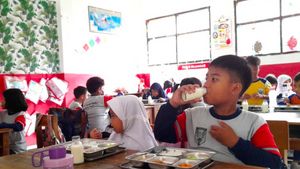
This program has reached more than 1,100 students and 200 teachers in 11 Special Schools, and involves eight local MSME actors as partners providing nutritious food.
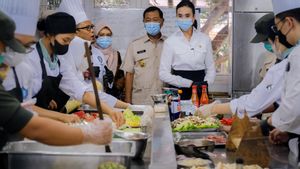
The Command Center functions as an intelligent technology operational center capable of monitoring the entire food production and distribution process through AI-based surveillance cameras installed at MSME kitchen critical points, including cooking, recitation, and food handover areas.
This camera works on a limited basis only during the preparation and packaging process, and has received approval from the food provider.
The visual technology used allows the system to detect important things such as kitchen hygiene, completeness of worker sanitation attributes (masks,gurs, and hair coverings), to the presence of pests automatically. This process is not only supervised by AI, but also by the manual supervisory team to ensure the accuracy and validity of the data.
SEE ALSO:

This system is also connected to an integrated digital dashboard that allows schools and food providers to fill out reporting forms directly, with data that can be monitored by the center in real-time. This facilitates tracking, detection of violations, and faster and more transparent settlement of incidents.
There are five stages in the incident handling system, ranging from AI detection of violations, manual validation, daily reporting to related parties, corrective action after repeated violations, to thorough evaluation for increasing SOPs.
National disability driving figure, Reda Manthovani, welcomed the existence of this technology. According to him, this monitoring system is an example that technology can strengthen public trust in the distribution of social assistance.
"This kind of approach is very relevant to be replicated in other social programs in Indonesia," he said in Grab-Ovo's official statement to VOI.
The program organizers explained that this system is the result of internal development that has gone through intensive trials. The goal is not only supervision, but also to build a safe, transparent, and supporting food distribution ecosystem for the local economy, especially MSME players in the program implementation area.
"For us, this program is not just a social initiative. This is a form of our long-term commitment to help create a healthier future for Indonesian children. We also want to show that technology can have a real social impact," said Neneng Goenadi, Country Managing Director of Grab Indonesia.
This free nutritious dining program has been taking place since April 2025 with the support of local governments and related agencies, including the Education Office and the Health Office in three administrative areas of Tangerang.
In addition to food distribution, the program also involves nutrition education for food providers, kitchen environment checks, and sanitation standard training.
This initiative has been extended to a number of other areas since late 2024, such as Kulon Progo (DIY), Kebumen (Central Java), and Minahasa (North Sulawesi), reaching thousands of students and teachers. In addition to ensuring nutritional adequacy, this program also empowers local MSMEs and opens up additional income opportunities for drivers involved in the logistics of food distribution.
Furthermore, this monitoring system will continue to be developed to make it more efficient, adaptive, and have a broad impact in supporting the sustainability of free nutritious eating programs targeting children from vulnerable groups.
The English, Chinese, Japanese, Arabic, and French versions are automatically generated by the AI. So there may still be inaccuracies in translating, please always see Indonesian as our main language. (system supported by DigitalSiber.id)
Most Popular Tags
#Prabowo Subianto #donald trump #Febrie Adriansyah #8791 #giias 2026Popular


