


JAKARTA - Handling stunting is one of the main priorities of the Ministry of Population and Family Development (Kemenduk bangga) in realizing a healthy and superior generation of Indonesia.
Through an upstream and collaborative approach, the Ministry of Education is proud to target a complete breaking of the stunting chain from providing clean water, proper sanitation, to fulfilling maternal and child nutrition.
The Minister of Population and Family Development as well as the Head of the BKKBN, Wihaji, said that the government is currently preparing a cross-sector work team, referred to as a "dream team", to accelerate the handling of stunting in Indonesia.
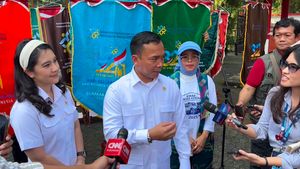
"The term is a dream team. It's about togetherness to complete stunting, although not yet completely perfect," said Wihaji when met at the Office of the Ministry of Education and Culture/BKKBN, Jakarta, after opening basic CPNS training, recently.
According to Wihaji, the stunting treatment approach will be directed more sharply to the upstream aspect, including access to clean water, sanitation, and balanced nutritional intake for pregnant women, breastfeeding mothers, and toddlers who have not been served by PAUD.
This program will be strengthened through collaboration with the National Nutrition Agency (BGN) in the form of the Free Nutrition Food Program (MBG).
"In this scheme, water and sanitation are managed by the related sector, while nutrition will be handled by BGN. Manpower, data, and distribution are the responsibility of the Ministry of Education and Culture, while MBG materials and logistics are prepared by BGN," he explained.
Wihaji emphasized that cross-ministerial and institutional cooperation will be finalized in 2025, including sharpening the role and responsibility of each institution. The focus of handling is directed at the group of pregnant women, breastfeeding mothers, and non-PAUD toddlers, who are the main targets in MBG.
In the future, it will be clearer who is doing what and where. The Ministry of Education is proud to handle data collection, distribution, and special evaluations for MBG. This program is unique, because there is no match in other countries," added Wihaji.
SEE ALSO:
-
 | KESEHATAN
45 Ribu Keluarga Risiko Stunting di Lebak Jadi Target Intervensi 2025
26 Juni 2025, 14:25
In a previous working meeting with Commission IX of the DPR RI, Wihaji also said that the government prioritized handling of 1.4 million families at risk of stunting from the decile group 1 which is 10 percent of the poorest households in Indonesia.
"Based on data from the Family Information System, of the 42 million couples of fertile age, there are around 8.6 million families at risk of stunting. Among them, 1.4 million are in the poorest group and this is a priority intervention," he said.
Wihaji also highlighted the importance of involving religious, traditional and community leaders in communication strategies and behavioral changes. In many areas, these figures are still very influential in shaping people's views on health issues.
"Sometimes people listen more to religious and traditional leaders. So, their role is very important in education on prevention and handling stunting," he said.
Furthermore, Wihaji underlined that non-gizi factors such as the availability of healthy latrines and habitable houses are also contributors to the risk of stunting that cannot be ignored. He revealed that millions of families in Indonesia are still living in inadequate sanitation conditions.
"Of the 8.6 million families risk stunting, 3.7 million do not have proper latrines, 1.9 million lack access to clean drinking water, and 4.3 million couples of fertile age experience four conditions too (too young, old, close, and many), and have not used modern KB," explained Wihaji.
Through an integrated and data-based approach, the Ministry of Education is proud to target a reduction in stunting rates not only through direct intervention, but also by improving the environment and a healthy lifestyle in the community.
The English, Chinese, Japanese, Arabic, and French versions are automatically generated by the AI. So there may still be inaccuracies in translating, please always see Indonesian as our main language. (system supported by DigitalSiber.id)


