
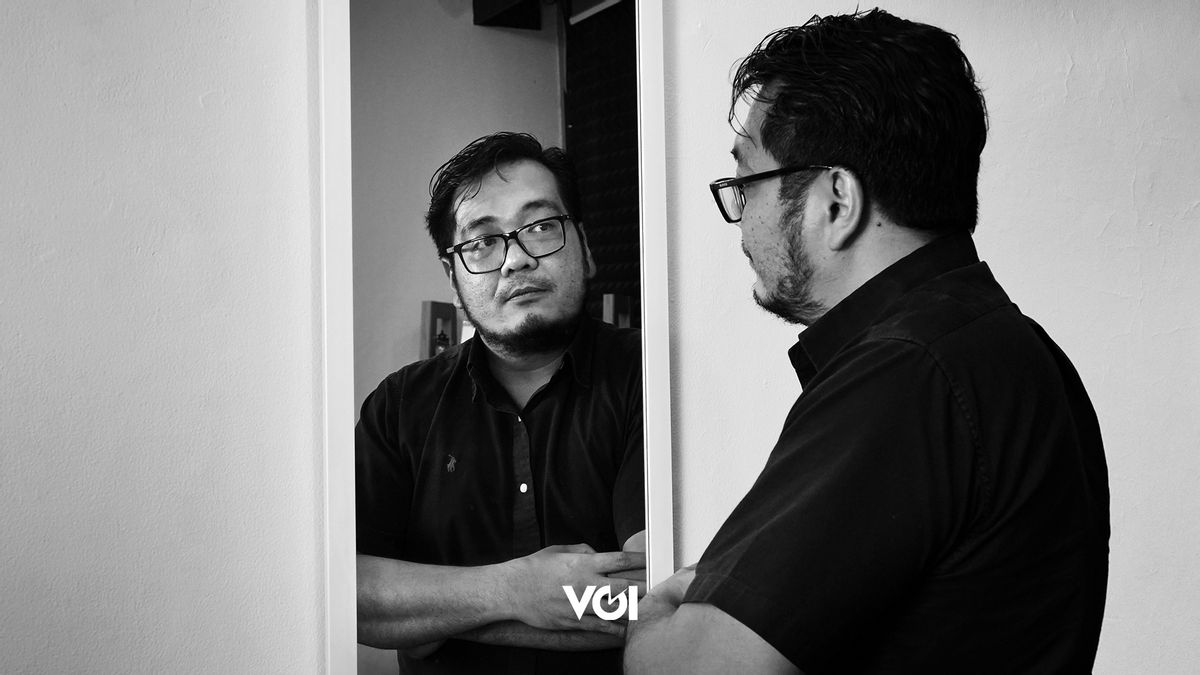


Many were shocked when rains struck Aceh, North Sumatra, and West Sumatra at nearly the same time, triggering massive flooding that destroyed roads, bridges, homes, schools, and public facilities, and claimed lives. According to Boy Jerry Even Sembiring, Executive Director of the Indonesian Forum for the Environment (Walhi), what occurred was an ecological disaster. The logs carried by the floodwaters are evidence of extensive logging in forest areas.
***
As of Sunday, December 7, according to data released by the National Disaster Management Agency (BNPB), the death toll had reached 940. The highest number of victims were in Aceh Province (366); North Sumatra (329); and West Sumatra (226). Meanwhile, 392 people were reported missing: Aceh (97); North Sumatra (82); and West Sumatra (213).
In addition to the loss of life, the floods also disrupted transportation access, as many roads and bridges were damaged or impassable. According to Celios, the losses caused by the floods in the three provinces reduced GDP by 0.29%. "Nationally, there was a decline in Gross Domestic Product of IDR 68.67 trillion, equivalent to 0.29 percent," said Celios Executive Director, Bhima Yudhistira Adhinegara, in a written statement on Friday, December 5.
Boy Jerry Even Sembiring stated that those who contributed to this disaster must be held accountable. "We at Walhi call the floods in Aceh, North Sumatra, and West Sumatra an ecological disaster. This isn't entirely a natural disaster, as capital intervention is involved. Therefore, it can also be called a capital disaster. The environmental damage and disasters that occurred are the result of capital intervention legalized by the state. Who can be held accountable for this disaster? First, the state, and second, the permit holders," Boy emphasized.
Therefore, his organization is preparing legal steps to sue—both criminally and civilly—the parties suspected of having a role in this flash flood disaster. "We are currently completing the data, and we will file a police report soon," he told Edy Suherli, Bambang Eros, and Irfan Meidianto from VOI, who met him at the Walhi Jakarta office on Wednesday, December 3, 2025.

How does WALHI interpret the massive floods that simultaneously hit Aceh, North Sumatra, and West Sumatra? Are they a natural phenomenon or the result of ecological damage?
From a natural perspective, it's true that there was heavy rainfall and a cyclone. But it must also be considered that the cyclone's presence and the severity of the disaster were caused by human-caused natural damage. The question is, which humans? The occurrence of cyclones at the equator and the unpredictable weather changes indicate a drastic shift in environmental dynamics.
Furthermore, the high number of victims and the extensive damage indicate that environmental damage has occurred. In the three provinces affected by the disaster, illegal mining activities were the primary trigger for environmental damage.
During the floods, hundreds of cubic meters of logs were seen floating. Is this evidence of large-scale logging?
The drifting logs indicate violations. Law enforcement in such incidents has not utilized technology optimally. If the government had used technology such as satellite imagery, it would have revealed evidence of illegal logging activity in the three provinces affected by the floods. Even if there were legal forest clearing activities, I suspect there were errors in the permit issuance. The permits issued did not take into account environmental capacity, disaster assessments and vulnerability, and public safety.
The damage caused was severe. How can we describe this situation?
We at Walhi call the floods in Aceh, North Sumatra, and West Sumatra an ecological disaster. This disaster is not entirely natural, as it involves capital intervention. Therefore, it can also be called a capital disaster. The environmental damage and disasters that occurred are the result of capital intervention legalized by the state. Who can be held accountable for this disaster? First, the state, and second, the permit holders.
On the island of Sumatra, how much forest is there, and how much has been cleared illegally?
Forests on the island of Sumatra cover less than 8 million hectares. Over the past ten years, three provinces—Aceh, North Sumatra, and West Sumatra—have consistently experienced deforestation of 20,000–60,000 hectares per year. So, some activities are legalized, but many are also illegal, for the benefit of mining, palm oil plantations, and the forestry industry.
What about law enforcement in this regard?
First, there is the reckless issuance of permits. Raja Juli Antoni (Minister of Forestry) stated that forestry governance must be revised. This poor licensing scheme is the cause of the disaster. Second, the deforestation that occurred shows the weakness of the law enforcement process. Third, considering the large number of victims, it means that the state has not yet incorporated disaster policy as important information in its spatial planning. In the context of law enforcement, oversight is very weak.
This must be addressed before it is considered a regular annual occurrence. Look at the forest fires; they have occurred consistently since 1997. Have there been any policy updates? They have only been recently implemented.

So, is it true that stricter regulations regarding forestry and mining business permits in forest areas, along with stricter oversight, are necessary?
We urge the government to stop issuing new permits in mining, forestry, plantations, and other sectors. Most importantly, the government must fulfill its promise to review the permits already granted.
Which companies are among the many companies suspected of causing the disaster?
Around 400 mining companies are suspected of causing this disaster. Of these, 631 have obtained permits, 40 are in the forestry sector, and 100 are developing oil palm plantations. This is not to mention the illegal activities that are being ignored. Where does the government stand when activities harm the environment and the community?
What concrete steps will Walhi take?
We are currently compiling data to file a criminal complaint and urging the government to evaluate its permits. We are directing our report to the Ministry of Forestry and the Ministry of Environment. We urge the governments of the three provinces to review the permits they have issued so far. They must include disaster and environmental safety factors in issuing permits. That's the quickest step to take.
Furthermore, we are also mobilizing solidarity and assistance for those affected by the disaster.
So, someone must be held accountable after this ecological disaster?
We don't need to worry about who is responsible. The state is obliged to provide protection and welfare to its people. Therefore, the state is responsible for this disaster. Furthermore, those who benefited most from the process that led to this disaster must also be held accountable. Systemic changes must be made to minimize similar disasters.
As for entrepreneurs, can they be forced to comply with regulations requiring them to use sustainable principles in running their businesses?
That is indeed their obligation. When opening a business by clearing forests or certain areas, they are required to carry out conservation. The state's duty is to ensure that entrepreneurs implement conservation properly to prevent environmental damage. We have recorded 21 million hectares of natural forest within concession areas. We urge the state to stop entrepreneurs from clearing natural forest. The state must enforce the law to create a deterrent effect. The state must be there for the people and the environment.
Following the disasters in these three provinces, the President and relevant ministers issued a statement that comprehensive repairs must be carried out. We expect this to be more than just a statement, but also a reality. The floods in Aceh, North Sumatra, and West Sumatra damaged roads, bridges, and other infrastructure, requiring significant repair costs. Hopefully, this serves as a valuable lesson.
The massive destruction of forests in Indonesia began in the early 1970s. At that time, permits were easily obtained and large-scale investment was influx. Consequently, Indonesia lost its forests rapidly. The cleared land was then converted into mining and palm oil plantations.
Businesspeople and the government often use forest clearing as a pretext for economic growth and development. How would you critique this rationale?
We can examine which economy is improving? Some jobs may be created, but how many? Is it worth it when compared to the environmental damage that has occurred? In my opinion, prioritizing economic interests is not the right step to ensure environmental protection.
President Prabowo is targeting 8% economic growth. That's a good target, but can it guarantee that the environment will remain safe and accessible for our children and grandchildren? The state should require companies opening businesses involving forest clearing to deposit a certain amount of security deposit so that when a disaster occurs, the security deposit can be used for repairs. The goal is to prevent the state from incurring losses and continuously spending large sums on post-disaster recovery. Meanwhile, who is reaping the huge profits? This must be a policy going forward. Companies must also be held accountable.
Are the profits balanced compared to the environmental damage that has occurred?
The profits may be substantial, but the question is, who benefits most? Does this state exist to serve the interests of a handful of businesspeople or the interests of the people?
The environment has been damaged. What is Walhi's call to the state, businesses, and the public?
The state must protect the people and the environment. People must be prioritized for assistance. The state must also implement existing regulations and laws, including reviewing permits and correcting any errors in their implementation. If necessary, take legal action—both criminal and civil. The state must also maximize technology to monitor the use and conversion of natural forests. The central government must also correct local governments whose spatial planning regulations are inappropriate.
Companies engaged in forest conversion must be held accountable for environmental damage, including to the affected communities. The state must also prepare its citizens to be ready for potential disasters and develop policies to help them recover from them.
There's no excuse for avoiding it anymore, is there?
Yes, action must be taken, whatever the language. No more gimmicks to the public. Rapid evaluation and law enforcement are needed. Remember, more than 700 people have died, many are missing and unaccounted for, and those who have lost their homes and businesses. Is state revenue from the forestry sector directly proportional to the people's welfare? This must be rehabilitated, otherwise this disaster could recur in the next few years.
In the context of climate change, it's not just these three provinces that require attention. All provinces are potentially affected and must be prepared.
You mentioned earlier that you would report companies suspected of having a role in this disaster. When?
Soon. We have completed the data for reporting to the police. Several companies are suspected of having a role in the disasters in Aceh, North Sumatra, and West Sumatra. Of the 631 companies, we are currently selecting which ones are most deserving of legal action. In addition to pushing for criminal and civil proceedings, we are also urging a review of their permits and requiring them to pay fines for the disaster. Those who profited the most must be held accountable.
Boy Jerry Even Sembiring Faced Opposition Upon Returning to Walhi

Walhi's Executive Director, Boy Jerry Even Sembiring, has experienced the ups and downs of pursuing a career at Walhi. Initially, his mother disapproved of his pursuing a career in an environmental NGO like Walhi. However, she gradually began to understand and now fully supports him.
Amidst his busy schedule managing Walhi and the various issues it handles, he strives to maintain a balance between work and rest. "For the past three months, I haven't had any hobbies; I've just been focused on work and work. What I do pay attention to is maintaining a sleep schedule, and I hope to get five hours a day," said the man born in Pekanbaru on June 27, 1987.
He still exercises, even if it means making time for it. "Right now, the most I can do is walk or run on a treadmill and also lift weights. As I get older and gain weight, I've had to give up sports I enjoyed like soccer and taekwondo," said Boy, who chose these sports on the recommendation of a doctor.
Due to his increased workload, he has also reduced the amount of exercise he does. "A month ago, my exercise duration was still consistent, 30 minutes per day. But lately, if I can even exercise two days a week, I'm truly grateful," he said.
Start Reducing Food Quantity

Despite his busy schedule, Boy Jerry Even Sembiring makes time for exercise. A month ago, he was consistently exercising every day for 30 minutes. Recently, however, he's only exercising twice a week. (Photo by Bambang Eros VOI, DI: Raga Granada VOI)
Regarding food, Boy still feels relatively safe. "I don't have any dietary restrictions, but I have to be self-aware and not overindulge. I have to limit the amount of food I eat," said Boy, who graduated from the Faculty of Law, Riau Islamic University, Pekanbaru (2009).
He has reduced some foods, such as those containing carbohydrates. He has slightly increased portions of protein.
When he's working out of town, he doesn't plan any culinary trips. "I just focus on work; when it's time to eat, I eat. So I don't set out to find specific foods from the areas I visit," said the man who completed his Masters in Law at Diponegoro University, Semarang (2012).
Despite his busy schedule, Boy still cares for his family. "If I had to wait for a break, it would have been difficult. In between my busy schedule, I made time to call my family," he said.
When he decided to return to Walhi in 2013, his family gradually began to understand his activities.
Occupational Risks

As an environmental activist, his work sometimes faces opposition, especially from those who feel disturbed. "The most intense was when I was serving in Rempang, Batam, in 2023–2024. What was annoying was that almost everywhere in Rempang there were banners reading 'Expel Boy' and 'Expel Walhi Riau,'" he recalled.
Basically, Boy continued, there were always attempts to corner him and stigmatize him. "There was also a post on TikTok featuring a photo of a nightclub, and there was also a photo of me that was edited. I responded to that post, saying maybe the person posting it really likes nightclubs," said Boy, who was already aware of the risks of becoming an environmental activist.
It was his father who introduced Boy to the nation's major issues. "Since junior high and high school, I was told to read books like *Di Bawah Bendera Revolusi* (Soekarno), *Sebelum Prahara: Pergolakan Politik Indonesia 1961–1965* (H. Rosihan), *Memoar Bung Hatta*, *Multatuli* (Eduard Douwes Dekker), and many other movement books," said Boy, who also read the works of Pramoedya Ananta Toer.
Before returning to Walhi (Indonesian Forum for the Environment), he worked in a law firm. "I wasn't cut out to be a lawyer, so I returned to Walhi. But my mother didn't agree, and we worked in secret for almost a year," he recalled.
In 2015, Boy Jerry Even Sembiring wrote a novel based on his advocacy experiences. The title is *Cerita dari Sungai Tohor*. "I wrote the novel based on our successful advocacy. And it turns out my mother read the novel. Only then did she understand my choice to join Walhi," he said.
"We at Walhi call the floods in Aceh, North Sumatra, and West Sumatra an ecological disaster. It's not entirely a natural disaster, as capital intervention is involved. Therefore, it can also be called a capital disaster. The environmental damage and disasters that occurred arose from capital intervention legalized by the state. Who can be held accountable for this disaster? First, the state, and second, the permit holders."
The English, Chinese, Japanese, Arabic, and French versions are automatically generated by the AI. So there may still be inaccuracies in translating, please always see Indonesian as our main language. (system supported by DigitalSiber.id)
Most Popular Tags
#Prabowo Subianto #donald trump #firearm #8791 #giias 2026Popular


