
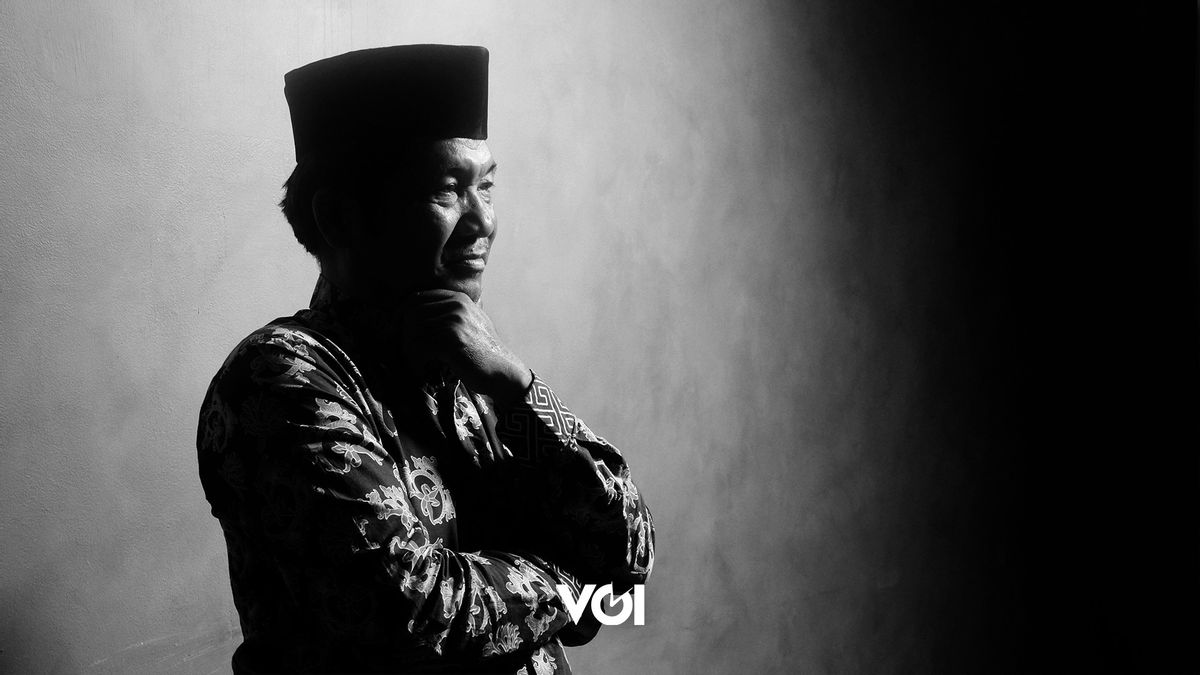


The behavior of Indonesian politicians has recently infuriated the public. Some have been clamoring to eradicate corruption, collusion, and nepotism (KKN) but have instead been caught in sting operations (OTT) by the Corruption Eradication Commission (KPK). There are also representatives whose words and actions have angered the public, even triggering demonstrations in Jakarta and several other cities. According to Ray Rangkuti, Executive Director of Lingkar Madani, many of our politicians and officials have become "politicians of the lips"—their words are sweet, but their actions are far from it.
***
The Corruption Eradication Commission (KPK)'s sting operation (OTT) against the Deputy Minister of Manpower, Immanuel Ebenezer, also known as Noel, shocked the public. The former chairman of Jokowi Mania (JoMan) during his tenure frequently conducted surprise inspections of companies, primarily targeting occupational safety and health (K3) certification.
However, there was a hidden agenda. Behind these surprise inspections, Noel was suspected of extorting money from the companies he visited. During the sting, KPK officers confiscated evidence including several four-wheeled and two-wheeled vehicles, Rp 170 million (approximately US$1,201) in cash.
It turns out Noel wasn't operating alone. Several officials within the Ministry of Manpower and several individuals from private companies were also involved. They were arrested by the KPK and will be held accountable for their actions.
The House of Representatives (DPR RI) was also in turmoil. Several politicians were accused of hurting the public through their words and behavior. Take Ahmad Sahroni and Nafa Urbach from the NasDem Party, Eko Hendro Purnomo and Uya Kuya from the National Mandate Party (PAN), and Adies Kadir from the Golkar Party. These five individuals have been suspended by their respective parties as members of the Indonesian House of Representatives (DPR RI) for allegedly offending the public.
According to Ray Rangkuti, these politicians only pay lip service. "They talk about poverty while enjoying delicious food at fancy restaurants. They talk about anti-corruption while targeting projects, and so on. They're called lip service politicians; their words are sweet but their actions contradict each other. This isn't just happening to Noel, but to many of our politicians," he told Edy Suherli, Bambang Eros, and Irfan Meidianto during a visit to the VOI office in Tanah Abang III, Central Jakarta, on August 26, 2025.

As a fellow activist, Ray Rangkuti was deeply saddened and ashamed to learn that Immanuel Ebenezer, also known as Noel, was caught in a KPK sting operation. (Photo: Bambang Eros VOI, DI: Raga Granada VOI)
The arrest of Deputy Minister of Manpower Immanuel Ebenezer Gerungan, also known as Noel, shocked many. How do you view this case?
Frankly, I was sad and disappointed to hear the news that Noel was caught in a KPK sting operation. Personally, I've known him for quite some time, since 1996 or 1997. We're both activists in the field. We often interact and know each other. That's why I was sad and disappointed to learn that he was caught by the KPK.
Is this completely contrary to the spirit of reform?
One of the spirits and ideals of reform is to fight corruption, collusion, and nepotism (KKN). But Noel was arrested. With this incident, I believe one of the struggles of the 1998 activists has been tarnished and injured by his actions.
As an activist, his integrity should be stronger than those who suddenly plunged into politics without experiencing the bitterness of the struggle to free the country from corruption, collusion, and nepotism. But when he reached the level of an official and state administrator, he was caught in a KPK sting operation. This is what disappoints me. He shouldn't have been tempted to do that.
As a friend, how do you see Noel as a person?
He's quite considerate of fellow activists. He's the type who doesn't hold grudges. If they fight or argue, they're friends again. He doesn't let it get to him. If he gets angry, he gets angry, but after that, there's no resentment. I personally often debate ideas with him in many places.
If we look closely, many activists and freedom fighters end up in prison for their struggles. But Noel is different. What's your take on it?
Actually, in the struggle, activists don't have to go to prison. If some are imprisoned, it's usually because their ideas clash with those in power. Noel was imprisoned on suspicion of stealing public funds. That's clearly different.
If an activist is imprisoned for their ideas and struggles, they are respected. In fact, in some cases, both at home and abroad, after being released from prison, they can become leaders or heads of state. People respect their integrity. Nelson Mandela in South Africa, Anwar Ibrahim in Malaysia, and even our proclaimer, Sukarno, who was in and out of prison, were all honored. After the proclamation, when Sukarno and Moh. Hatta was appointed President and Vice President, and no one objected, as their integrity had been tested. In fact, his experience in prison strengthened his character.
Before his arrest, Noel frequently conducted spot checks. Do you think that was a form of public relations or a form of responsibility?
I don't know whether his actions were public relations or not. As an outsider, I only know about them from the media. As far as I know, Noel isn't the type to hide anything. When he makes spot checks, he tells the truth. As for what goes on behind the scenes, I don't know.
But his activities—whether he realizes it or not—have created an image of an active official. He makes spot checks everywhere, makes strong statements in the media, and appears assertive on talk shows.
Ultimately, that image turned into gossip when he was caught in a sting operation by the Corruption Eradication Commission (KPK). People's trust immediately collapsed. This doesn't mean he can't be active like Noel, but he must balance it with fortifying himself so as not to engage in reprehensible acts.
Noel is known for his vocal actions, even calling for the death penalty for corruptors. But he was caught in a sting operation. How do you see this contradiction?
His statements about corruption are indeed strong. So it's perfectly legitimate for him to be diligent in conducting spot checks. But it's wrong to use them solely for image building. These statements should be used as a moral compass. However, when the reality turns out to be contrary, the public scoffs. A seemingly tough front is actually caught in a KPK sting operation.
I don't think this is unique to Noel. Many of our political elites enjoy image building, but don't actually live it out. The House of Representatives, for example, are representatives of the people, but their lifestyles are at odds with the people they represent. We see a lopsided political culture: the facade is at odds with the reality behind the scenes.

Ray Rangkuti observed that many activists become pragmatists when they occupy certain positions, whether in the executive or legislative branches. (Photo: Bambang Eros VOI, DI: Raga Granada VOI)
For example?
They talk about poverty while enjoying delicious food in fancy restaurants. They talk about anti-corruption while targeting projects, and so on. They're often called lip service politicians, whose words are sweet but their actions contradict each other. This isn't just the case with Noel, but with many of our politicians.
Noel is an activist, so did he accidentally enter a corrupt system?
That could be a factor. He couldn't get out of the usual administrative traps. Our government system is designed to trap people into corruption. But if you read the chronology of events, it doesn't seem like that. There was a request in this case from a businessman. We'll just have to wait for the trial.
Is it because someone's integrity is fragile? Strong as an activist, but changes when they enter the bureaucracy?
Before taking office, they were shouting about anti-corruption, that the government must be transparent, dialogue-oriented, involve public participation, and so on. But when they came to power, it turned out that wasn't the reality. This is what's sad.
So it's not that they're shaping the bureaucracy, but the bureaucracy is shaping them?
Yes, more like that. That's the reality we see now.
Is this a trap set by the bureaucratic system to keep activists from speaking out?
It could be. What I'm worried about is that they're doing it consciously to survive in that elite circle.
You once said that being an activist doesn't necessarily require jail time. But with a corrupt system, how can you escape that trap?
I often talk about political Sufism. What I mean by that is, a Sufi is someone who takes just enough in this world and leaves the rest for others.
What's the limit of enough? Is it just basic needs?
Yes, just basic needs for survival. The problem is, with the power they already hold, they want to gain money and popularity at the same time. They have all three in their grasp: power, popularity, and money. That's what traps many officials.
If you want money, become an entrepreneur. If you want popularity, become a musician or actor. If you want power, don't seek money from it. That's what I call political Sufism.
This doesn't mean you have to be rich to enter politics. In fact, many of those caught in corruption cases are also wealthy. Corrupt behavior is a matter of desire and self-control. After entering politics, a simple life is what must be lived—especially after entering the Indonesian House of Representatives (DPR RI). Their lives should reflect the people they represent.
Is this one of the reasons for the recent demonstrations? That the behavior of our DPR members no longer reflects the people they represent?
In the last 15-20 years, the public has seen the lifestyles of DPR members have become very different from those of the people. For a long time, people have criticized the DPR RI as being like a luxury car showroom. Their lifestyle moves from hotel to hotel. There has been public understanding. Because of this understanding, DPR RI members have been continuously provided with facilities that ensure their comfort.
What's even more distressing is that the economy is currently struggling. If the economy were doing well, perhaps the criticism wouldn't be as harsh. So what's emerging is public resentment. There's a sense that they're a class apart from ordinary people.
Implementing this political Sufism is difficult for those accustomed to a life of luxury. What's the solution?
The question is, what makes members of the Indonesian House of Representatives (DPR RI) feel like they belong to a certain social class, different from the general public? Because they come from a certain social class from the start. Just look at them: most of them are the children of officials, the wives or husbands of officials, and so on. Even from their hometowns, they are elite. Their standard of living differs from that of the general public. When they enter the DPR RI and are asked to live like ordinary people, they can't. Why is that? Because they only know about poverty, hardship, or hard work, but they haven't experienced it.
So, it's difficult to realize it?
Have they ever experienced a situation where they can eat today but not tomorrow? If so, I'm sure they can relate. That's called empathy. So they don't want to live the same lifestyle as the general public.
So, how do we convince them that what they're doing is wrong?
This is a tough question, because it involves changing their mindset. Ideally, the first people to know about the people's hardships are the people's representatives. The first to know about the increase in rice prices should be the people's representatives. The same goes for other basic necessities. A child named Raya died of worms. Members of the House of Representatives (DPR) should have been the first to speak out.
However, these important cases rarely receive attention. Instead, what's circulating is the news of a housing allowance for members of the DPR RI of IDR 50 million per month. Even that, in their calculations, is still considered insufficient, considering the standard house rent is IDR 3 million per day.
What else did you observe about this demonstration?
The demonstration occurred because there was no opposition in our parliament. Ultimately, what emerged was a street opposition. The formal opposition is usually those who lost the election but remain in parliament. The informal opposition is made up of religious and community leaders. Then there's the dependent opposition, namely the people. Because the formal and informal opposition are so thin, a third opposition plays a role. Therefore, we don't know who the coordinator is or who is coordinating. This indicates unrest in society. If it can't be controlled, it could lead to chaos.
Do you predict whether these protests will continue?
As long as there is no change, the demonstrations will continue. If not on the streets, they will protest via social media. When members of the House of Representatives (DPR) recess in their constituencies, be prepared to be questioned by the public. A DPR member shouldn't just think about their party's voters, but about all the people. Therefore, formal and informal opposition are still needed so that aspirations aren't channeled solely through street opposition. Furthermore, it's necessary to build a caring society. The people must ensure that their choices—both executive and legislative—can be corrected if they are wrong. Don't remain silent.
So, will protests continue if DPR members aren't critical of the government?
Where have DPR members criticized the government's overall performance? Where are their stances on the free nutritious meal program, Danantara, the People's School, the Red and White Village Cooperative, the increasing number of layoffs, and so on?
The issue isn't just about the Rp 50 million housing allowance. Officials and representatives should also avoid making comments that challenge or demean the people.
In your opinion, has our activist movement shifted from idealism to pragmatism?
This isn't new; it's been happening for a long time. Many activists no longer question alleged human rights violations by officials, indicating they have changed. They also didn't question Gibran's nomination as vice presidential candidate the other day, which means they've changed. In fact, they seem relaxed about being led by a vice president rife with nepotism. That's a sign they've changed.
What needs to be done now?
What's needed now is a return to the spirit of reform. The New Order era was characterized by a powerful state, while the reform era is characterized by a powerful people. What also needs to be done is a change in culture. Independent institutions are complete; the problem lies in the culture shaped by the mindset.
Now we're back in the New Order era. Everything is centralized in the government. Budget cuts for regions have made it difficult for local governments to finance basic community needs, such as health and sanitation. As a result, local governments raise taxes to cover the costs. The state is now prioritized, even though the state should have been established to improve the welfare of the people.
At the same time, a sense of officialism is growing in our minds. People risk everything for office, including sacrificing their ideals. They once opposed nepotism, now they remain silent. They once opposed militarism, now they dress in military-style attire.
Ray Rangkuti and a Lifestyle Closer to Nature

Everyone must play a role in saving the earth, depending on their individual capacity. Ray Rangkuti is doing this through his back-to-nature lifestyle. (Photo: Bambang Eros VOI, DI: Raga Granada VOI)
Outside of his busy schedule as a political observer and Executive Director of Lingkar Madani, Ray Rangkuti chooses a lifestyle that is friendly to nature. He is acutely aware that environmental damage is partly due to human activity. Therefore, he strives to be as friendly as possible to nature, using it wisely. His practice is often referred to as "back to nature."
This man, whose real name is Ahmad Fauzi, owns rice fields and a garden in the Ciseeng area of Bogor Regency. "I have a small area of rice paddy where I grow rice without using chemical fertilizers, pesticides, or herbicides. So everything is done naturally. If I do use fertilizer, it's only manure," he said.
Is the harvest from your rice paddy sufficient to meet the family's needs? "Oh yes, quite a bit. In fact, because it's sufficient, I can sell it to some friends who already know my harvest," said the man born in Mandailing Natal, North Sumatra, on August 20, 1969.
According to Ray, his friends can distinguish the rice he grows from the rice commonly purchased at the market. "They say it's good. That's why they buy from me again and again. However, my rice doesn't last long. So I only mill the grain to order," continued the alumnus of the Faculty of Ushuluddin, Aqidah and Philosophy Program, UIN Syarif Hidayatullah Jakarta.
No Plastic Waste

Reducing plastic waste is one of Ray Rangkuti's concerns. When shopping at the market, he brings his own shopping bags from home. (Photo: Bambang Eros VOI, DI: Raga Granada VOI)
Plastic is one of Ray Rangkuti's concerns. He avoids using plastic packaging whenever possible.
"That's why when I shop at the market, I bring my own bag. I tell the vendors there's no need to wrap everything in plastic; just put everything in the shopping bag. Every purchase is wrapped in plastic. Imagine how much packaging is used, and it ends up in the trash," he said.
Why doesn't he want to use plastic? Because the plastic commonly used to wrap vegetables and other food items at the market is generally very difficult to decompose once it becomes waste. It takes hundreds of years to decompose in nature.
"That's why I try not to use plastic packaging. Because plastic waste will pollute the environment," explained the man who regularly uses public transportation.
Now in the Ciseeng area, many rice fields are being converted into residential areas.
"I'm still determined that rice fields should be used for rice fields, not for anything else. Even if someone offers it, I refuse," said the man who characteristically wears a peci (traditional Javanese peci) when appearing at formal events.
Message to Activists

Ray Rangkuti said this nation needs figures with character. There's a tendency for the current generation to become pragmatic as well. (Photo: Bambang Eros VOI, DI: Raga Granada VOI)
To young people, he advised them not to be tempted to become pragmatic like many activists. While still fighting on an idealistic path, after becoming an official or figure he changed to be pragmatic.
"This nation needs figures who have character. There is a tendency for the current generation to become pragmatic too. If they can refrain from contributing to things that will make the nation worse, that would be something extraordinary," said the observer who often appears on a number of television shows.
Our problem, Ray said, is not about money. "Our system is not bad, but we have lost a clean character to build the nation. If we can overcome this problem, the fifth principle of Pancasila is in sight," said Ray, one of the founders of the Independent Voter Monitoring Committee (KIPP).
Political manners or political morals, according to him, are absolutely necessary. "If there isn't that, don't expect anything to change. We'll just turn around in place," he said.
Meanwhile, so far many people only stick to written rules.
"There's no regulation, so it can be done. There are others who practice nepotism, but they continue because they feel there's no written regulation on it," he explained.
"We must level up our understanding of democracy. Democracy is not just a set of rules, but a set of ethics and morals. In a religious context, we are encouraged to be people who benefit others. As the Prophet Muhammad said: The best people are those who are most beneficial to others. That is higher than rules," Ray Rangkuti emphasized.
"I don't think this is unique to Noel. Our political elites are passionate about image-building, but they don't truly embrace it. Take the House of Representatives, for example, as representatives of the people, but their lifestyles are at odds with the people they represent. We see a political culture where appearances and reality are at odds."
The English, Chinese, Japanese, Arabic, and French versions are automatically generated by the AI. So there may still be inaccuracies in translating, please always see Indonesian as our main language. (system supported by DigitalSiber.id)


