
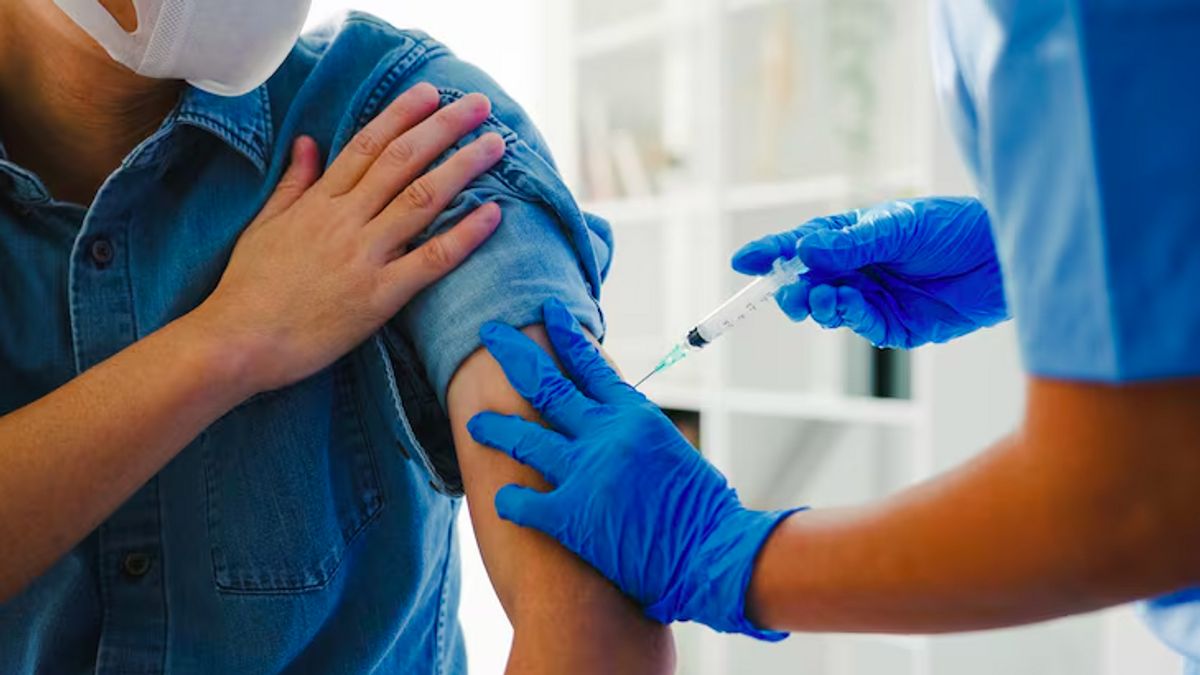


JAKARTA - The measles vaccine has long been considered only important for children because the disease is synonymous with early age. In fact, adults are still at risk of contracting measles, especially if they do not have enough immunity.
Although often seen as a mild disease, measles can have a more serious impact if it attacks adults. The risk of complications such as lung infections to disorders of the nervous system can increase, so that prevention efforts through immunization remain relevant in all age groups.
Therefore, vaccination is an important preventive measure to prevent serious complications that can occur in adulthood.
Internal disease specialist from Eka Hospital MT Haryono, Jakarta, Erpryta Nurdia Tetrasiwi explained that the uncertainty of the vaccination status was a strong reason to carry out re-immunization.
"In adults whose vaccination status is unknown, or forgot whether they had been vaccinated against measles or not when they were children, it is better to vaccinate," explained Dr. Pryta, his nickname in his discussion media in Jakarta, recently.
According to him, vaccination is becoming increasingly important, especially for those who live in areas with high measles cases or live with vulnerable groups such as the elderly and infants.
"Especially if the adult lives in an area with high measles cases. Or he lives with parents or the elderly and babies, here the measles vaccination plays a role in protecting those around us."
To determine whether a person has immunity to measles, it can actually be done through laboratory tests such as IgG and IgM measles tests.
However, not all health facilities provide this service, and the cost is relatively expensive. Therefore, vaccination is considered a more practical option.
"So, it's better to get vaccinated because it's cheaper and if you've ever been vaccinated, there's no negative effects if you get vaccinated again," he added.
Furthermore, the administration of measles vaccine to adults generally uses the MMR vaccine (measles, mumps, rubella). This vaccine is given when the body is in a healthy state, with two injection doses spaced about 28 days apart.
Through vaccination, the risk of severe symptoms can be suppressed if a person remains infected with the virus that causes measles. Measles in adults who have not been vaccinated can cause serious complications.
One of the most common is pneumonia or lung infection.
"The most frequent hospital admission in measles cases is due to pneumonia. There are also some cases, although rare, such as the risk of encephalitis to eye disorders," he said.
Under certain conditions, infection can cause damage to the cornea. Complications in the eyes can cause corneal inflammation (keratitis) which, if not treated immediately, can result in permanent vision loss.
"If you are exposed to measles, for example, people who have been vaccinated will have much milder symptoms. It's not too hot, and the red rash is not as bad as people who are not vaccinated," said Dr. Pryta.
In addition to protecting against measles, the MMR vaccine also provides protection against mumps and rubella.
For women who plan to get pregnant, this vaccine is highly recommended because infection with measles or rubella during pregnancy can increase the risk of miscarriage, premature birth, and congenital defects in infants. Vaccination should be done at least one month before starting a pregnancy program.
The English, Chinese, Japanese, Arabic, and French versions are automatically generated by the AI. So there may still be inaccuracies in translating, please always see Indonesian as our main language. (system supported by DigitalSiber.id)


