


BOGOR - Heart attacks are still the highest cause of death in the world and in Indonesia, so people need to be alert and understand the importance of regular heart health checks.
This condition often comes suddenly and is often not realized by the sufferer, so that treatment is often late.
Specialist Doctor of Heart and Blood Vessels at Eka Hospital Cibubur, dr. Yislam Aljaidi, explained that a heart attack occurs when blood flow to the heart muscle is drastically reduced or stopped due to a blockage in the coronary artery.
This blockage is usually caused by a buildup of fatty plaques and cholesterol that triggers the formation of blood clots that block blood flow to the heart.
"If this condition is not immediately treated, the heart muscle can experience permanent damage and even cause death," said Yislam when met in Bogor, Wednesday, February 11.
The risk of death from heart disease is very high in Indonesia and around the world. World Health Organization (WHO) data shows that cardiovascular diseases, including heart attacks, are the number one cause of death globally with around 17.9 million people dying each year due to this condition.
More than four out of five deaths from cardiovascular disease are caused by heart attacks and strokes. In Indonesia, ischemic heart disease or heart attacks account for a significant percentage of deaths in addition to strokes, making it one of the main causes of the national mortality rate.
In addition, based on data from the Ministry of Health, ischemic heart disease accounts for more than 14 percent of total deaths in Indonesia.
According to Yislam, the time of treatment is a crucial factor when a heart attack occurs. The sooner the patient receives medical assistance, the greater the chance of survival and minimizing heart damage. Therefore, the public needs to recognize the symptoms that often appear.
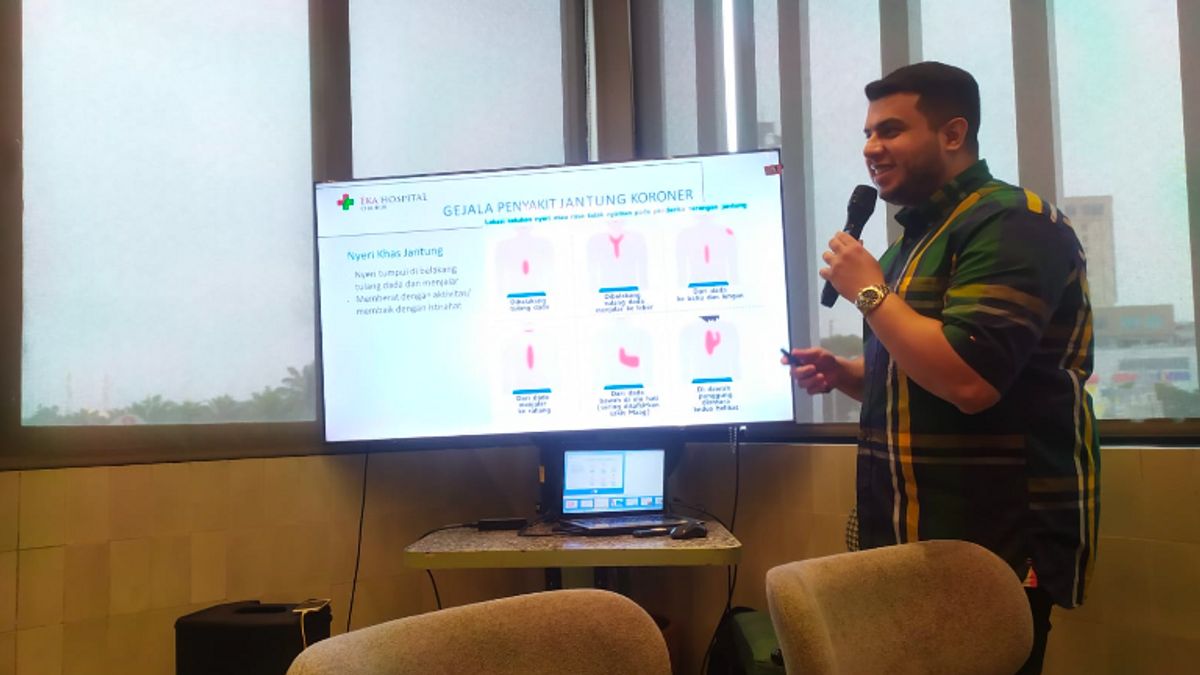
The symptoms of a heart attack are generally characterized by chest pain such as being pressed or smothered by a heavy load, discomfort or pain that can spread to the shoulders, arms, back, neck to the jaw, cold sweat, shortness of breath, extreme fatigue, sudden dizziness, nausea, or pain in the stomach.
"In some cases, back pain is often mistaken for ordinary pain so that patients are late in seeking help," he explained.
He added that symptoms in women are sometimes not typical. Many female patients only feel that their chest is heavy, weak, or uncomfortable without sharp pain, so complaints are often ignored.
Heart attacks are generally triggered by coronary heart disease. The risk increases in those over 45 years of age for men and 55 years for women, smokers, people with high blood pressure, high cholesterol and triglycerides, diabetes, obesity, and individuals who rarely exercise.
Family history of heart disease, a diet high in saturated fat, sugar, and salt, and prolonged stress also increase the likelihood of heart disorders.
Even so, many of these risk factors do not cause symptoms in the early stages. Yislam emphasizes the importance of routine screening to detect problems early, because conditions such as high blood pressure or high cholesterol often do not feel but can damage blood vessels silently.
Some of the heart screening examinations that can be carried out include blood tests to see cholesterol levels and blood sugar, electrocardiograms or EKGs to monitor the electrical activity of the heart, examinations with treadmills to assess the heart's response during activity, echocardiograms or heart ultrasounds to see the structure and function of the heart, and CT scans or calcium score examinations to find out if there is calcium deposits in the coronary vessels.
The frequency of examination is adjusted to the age and risk factors of each individual. In healthy people, screening can begin from young adulthood, while those with risk factors are recommended to have more regular examinations.
Yislam reminded that consultation with a cardiologist is important to determine the right screening schedule. Prevention through early detection and control of risk factors is always better than treatment after an attack occurs.
Through awareness of recognizing symptoms and discipline in undergoing regular examinations, the risk of heart attacks is expected to be minimized so that people can maintain heart health and better quality of life.
The English, Chinese, Japanese, Arabic, and French versions are automatically generated by the AI. So there may still be inaccuracies in translating, please always see Indonesian as our main language. (system supported by DigitalSiber.id)


