
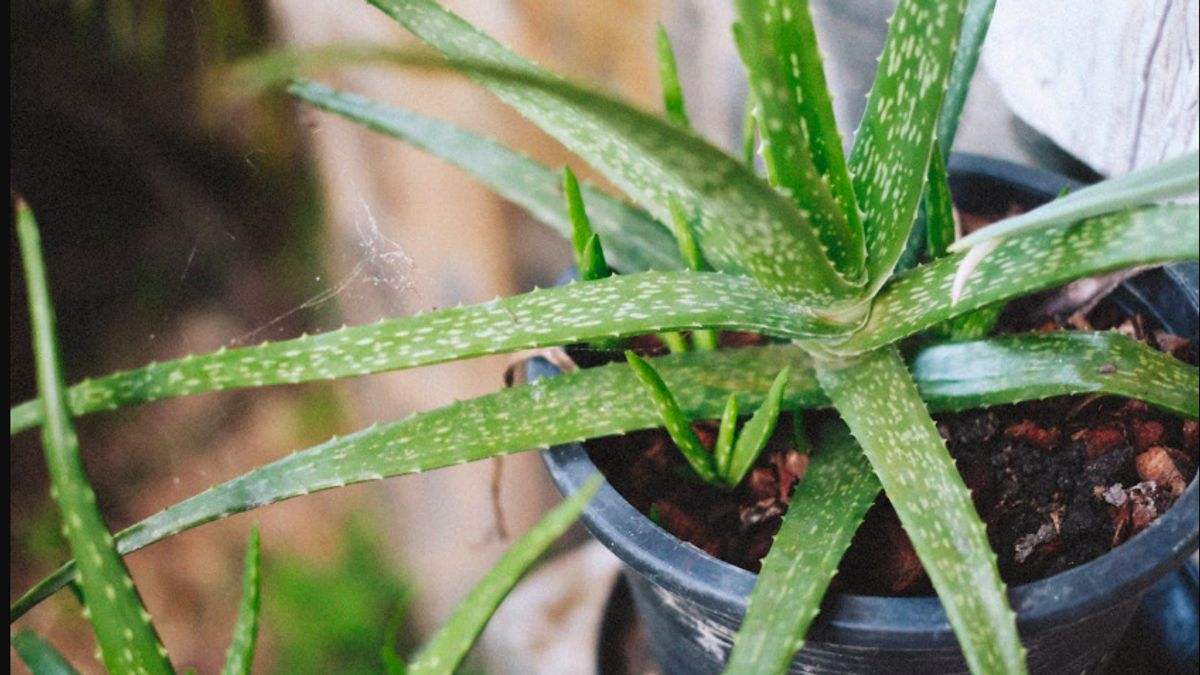


JAKARTA - Recent research has found that cultural tongues have the potential to inhibit the development of Alzheimer's disease. Alzheimer's is a degenerative brain condition that causes a decline in function in a number of aspects.
The potential of aloe vera for Alzheimer's was found from a computer-based simulation study, which showed that natural compounds in cultured aloe can interact with enzymes that play a role in memory loss.
Quoted from Science Daily, on Tuesday, February 10, 2026, the study examined the chemical content in the aloe vera plant, which has long been known as a skin care plant. Researchers traced these compounds interacting with biological processes related to Alzheimer's.
The focus of the research is on two important enzymes, namely acetylcholinesterase (AChE) and butyrylcholinesterase (BChE). Both enzymes function to break down acetylcholine, a brain chemical that helps nerve cells communicate with each other.
In Alzheimer's patients, acetylcholine levels are already declining. If AChE and BChE are too active, memory disorders and thinking ability can decrease further.
Among the compounds analyzed from the content of aloe vera, beta-sitosterol was judged to be the most promising. This compound shows a strong and stable bond with both enzymes in computer simulations.
"We found that beta-sitosterol has a strong and stable binding ability to enzymes involved in Alzheimer's," said the study's lead author, Meriem Khedraoui.
The strong bond suggests the potential of beta-silosterols to help maintain acetylcholine levels in the brain. The results of the analysis also show that beta-silosterols have a good safety profile.
The compound is expected to be well absorbed by the body, and has a low risk of side effects at certain doses.
"The combination of effectiveness and good safety profile makes this compound worth further study," said one of the researchers, Samir Chtita.
However, the results of this study cannot be used as a basis for treating Alzheimer's disease. Studies need to be continued with laboratory tests and clinical trials in humans, to further ensure its benefits and safety.
Nevertheless, this study provides new hope in the development of natural plant-based Alzheimer's therapies. Especially in the midst of the current limitations of available treatment options.
The English, Chinese, Japanese, Arabic, and French versions are automatically generated by the AI. So there may still be inaccuracies in translating, please always see Indonesian as our main language. (system supported by DigitalSiber.id)
Most Popular Tags
#Prabowo Subianto #donald trump #2026 World Cup #Febrie Adriansyah #8791Popular


