
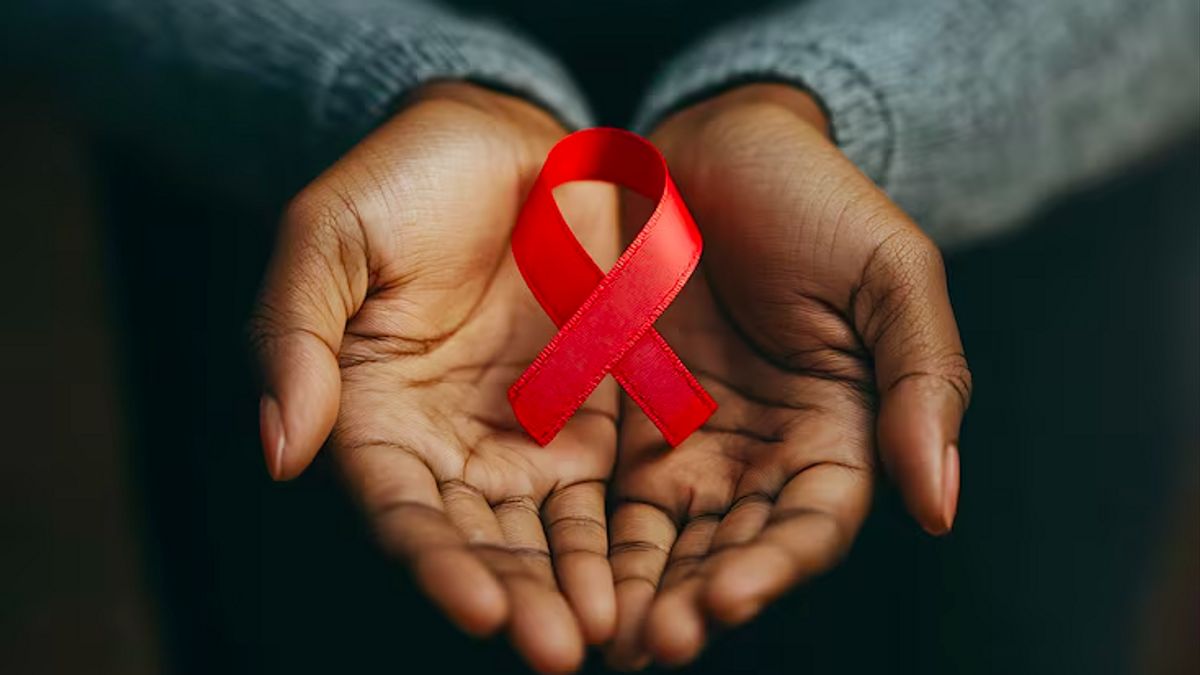


JAKARTA - HIV is still one of the public health issues that are full of stigma in Indonesia. Not only because of the medical challenges, but also because of the social perception that considers HIV as a disgrace.
This view is what makes many people reluctant to get tested, even though early detection is the key to preventing transmission and maintaining quality of life.
According to data related to the HIV epidemic in Indonesia, it still shows an alarming figure. Until the end of 2023, the Indonesian Ministry of Health recorded an increase in new HIV infections, with a projection of more than 515 thousand cases in the period January-September 2023.
Ironically, of this number, only about 40 percent of people with HIV (ODHIV) access antiretroviral therapy (ARV), a treatment that has been proven effective in suppressing the virus and allowing ODHIV to live healthy like others.
Indonesia itself has committed to achieving the global target of Triple 95 by 2030. This target includes 95 percent of people with HIV knowing their status, 95 percent of those diagnosed receiving ARV therapy, and 95 percent of those undergoing treatment achieving viral suppression. However, achieving this target is still hampered by various factors, especially stigma and discrimination.
This was acknowledged by Lely Wahyuniar, Strategic Information Advisor of UNAIDS Indonesia. He said that stigma was the main obstacle for people to do HIV tests.
"Fear of social judgment, family rejection, to the loss of a job make many people choose not to know their health status. In fact, delays in diagnosis actually increase the risk of transmission and worsen health conditions," he said in a media discussion entitled "Strengthening the HIV Response 2025, the Role of the Media in Driving Action and Reducing Stigma", in Jakarta, recently.
From the community's perspective, ODHIV's experience shows that fear of HIV testing often starts with stigma against oneself. As Hartini, a person with HIV (ODHIV), explained, not a few people are afraid to get tested because they feel guilty about the past or are worried if the results are positive.
This fear then develops into overthinking, such as worrying about being kicked out of the family, losing a job, or not being able to continue their education.
"Being a person living with HIV is very difficult. We do not ask for special services, just public services that can be accessed without stigma and discrimination. Don't burden us with painful news anymore," said Hartini.
Hartini also highlighted the lack of education regarding HIV and HIV testing. Many people still do not understand that HIV is not the end of everything and can be managed with proper treatment. In addition, there are still people who do not know that HIV testing services are now widely available at health centers and the treatment is free, including in Jakarta.
As an alternative for those who are still embarrassed or afraid to come to a health facility, there is now an option for self-HIV testing. Lely Wahyuniar explained that people can access self-test tools online. This test uses a saliva sample and can be done at home.
"If the result is reactive, then a person is recommended to go to the nearest health center or health facility for further examination and treatment," added Lely.
This option is expected to be the initial door for the public to dare to know their HIV status without excessive fear. However, Lely emphasized that self-testing must still be followed by formal health services so that treatment can be carried out properly.
The English, Chinese, Japanese, Arabic, and French versions are automatically generated by the AI. So there may still be inaccuracies in translating, please always see Indonesian as our main language. (system supported by DigitalSiber.id)


