


JAKARTA - Not many know that not all types of chicken eggs are safe as daily food. Professor of Unggas Livestock Science from IPB University, Prof. Niken Ulupi emphasized that broiler eggs or known as fertil eggs should not enter the consumption chain because they are easily damaged.
"Ultile outlets that do not meet the requirements to be eradicated should not be sold in the market. The quality is low, the shelf life is short, and it is easy to rot," explained the lecturer from the Department of Livestock Production and Technology, Faculty of Livestock, IPB University, quoted from the official IPB University website.
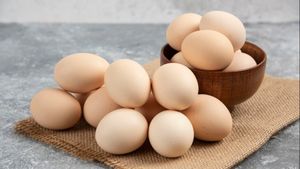
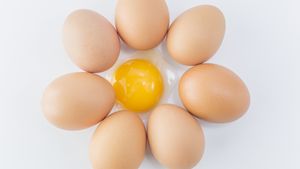
He conveyed that fertil eggs have a different character than ordinary consumption eggs. Eggs commonly sold in the market come from commercial laying hens.
All chickens in this system are females who produce eggs without a fertilization process, so the eggs are infertile and safe as food.
Meanwhile, fertil eggs are formed through the fertilization process between female and male chickens, so that there is the forerunner of embryos.
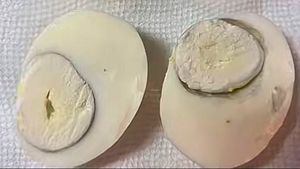
"This type of egg requires low-temperature storage. If left at room temperature, embryos can partially develop and make eggs rot quickly," he explained.
Prof. Niken also explained that the purpose of maintaining chickens varies, depending on the products to be produced. There are chickens cultivated for egg production, and there are also chickens raised as a source of meat. This causes the development of various types of chicken eggs, both from superior and local races.
SEE ALSO:
-
 | INFO SEHAT
5 Jenis Makanan yang Sebaiknya Tidak Dikonsumsi Bersamaan dengan Telur
16 Oktober 2025, 02:25 -
 | INFO SEHAT
Kalori Telur Bebek dan Ayam, Lebih Tinggi yang Mana? Cek Perbedaannya
17 April 2025, 15:47
The commercial laying chicken is designed to produce consumption eggs, while broilers such as broilers are devoted to meat production.
"Commercial broiler chickens are only kept short, about five weeks, then cut. So broilers do not lay eggs," said Prof. Niken.
The broiler broiler (breeder broiler) has a different function, namely producing cashed eggs (fertil) which will later be eradicated into broiler chickens.
"These eggs are called fertile eggs, because they are produced from male seeded female mothers," he added.
Although the nutritional content between fertil eggs and consumption eggs does not have a significant difference, especially in terms of protein and amino acids, Prof. Niken emphasized that the level of damage to fertil eggs is much higher.
Therefore, fertil eggs are not designed for the consumption needs of the general public. In addition, the circulation of fertil eggs in the market can affect the stability of the price of consumer eggs.
In closing, Prof. Niken explained that the public can recognize the differences between the two types of eggs through physical appearance and marking on their shells.
This understanding is important so that people can choose eggs that are safe, nutritious, and according to their designation. "
The English, Chinese, Japanese, Arabic, and French versions are automatically generated by the AI. So there may still be inaccuracies in translating, please always see Indonesian as our main language. (system supported by DigitalSiber.id)


