
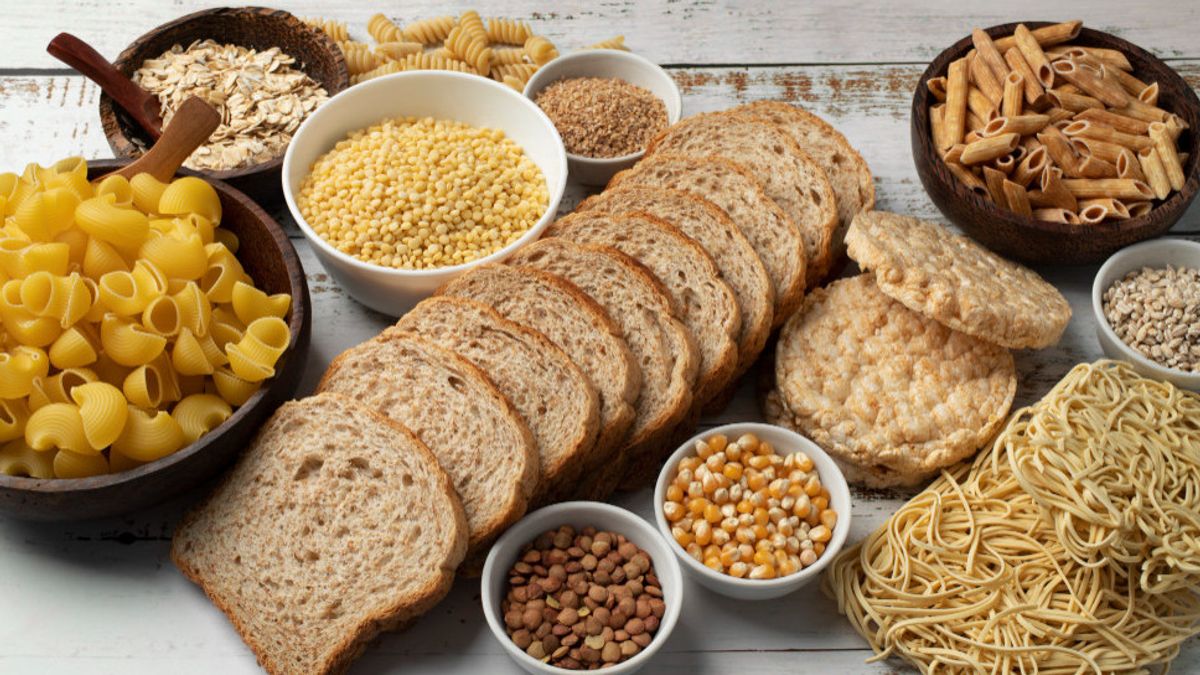


The simple and complex carbohydrates that enter the body will be broken into sugar which functions as the main energy source for the cells, tissue, and organs of the body. Let's find out how the process of abusing carbohydrates in the body through the review below.
As we know, carbohydrates are the main energy source for the body to undergo various activities, both physically and mentally. When passing through the digestive system, carbohydrates will double into sugar called sakirida. This carbohydrate breaking process has started in the mouth and ends in the colon or colon.
In general, carbohydrates are divided into three, namely:
Simple and complex carbohydrates will be broken down into glucose (blood sugar sugar). While fiber will not be digested or broken down by the body. According to research, fiber is beneficial for heart health and helps control weight.
Quoted from Healthline, the process of breaking carbohydrates in the body starts from the mouth and ends in the large intestine. this process involves various organs and enzymes that work together to produce the energy the body needs. The explanation is as follows:
Implementation of carbohydrates begins when food first enters the mouth. The saliva produced by the saliva gland helps moisturize the food while peeling. In the saliva there is an amilase enzyme, which begins to break the sugar in the carbohydrates we eat into a simpler form.
After peeling, the food is then swallowed and passes through the concavity towards the stomach. At this stage, the food is already soft-shaped which is also referred to as kimus (chyme). The slab produces stomach acid which functions to kill bacteria in the kimus before the food continues its journey to the next stage in the digestive system.
Kimus then moved from the stomach to the first part of the fine intestine called duodenum. This process stimulates the pancreas to release the pancreatic amilase enzyme, which functions to break the kimus into dedistrins and maltosa.
Furthermore, fine intestinal walls produce enzymes such as lactase, sukrase, and maltase, which break sugar into monosocides or single sugars. These simple sugars are then absorbed by the fine intestines and sent to the liver for further processing and stored in the form of glycogens.
SEE ALSO:
-
 | LIFESTYLE
Budaya Kerja Sehat yang Bikin Karyawan Betah dan Semakin Produktif
28 Agustus 2025, 19:35


Some of the other glucose is circulated throughout the body through blood flow. The insulin hormone released by the pancreas allows glucose to be used by body cells as a source of energy.
Food residues that are not scattered after all these processes will go to the colon (colon). Here, the remnant will be described by intestinal bacteria.
Carbohydrates containing fiber cannot be digested by the human body, so fiber will reach the large intestine and then dumped with the feces.
That's information about the process of breaking carbohydrates in the body. Get news updates of other options only on VOI.ID.
The English, Chinese, Japanese, Arabic, and French versions are automatically generated by the AI. So there may still be inaccuracies in translating, please always see Indonesian as our main language. (system supported by DigitalSiber.id)
Most Popular Tags
#Prabowo Subianto #donald trump #firearm #8791 #giias 2026Popular


