
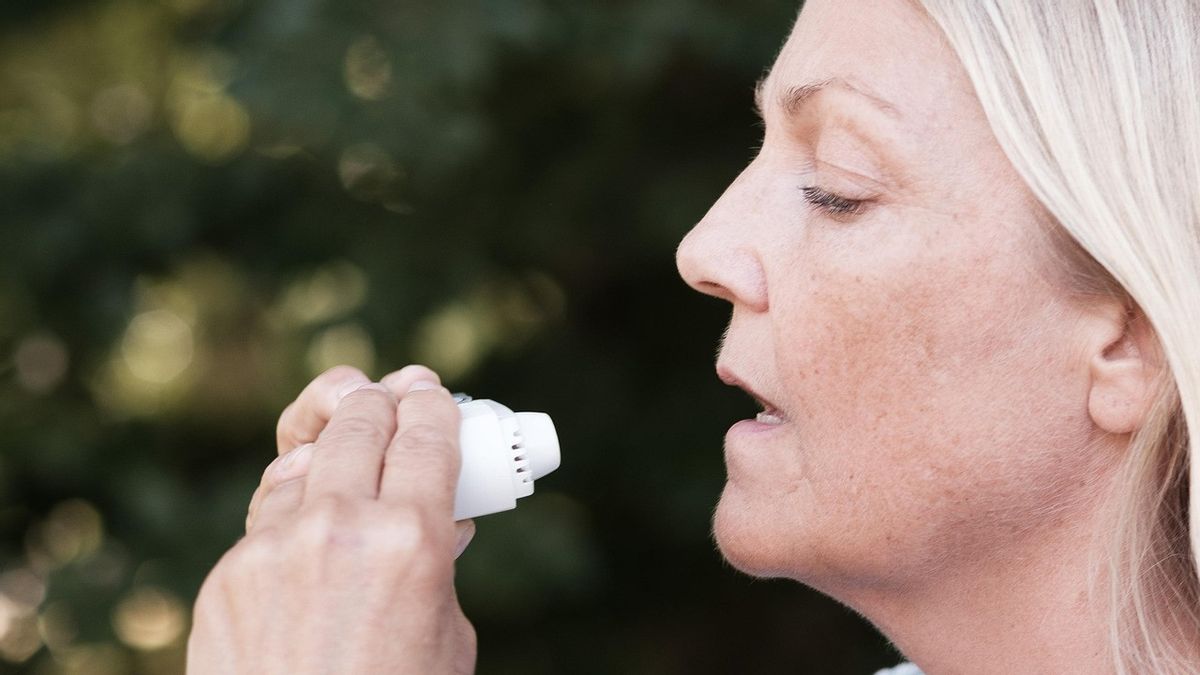


YOGYAKARTA How much residual air volume is in the lungs? Before answering this question, first you need to understand what the residual volume in the lungs is and how to measure it.
The residual volume is defined as the amount of air left in the lungs after a person exhales as strong as possible. The volume of residue is one of the components measured by a pulmonologist (pulmonologist) in a lung function test to assess how well lung performance is.
Normally, some of the air needs to be left behind in the lungs after the exhalation process so that small air bags called alveolus where the oxygen and carbon dioxide exchange occurs remain open at all times.
However, if the residual volume is outside the normal range, it can be a sign of obstructive pulmonary diseases such as COPD (Pronic Obstructive Lung Disease) and asthma, or Restrictive lung disease such as lung fibrosis, quoted from VeryWell Health.
Measurements of residual volume in the lungs cannot be done directly, but must be calculated by involving volume and other lung capacities. This test aims to determine how much air is still left in the lungs after a person exhales to the fullest.
There are several types of respiratory examinations used to measure residual volume, each with different methods and approaches. Here are some common ways to do:
In this method, patients are asked to breathe through a pipe that is connected to a special measuring device in a closed room. Air pressure resulting from the respiratory process will be used to calculate the volume of air in the lungs.
This examination uses gas that is not easily absorbed by blood, such as helium or nitrogen. The patient breathes the gas, then the gas levels before and after breathing are measured. The two types of tests included in this method are helium dilution test and nitrogen washout test.
In this test, the patient breathes nitrogenless air. The amount of nitrogen released while breathing is then measured to determine the volume of the remaining air in the lungs.
In this test, the patient breathes in and out of a bag containing a certain mixture of gas. Changes in gas concentration during the respiratory process are used to estimate the volume of lung residue.
SEE ALSO:
-
 | LIFESTYLE
Proses Pembuatan Yogurt: Persiapan Bahan, Fermentasi, hingga Penyimpanan
26 November 2024, 14:55 -
 | INFO SEHAT
Konsumsi Yogurt Setiap Hari Disebut Bantu Cegah Risiko Kanker Usus, Benarkah?
03 September 2025, 15:55 -
 | INFO SEHAT
Ahli Gizi Ungkap 5 Makanan yang Sebaiknya Tidak Dikonsumsi saat Sarapan
25 April 2025, 23:25


This method utilizes imaging technology, such as CT scans or MRI, to see and calculate the volume of the air left in the lungs after maximum exhalation.
The average value of residual volume in adult humans ranges from 1.2 liters, or about 20-25 ml per kg of body weight in adults. This volume is the amount of air left in the lungs after taking a breath as strongly as possible and cannot be removed again, quoted from the National Library and Medicine (NCBI) page.
Even so, this figure is not absolute. Variations can occur depending on several factors, such as:
This is information about how much residual air volume is in the lungs. Hopefully the information above can add insight to readers. To get other interesting news updates, keep reading VOI.ID.
The English, Chinese, Japanese, Arabic, and French versions are automatically generated by the AI. So there may still be inaccuracies in translating, please always see Indonesian as our main language. (system supported by DigitalSiber.id)
Most Popular Tags
#Prabowo Subianto #donald trump #2026 World Cup #Febrie Adriansyah #8791Popular


