



JAKARTA - Health Minister Budi Gunadi Sadikin explained a number of dangerous microorganisms that often cause food poisoning in the Free Nutrition Food (MBG) program. According to him, there are eight bacteria and two types of viruses that most often cause health problems in children.
The eight bacteria include SALmonella, Escherichia coli, Bacillus cereus, Staphylococcus aureus, Clostridium perfringens, Listeria monocytogenes, Campylobacter jejuni, and Shigella. Budi explained that these bacteria usually appear due to foods that are not cooked properly or stored in a less hygienic manner.
In addition to bacteria, there are also two viruses that are the main causes, namely the norovirus /rotavirus and hepatitis A virus. This virus is generally transmitted through polluted food or drinks, and can cause severe diarrhea to liver infection.
"Why is this decisive for us to find out? Because this will determine one, what kind of treatment if he is hit," Budi said during a working meeting with Commission IX quoted from the YouTube channel Parliament TV.
For him, knowing the type of germs that attack is very important so that medical treatment can be more appropriate. Identification of bacteria and viruses also helps find sources of contamination.
"We can also track the source, the cause is why, because each bacteria or virus has different origins," he explained.
SEE ALSO:
-
 | LIFESTYLE
Sinopsis Film Tukar Takdir: Kehidupan Nicholas Saputra Setelah Kecelakaan Pesawat
02 Oktober 2025, 13:10 -
 | LIFESTYLE
Budaya Kerja Sehat yang Bikin Karyawan Betah dan Semakin Produktif
28 Agustus 2025, 19:35
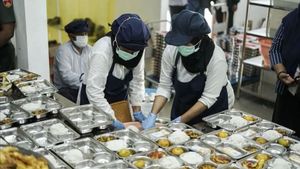

According to Budi, the government has prepared special reagents to detect these bacteria and viruses. Several examination results have also been seen.
For example, SalmonelladanE. The collium comes from immature meat or eggs, while Lyteria often exists in milk products that have not been pasteurized. Staphylococcus aureus usually appears in foods that are too long left at room temperature.
For viruses, the norovirus is very contagious, especially in the school environment if hand hygiene is ignored.
Meanwhile, hepatitis usually spreads through drinking water or food contaminated with human waste.
Budi emphasized the need for cooperation between health workers, sanitarians, and kitchen manager MBG so that the food served remains safe.
Routine checks and the application of hygiene standards are referred to as a key step in preventing cases of repeated poisoning.
With this mapping, the government hopes that the MBG program will not only meet the nutritional needs of children, but also ensure their food safety.
"Children's health is our top priority." said Budi.
The English, Chinese, Japanese, Arabic, and French versions are automatically generated by the AI. So there may still be inaccuracies in translating, please always see Indonesian as our main language. (system supported by DigitalSiber.id)
Most Popular Tags
#Prabowo Subianto #donald trump #Febrie Adriansyah #8791 #giias 2026Popular


