
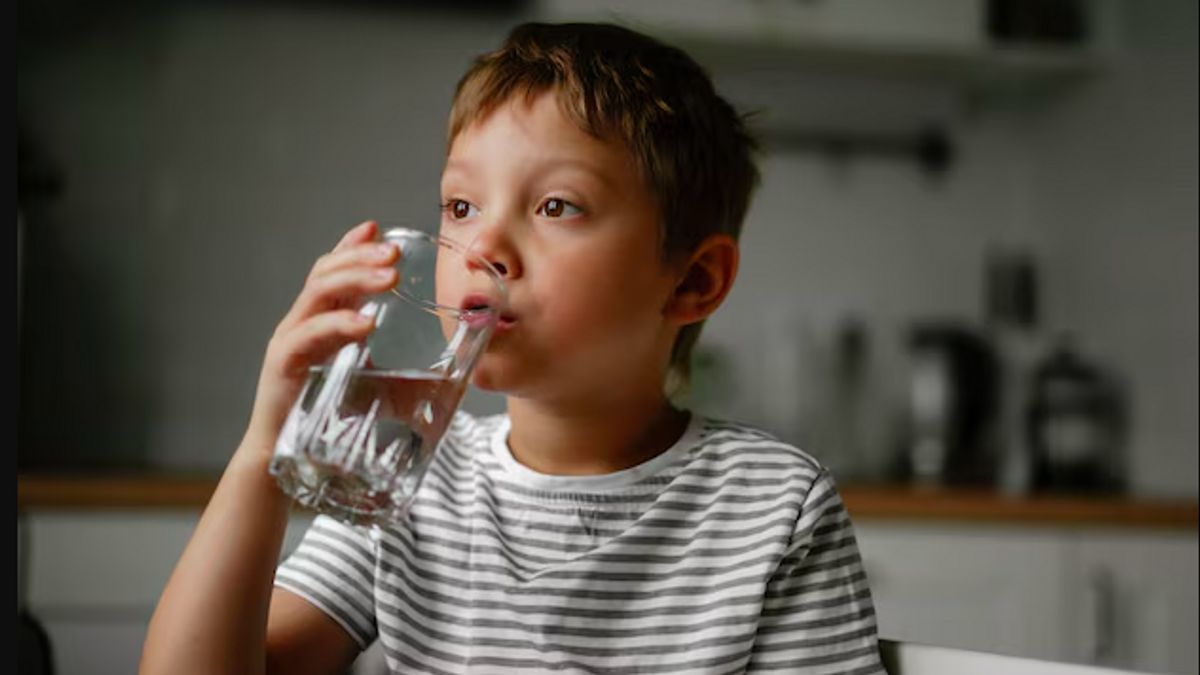


JAKARTA - The quality of drinking water is closely related to children's growth and development. A number of studies show that children who are less hydrated are at risk of experiencing a decrease in cognitive function, including concentration power to learning skills.
According to a publication in the Journal of the American Nutrition Association (Vol 42, 2023) by Simon Marisel, dehydration in children in Indonesia should be a serious concern. Data from Review of Primary Care Practice and Education Vol 6 (2023) states that around 22% of children in Indonesia are dehydrated.
The same thing can be seen in The Indonesian Regional Hydration Study (THIRST) which found nearly half of school students (49.5%) were mildly dehydrated. The dehydration condition is because children do not consume enough drinking water before and when they are at school.
Even other effects, according to the study, the habit of consuming water carelessly can reduce the child's cognitive function. So why is the quality of drinking water important for the growth and development of your little one?
Water is a vital component of the human brain. About 75% of the brain's volume consists of water, so that a slight decrease in body fluid levels can affect the way the nervous system works. In children, dehydration can reduce blood flow and oxygen to the brain, which has an impact on memory, focus, and speed of thought.
In addition, the quality of water is also decisive. Water polluted by microorganisms or heavy metals such as lead, arrest, or mercury can interfere with the development of the child's nervous system in the long term. The exposure of contaminants is shown to be related to learning disorders, decreased IQ, to behavioral problems.
In contrast, adequate and contaminant-free drinking water helps maintain the balance of electrolytes, facilitates the metabolism of nerve cells, and supports body temperature regulation. All of these factors contribute to optimal cognitive functions, especially in school-age children who are in the critical phase of brain development.
The study emphasized that the availability of proper drinking water, aka the quality of water consumed at home, plays a major role, even up to 80% in determining the adequate hydration of children. Lack of water intake, both before and while at school, is one of the main causes of this condition.
SEE ALSO:
-
 | INFO SEHAT
Dapatkan Manfaat Maksimal, Begini Cara Minum Air Hangat yang Benar
17 September 2025, 11:21 -
 | LIFESTYLE
Kurang Minum Bisa Bikin Stres Lebih Berat, Perubahan Urine Jadi Tanda Awal
29 Agustus 2025, 08:55 -
 | KESEHATAN
Migrasi BPA dari Galon ke Air Minum, Pakar dari IPB Ungkap Temuannya
14 Agustus 2025, 12:25
Furthermore, according to the results of the National Socio-Economic Survey (Susenas) by the Central Statistics Agency (BPS) in March 2023, it shows that more than 40% of households in Indonesia choose to use branded bottled water or refill as the main source of drinking water.
This reflects the public's need for more practical and guaranteed access to ensure the adequacy of family hydration.
However, cooked water remains the standard of main quality. Water, which has gone through a softening process until the boiling temperature is shown to be safer for consumption because it can kill microorganisms and reduce the risk of contamination.
Along with the development of technology, a number of drinking water producers present additional purification methods, such as distillation.
This process is carried out by heating water up to more than 110 degC to produce steam, then returning it to pure water free from chemical and biological contaminants.
"The result is water with a purity of 0 PPM which is contaminant-free," said Astrid Adelaide Siregar, Head of Marketing Amid in a press statement to VOI.
This technology-based product is generally present in various packaging, including single-use gallons designed to maintain hygiene while facilitating use in households.
"The result of this process is water with a purity of 0 PPM which is contaminant-free," he concluded.
The English, Chinese, Japanese, Arabic, and French versions are automatically generated by the AI. So there may still be inaccuracies in translating, please always see Indonesian as our main language. (system supported by DigitalSiber.id)
Most Popular Tags
#Prabowo Subianto #donald trump #firearm #8791 #giias 2026Popular


