


YOGYAKARTA - Everyone must have heard the word endurance and stamina when talking about fitness. But often the two terms are considered the same. In fact, even though they are similar, both of them have different nuances of meaning and different aspects of focus. In this article, it will explain what endurance and stamina are, how they are different, and how to improve both of them so that you can be healthier and more energetic.
Stamina is a combination of mental and physical conditions that allow a person to maintain activities for a long time without feeling tired. Simply put, stamina is more about feeling capable of doing good activities, staying energetic and 'remaining energy' in daily activities or longer activities. Launching Healthline, Monday, September 15, stamina is not only in sports. Stamina is also important for activities such as work, playing with children, or doing daily activities that require concentration and energy.
Endurance is the physical ability of the body to continue to carry out activities for a long period of time. Endurance consists of two main components, namely endurance cardiovascular (cardivascular endurance) and muscle endurance (muscular endurance). Cardiovascular endurance is the ability of the heart and lungs in distributing oxygen throughout the body so that muscles can work longer. While muscular endurance is the muscle's ability to work continuously without fatigue.
After explaining each other's definitions, it is quite clear that endurance and stamina have significant differences. The following is the difference between physical or endurance and stamina.
Endurance emphasizes more physical abilities that can be measured, such as how long a person can run, swim, dance, or do strenuous physical activity. Meanwhile, stamina is more of a result of overall fitness, namely about how the body and mind work together to stay energetic for a long time.
For endurance, physical aspects such as cardiovascular systems and muscle resistance are very dominant. Meanwhile, stamina, apart from involving physical elements, also involves mental conditions and the ability to manage mood and energy in the face of fatigue.
Endurance can be measured through real tests. For example, a distance run test, maximum number of push-ups/sit-ups at a certain time, or fast road tests. Well, if stamina is often a subjective measure. Because it is usually used to measure how fast you run and feel tired, how often you feel you have energy during daily activities, how long you can stay active without long breaks.
Endurance is part of a clear physical fitness in five fitness components. Among them is endurance cardiovascular, flexibility, body composition, muscle endurance, and muscle strength. While stamina is not a separate fitness component, it is the result of all the fitness components if carried out consistently.
In order for the aspect of endurance development and stamina to be better, the following ways can be followed:
SEE ALSO:
-
 | INFO SEHAT
Mengenal Daya Tahan Kardiovaskular, Ini 7 Manfaatnya untuk Kesehatan Tubuh
31 Agustus 2022, 13:37 -
 | KESEHATAN SEKSUAL
6 Jenis Olahraga yang Membantu Meningkatkan Gairah Seksual
26 Oktober 2024, 03:47


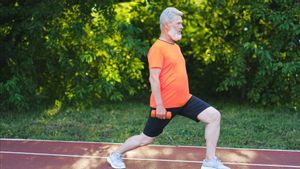
Endurance and stamina are closely related, but not exactly the same thing. Endurance is more specific to the physical aspect and body performance objectively, while stamina includes physical and mental aspects, as well as overall energy that allows a person to survive doing activities in the long term. By understanding the differences between endurance and stamina, you can undergo proper training, consistency, and attention to recovery so that it can improve both.
The English, Chinese, Japanese, Arabic, and French versions are automatically generated by the AI. So there may still be inaccuracies in translating, please always see Indonesian as our main language. (system supported by DigitalSiber.id)
Most Popular Tags
#Prabowo Subianto #donald trump #2026 World Cup #Febrie Adriansyah #8791Popular


