
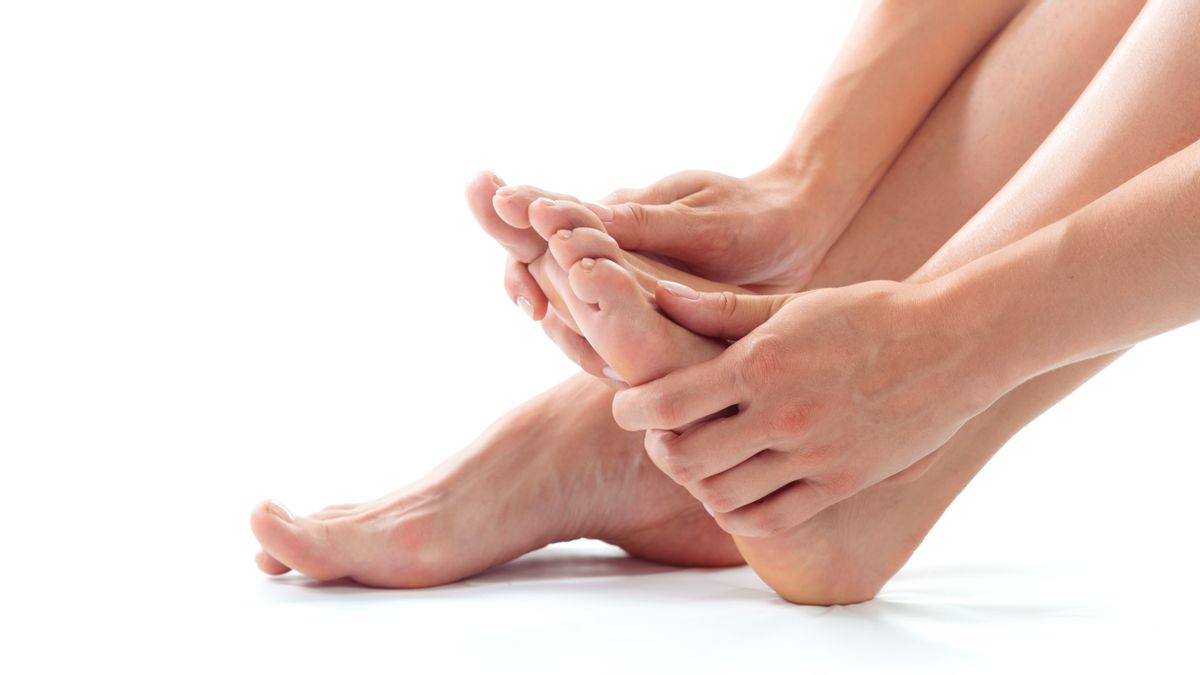


JAKARTA - Swelling feet are often taken lightly, for example because they sit or stand for too long. However, swelling in the legs or known as the eedema can also be a sign of serious health problems, one of which is kidney damage.
Reporting from the Mayo Clinic page, the kidneys have an important function to filter blood and remove excess fluids and salt from the body through the urine. If the kidneys are damaged or not functioning optimally, fluid and salt can accumulate in the body. As a result, swelling occurs in several parts of the body, especially in the legs, ankles, and around the eyes.
In addition, kidney damage can also cause decreased levels of protein in the blood, such as the condition of nephrotic syndrome. Protein functions to keep the fluid in the blood vessels. If the protein levels are low, the fluid leaks more easily into the body's tissue and causes swelling.
Swelling due to kidney disorders usually have the following signs:
- Swelling in the legs, ankles, or around the eyes that never disappear.
- The skin looks glossy or stretched in a swollen area.
- If pressed, the skin can leave a curve (pitting edime).
- Weight gains due to fluid buildup.
Accompanied by other symptoms of kidney disease, such as:
- Often urinate at night.
- Urin foam (signs of protein in urine).
- Easy to get tired.
- High blood pressure.
Immediately go to the doctor if the swelling is not lost even though you have rested, or if you are accompanied by other symptoms such as shortness of breath, chest pain, and decreased urine production.
This condition can indicate serious kidney disorders, to other complications such as heart failure or buildup of fluids in the lungs (pulmonary dieme).
SEE ALSO:
-
 | INFO SEHAT
Bunda Harus Tahu, Pertolongan Pertama Anak Sakit Perut dan Kapan Harus ke Dokter
28 Agustus 2025, 11:55


How To Overcome And Prevent
The handling of the eedema due to kidney problems depends on the underlying disease. Usually doctors will provide drugs to help reduce excess fluids (duretics) and control blood pressure.
Some simple steps can also help prevent the eddy:
- Limit excess salt intake.
- Control blood pressure and blood sugar.
- Regular kidney health checks, especially if you have a history of diabetes or hypertension.
- Avoid sitting or standing for too long without moving.
The English, Chinese, Japanese, Arabic, and French versions are automatically generated by the AI. So there may still be inaccuracies in translating, please always see Indonesian as our main language. (system supported by DigitalSiber.id)
Most Popular Tags
#Prabowo Subianto #donald trump #Febrie Adriansyah #8791 #giias 2026Popular


